


Opinion

Amid a busy news cycle, with the chaos at the White House Correspondents Dinner and a dragging failure of negotiations in Iran, Donald Trump announced his pick for the next US ambassador to Australia.
In contrast with the appointment of the most recent ambassador Caroline Kennedy in 2021, this marks a major departure from how previous administrations have approached their relationship with Australia.
For the past 80 years, Australia has been a key ally of the United States, so much so that eight Australian prime ministers have been honoured with official visits to the White House to demonstrate that importance. That’s two more than Britain has had over the same period.
Cultural connections and shared strategic interests have meant that the US typically sends an ambassador with close personal ties to the president. Those ties allowed the ambassador flexibility and autonomy when they showed up in Canberra.
Kennedy, the most recent US ambassador, is the scion of the Kennedy family and a longtime ally of Joe Biden. Trump’s first ambassador, Arthur Culvahouse, had led the vetting process for Trump to pick his first vice president and had served as White House counsel under Ronald Reagan. The two ambassadors under Barack Obama were both longtime friends and trusted allies. George W. Bush sent his longtime business partner and then his deputy attorney-general.
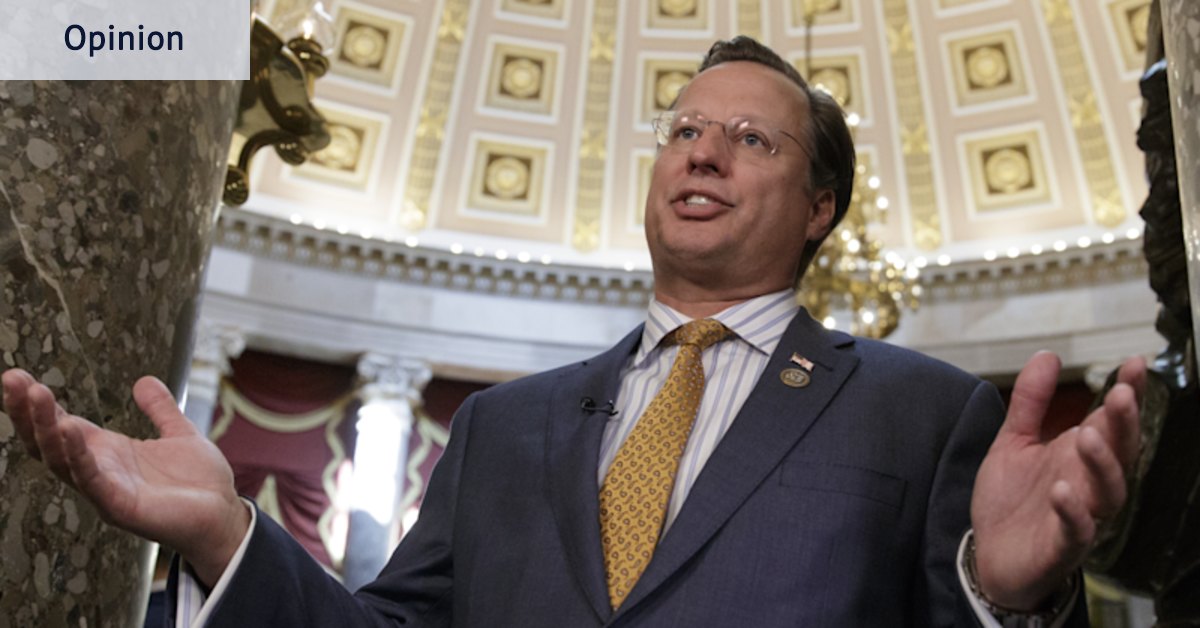
But Trump’s new ambassador, David Brat, has been called up from the reserves. Brat will arrive in Canberra having last been present in the American political scene in 2018, when he was ousted from Congress after four years. He has spent the intervening years as an administrator at a far-right Christian college in Virginia. Brat was part of the Tea Party movement but does not appear to have direct links to the president.
Trump is reported to have had trouble finding someone “happy to live in Canberra”, which seems a half-hearted excuse. As much as Canberra’s reputation for dullness precedes it, the city itself is not the reason that Trump is sending a bargain-bin ambassador. It’s because the role of ambassador has become redundant under Trump.
The US no longer has significant diplomatic infrastructure. Likewise, Trump has hollowed out the National Security Council, normally responsible for coordinating foreign policy across the administration. When other countries engage with the United States now, it’s not through the broad apparatus of the State Department or the aid programs that were gutted under Elon Musk’s watch.
Instead, Trump expects world leaders to react to his Truth Social posts, or to show up to the White House, hat in hand. He has laid off dozens of career ambassadors, mostly leaving their seats empty and expecting foreign leaders to deal with him directly.
The exception is when countries and crises demand Trump’s attention. Then he sends Steve Witkoff, a real estate developer, and/or Jared Kushner, his son-in-law. And when Trump wants to avoid being blamed for failure, he sends JD Vance.
Of the global hotspots that command such attention, Israel is the only one with a US ambassador. Even still, the Israeli government works and negotiates with Witkoff and Kushner, while Trump has calls with Netanyahu several times a week. The ambassador there is merely decorative.
The consequences of this new approach to international relations are profound.
The Obama administration’s deal with Iran that led to the freezing of its nuclear program in exchange for sanctions relief came together because two senior diplomats with long histories and experience in the US government built over time relationships of trust with their Iranian counterparts.
Trump is seeking a similar deal with Iran, despite walking away from the first. He sent Vance to negotiate with the Iranians in Pakistan because he knew success was unlikely, and he wanted to distance himself from that possibility. Vance, alongside Witkoff and Kushner, sat for 21 hours of negotiations and left without a deal. Things may have been different if there was a US ambassador in Pakistan who understood the region. But Trump did not replace Donald Blome, who left in the closing days of the Biden administration.
In the absence of cool heads, most countries now know that any deal that Witkoff and Kushner negotiate is only as secure as Trump’s current mood. There is no longer any institutional weight to American foreign policy and other countries cannot trust what intermediaries have to say on Trump’s behalf. Even conversations with the president are only valid until his next call.
Brat’s appointment will make little difference to the US-Australia relationship. Albanese will need to speak with Trump directly when issues arise. If a crisis happens in the Pacific, Australia will host Witkoff and Kushner while Brat enjoys his time Down Under. He will be little more than an American tourist in Canberra.
Australia has staked its strategic future on the durability of American institutions. But what will arrive in Canberra is a placeholder with no clout or access to the Oval Office – and no ability to make commitments that matter. The alliance now runs through a single phone. On a good day.
Cory Alpert is a PhD researcher at the University of Melbourne looking at the impact of AI on democracy. He previously served the Biden-Harris administration.
The Opinion newsletter is a weekly wrap of views that will challenge, champion and inform your own. Sign up here.
 Cory Alpert is a PhD researcher at the University of Melbourne looking at the impact of AI on democracy. He previously served the Biden-Harris Administration for three years.