


Opinion

In the middle of this week, a London-based friend of Uncle Ray Minniecon’s called him, incredulous. “What the hell have you been doing?” he asked. “You’ve been on the news all the way over here!” They both fell about laughing.
“What else can I do?” Uncle Ray tells me.
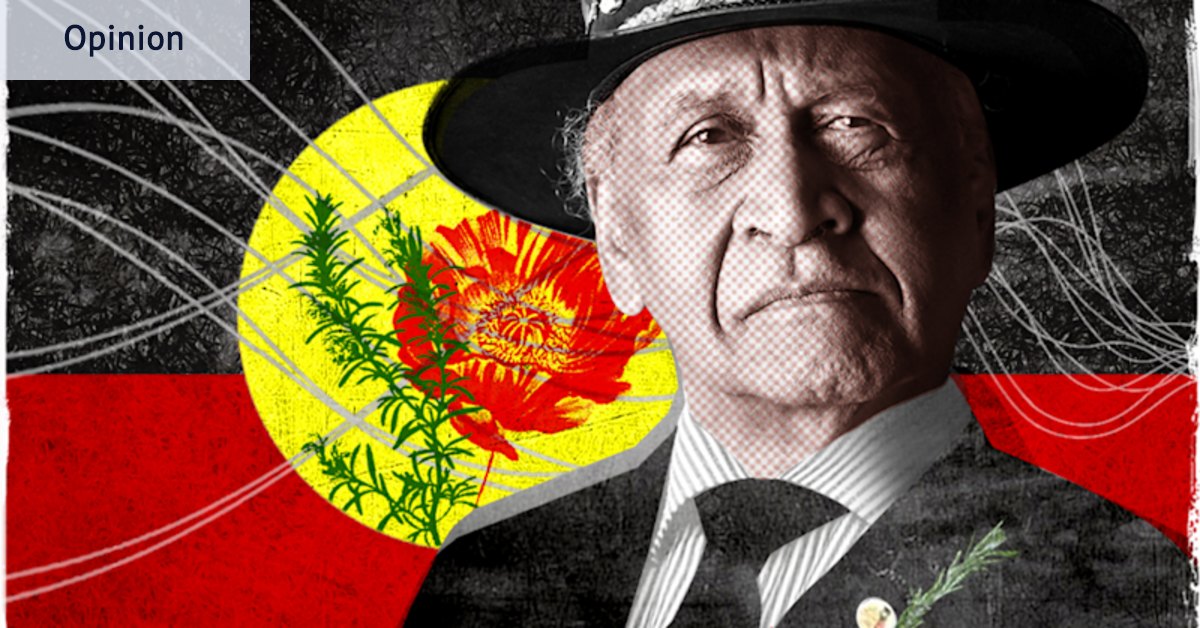
It’s been a strange week for Uncle Ray, a respected pastor, community leader and veteran, ever since he rose in the dark to do an Acknowledgment of Country for the Anzac Day dawn service in Sydney’s Martin Place and was rudely booed by a bunch of goats. It has been, he says, “a little bit crazy”.
But now, after a chorus of people said they were disgusted by the disrespect, he’s beginning to think it may have been a good thing. It could even have been a “God moment”, he says, a time when the ugliness that Aboriginal people are routinely exposed to has been revealed. “Like putting a prick in a boil,” he says, lancing the pus of hate. Showing the rest of the country what racism looks like, how it simmers on our streets and can noisily erupt even when a man of Uncle Ray’s standing speaks with reverence of those who fell for our country.
It’s so jarring.
One of the booers, a 24-year-old man, has been arrested for “an alleged act of nuisance”, while others were moved on by police.
The booing of Indigenous Australians involved in Anzac services didn’t just happen in Sydney, but in Melbourne and Perth, too.
The hatefulness that most of us don’t see – because it is not directed at us – was striking.
It would be absurd even if Uncle Ray was not a former Australian Defence Force veteran, with three generations of his family serving in the armed forces. Acting chief of army Major General Richard Vagg called the jeers “disgraceful”.
What Uncle Ray did was show grace in the face of gracelessness. If you’ve ever been heckled while speaking, or booed, you will know the sick feeling you can get, the panic, the sense of distraction, even threat. But when I asked if it rattled him, he said: “I chose not to be startled by it. We were at a sacred site – remembering all of those men and women who sacrificed everything on our behalf. The boos were just a bit of noise in the background. But they are the ones who really did the wrong thing; they didn’t consider the sacredness of that moment.”
I know some people oppose any idea of a Welcome to Country or Acknowledgment of Country, or wish them to occur only rarely. Polls have shown an increasing antagonism towards them being held as part of sporting or other public events. Some see them as exclusive, as performative, or even – wrongly – as a sledge against white people. A campaign to shut them down has grown louder. This week, the Institute of Public Affairs released the results of a poll of 1001 Australians by marketing research firm Dynata, which found that almost half thought Welcome to Country ceremonies should not be part of Anzac Day services.
Sixty per cent saw them as divisive. Is it not precisely the opposite? Welcoming, including, reminding us that this nation has the world’s oldest continuing living culture, an ancient heritage to honour and be proud of? Why take offence?
Only in 2024, a poll by Reconciliation Australia found 80 per cent of young people and 55 per cent of older Australians supported Welcome to Country ceremonies at major sporting events.
We need to be perfectly clear here: the rejection of the Voice referendum emboldened those hostile to Indigenous voices and has led to what elders such as Uncle Ray say is an outbreak of racism around the country.
During the Voice campaign, he says, “I worked with a lot of young Indigenous leaders who were so hopeful. But after the referendum we lost them all; they went into hiding. This has given them an opportunity to be angry and to find their voice again. They are angry and rightly so. I hear from my nieces and nephews about young kids, and there is no way they can protect themselves from the racist abuse they are experiencing. It’s scary, it’s concerning.”
It has always baffled me that the Voice referendum was so often portrayed as a selfish, even sinister political ploy and not an act of grace and wisdom, of seeking to come together despite the pain, the violence, the past. The words of Stan Grant have stayed with me. He said he feared that “the media does not have the love or the language to speak to the gentle spirits of our land”.
There are many places to discuss how often, when and which Welcome to Country ceremonies are the most potent and effective. But Anzac Day? The hatefulness that most of us don’t see – because it is not directed at us – was striking.
I have always loved these ceremonies as a pause, a prayer, a moment to think, to listen and be still, to dig our toes into the soil we stand on. I often learn something; it’s like stopping traffic to listen to a poem. They do vary in delivery and impact. Some are livelier than others, some are pat, many are surprising and moving. Some go a little rogue, like the bloke who recently, in the words of a friend of mine who was present, “did a beautiful welcome all about the birds and connection to country then pivoted to his Ozempic weight loss journey to close it out”.
But the movement to shut down the ceremonies is twinned too often with a blunt desire to shut down voices of Indigenous Australians – their stories, hopes, dreams, frustrations.
It feels mad to even weigh in on this topic. It should be plainly clear that booing anyone, let alone a respected, distinguished and dignified elder, is wrong, an embarrassment, an erosion of civility. Remember that time Barack Obama was out campaigning for Hillary Clinton and a man stood up and loudly heckled him? And as the crowd began to roar, Obama calmed them, told them to respect the man, who was an elder and a veteran. That free speech was important. And that they should focus on the important things.
On Anzac Day, Uncle Ray wanted to focus on the sanctity of the day.
“Racism is not an Aboriginal problem,” he says. “It’s a whitefella problem, and we need to sort it out.”
Julia Baird is a journalist, author and regular columnist. Her latest book is Bright Shining: how grace changes everything.
Get a weekly wrap of views that will challenge, champion and inform your own. Sign up for our Opinion newsletter.
 Julia Baird is a journalist, author and regular columnist. Her latest book is Bright Shining: how grace changes everything.Connect via X, Facebook or email.