


Steve Holland
The United States has expressed confidence that peace talks with Iran will go ahead this week in Pakistan, and a senior Iranian official has said Tehran is considering joining, but significant hurdles and uncertainty remain as the two-week ceasefire approaches its end.
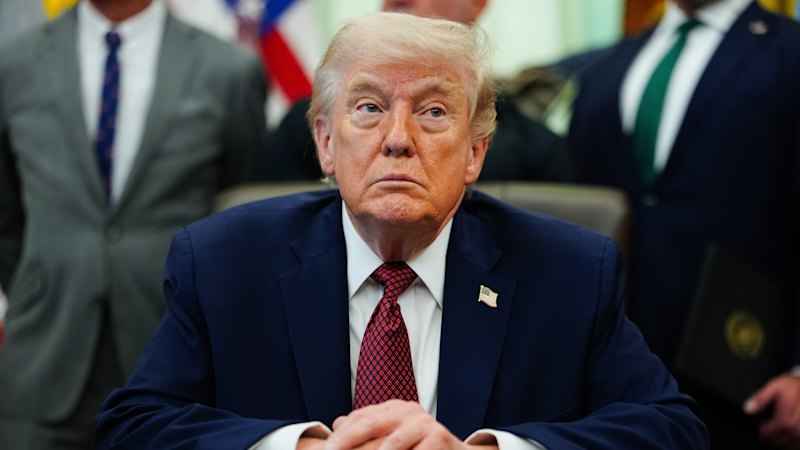
US President Donald Trump said Vice President JD Vance was preparing to join a US delegation heading to Islamabad for a second round of talks, but appeared to rule out any extension to the two-week ceasefire with Iran as “highly unlikely” if a deal was not reached.
Washington has not specified when the ceasefire will end, but a Pakistani source involved in negotiations said it would expire at 8pm on Wednesday, US time (10am Thursday, AEST).
Trump wants an agreement that would prevent further oil price rises and stock market shocks, but has insisted Iran cannot develop nuclear weapons. Tehran hopes to leverage its control of the crucial Strait of Hormuz to strike a deal that averts a restart of the war, eases sanctions, but does not impede its nuclear program.
Trump on Monday talked up the prospect of a deal “far better” than the one negotiated by his predecessor Barack Obama, but insisted he would not be “rushed into making a bad deal”.
The Iranian official, speaking to Reuters, said Tehran was “positively reviewing” its participation in the talks, despite earlier ruling them out, but stressed no decision had been made.
On Tuesday, Iranian state television said that “no delegation from Iran has visited Islamabad … so far”.
A Pakistani source involved in the discussions said there was momentum for talks to resume on Wednesday, and that Trump could attend in person or virtually if a deal were signed.
“Things are moving forward, and the talks are on track for tomorrow,” the source said on Tuesday on the condition of anonymity.
Meanwhile, Israeli and Lebanese representatives will hold a second round of talks in Washington on Thursday, the US State Department confirmed, marking the first talks between the two countries since a 10-day ceasefire in the Lebanon conflict took effect last week.
Ships attempt Hormuz transit
Three vessels – two cargo ships and a fuel tanker – appeared to be attempting to transit the Strait of Hormuz early on Tuesday as US and Iranian blockades remained in place.
The Shoja 2, an Iranian-flagged cargo vessel, crossed the strait and moved into the Gulf of Oman, but then stopped signalling its position. The ship’s progress is being closely watched after the US Navy seized another Iranian ship on Sunday, the first capture since Washington imposed a blockade of the waterway last week.
The other two vessels have no clear links to Iran. The Lian Star, a Gambia-flagged cargo ship, crossed the strait and turned south, while the Ean Spir, a medium-range tanker with no identified owner, sailed north-east from waters off the United Arab Emirates, apparently heading for Oman.
Traffic through the vital waterway, through which one-fifth of the world’s oil and liquefied natural gas passes, otherwise remained at a virtual standstill after a chaotic weekend in which Iran declared the corridor open before closing it when the US declined to lift its blockade of Iranian ports.
Some 800 vessels remain stuck in the Persian Gulf.
Iran’s Foreign Ministry on Tuesday condemned the US for what it called an attack on the Iranian commercial vessel Touska at the weekend, demanding the immediate release of the ship, its crew and their families.
“Iran would use all its capabilities to defend its national interests and security and protect the rights and dignity of its citizens … the United States would bear full responsibility for any further escalation in the region,” it said, according to Iranian state media.
Maritime security sources said the ship was likely to be carrying what Washington deems dual-use items that could be used by the military. US Central Command said the Touska’s crew failed to comply with repeated warnings and had violated the blockade.
China, the main buyer of Iranian crude, expressed concern over the “forced interception”. On Tuesday, Chinese President Xi Jinping used a rare call with Saudi Crown Prince Mohammed bin Salman to urge the restoration of free navigation through the strait and a full end to hostilities.
Oil prices fell and stocks bounced back in early trading in Asia on Tuesday on the expectation of the resumption of talks, having spiked about 6 per cent the previous day amid doubts over whether they would go ahead.
Brent crude futures declined 54¢, or 0.6 per cent, to $US94.94 a barrel, and West Texas Intermediate for May fell $US1.11, or 1.2 per cent, to $US88.50.
‘They’re going to negotiate’
Thousands of people have been killed by US-Israeli strikes on Iran and in an Israeli invasion of Lebanon conducted in parallel since the war began on February 28. The war has triggered a historic shock to global energy supplies and fears that prolonged conflict could push the global economy into recession.
Speaking on the John Fredericks Media Network on Monday, Trump said Iran would negotiate but reiterated that Washington would not allow Tehran to develop a nuclear weapon.
‘The president, as commander-in-chief, still has a number of options at his disposal that he’s unafraid to use.’
Karoline Leavitt, White House press secretary
“They’re going to negotiate, and hopefully they’ll make a fair deal, and they’ll build their country back up, but they will not have – when they do it – they will not have a nuclear weapon,” Trump said.
White House Press Secretary Karoline Leavitt told Fox News’ Hannity program that a deal with Iran was close “thanks to the success of the military operation and his (Trump’s) hardline negotiating style”.
“And if not, the president, as commander-in-chief, still has a number of options at his disposal that he’s unafraid to use,” Leavitt said.
At the weekend, Trump warned that the US would destroy every bridge and power plant in Iran if it rejected his terms, continuing a recent pattern of such threats, while Iran has vowed to strike power stations and desalination plants in its Gulf Arab neighbours in retaliation for any attack on its civilian infrastructure.
On Tuesday, Iran’s top negotiator, Mohammad-Bagher Ghalibaf, warned that Tehran has “new cards to play on the battlefield” if the conflict restarts, and said the country would “not accept negotiations under the shadow of threats”.
