

Close Menu
thewitness.com.au
  • Home
  • Latest
  • National News
  • International News
  • Sports
  • Business & Economy
  • Politics
  • Technology
  • Entertainment

Subscribe to Updates

Get the latest creative news from FooBar about art, design and business.

What's Hot

Fuel tax cuts won’t touch diesel – WA needs a smarter buffer

April 17, 2026

Presenting, debating, lobbying or selling the work is rising in importance.

April 17, 2026

Decorated community leader and two other advisors quit after the AFL Commission bypassed them when it ticked off targets to increase the number of First Nations or Indigenous players

April 17, 2026
Facebook X (Twitter) Instagram Threads
thewitness.com.au
Facebook X (Twitter) Instagram
Subscribe
  • Home
  • Latest
  • National News
  • International News
  • Sports
  • Business & Economy
  • Politics
  • Technology
  • Entertainment
thewitness.com.au
Home»Latest»Australia’s growing cities risk not having enough water for new houses
Latest

Australia’s growing cities risk not having enough water for new houses

info@thewitness.com.auBy info@thewitness.com.auMarch 11, 2026No Comments4 Mins Read
Australia’s growing cities risk not having enough water for new houses
Share
Facebook Twitter Pinterest Threads Bluesky Copy Link


Shane Wright

March 11, 2026 — 7:30pm

You have reached your maximum number of saved items.

Remove items from your saved list to add more.

Save this article for later

Add articles to your saved list and come back to them anytime.

Key points

  • Infrastructure Australia warns that a lack of drinkable water and ageing assets will severely hinder national housing targets.
  • Providing water to growing cities will require immediate investment in climate-independent sources like desalination plants, it says.
  • The AUKUS shipbuilding projects in Adelaide and Perth, expected to cost more than $50 billion, are expected to transform those regions into major hubs.

Australia’s plans to build millions of new homes will be held back by a lack of water in the country’s major cities, Infrastructure Australia has warned in a report that says tens of billions of dollars will have to be spent on major projects in coming years.

The independent agency, which provides advice to the federal government on projects from roads to rail lines, used its first national priority list in four years to argue more desalinisation plants may be needed to ensure major cities do not run out of drinkable water.

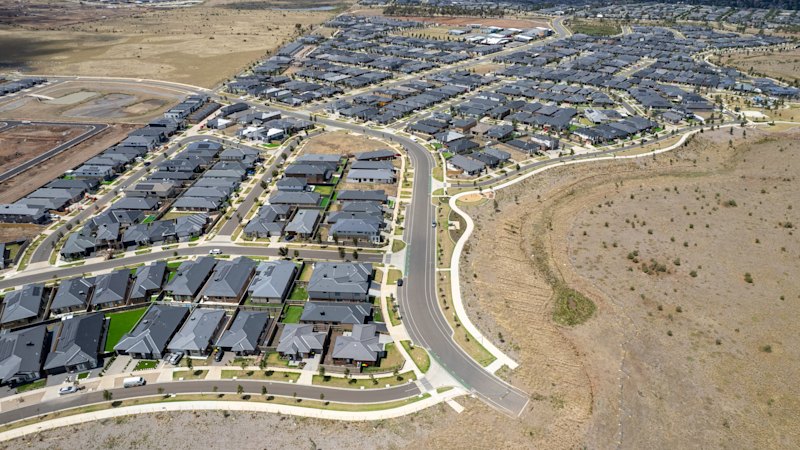
A housing estate in western Melbourne. Infrastructure Australia says ensuring water supply is necessary if the country is to build more homes.
Jason South

Infrastructure Australia’s priority list identified 68 projects, stretching from the proposed east coast high-speed rail line to fuel lines for city airports, that are likely to need financial support over the next decade.

It found 15, of which a third are water projects, should get immediate priority for funding, noting Sydney, south-east Queensland, Canberra, Perth and Adelaide all face substantial increases in demand for water over the next few decades.

It recommended projects in Melbourne, Darwin, Launceston and Adelaide, plus an upgrade to the Paradise Dam in Queensland, all get priority support.

The agency’s chief executive officer, Adam Copp, said the pressure on water supplies would increasingly stretch the ability of cities to provide necessary housing to their growing populations.

“One of the biggest barriers to housing is water and having appropriate water and wastewater, we’ve got climate change and we’ve got ageing assets in the ground,” Copp said.

“So we need more water infrastructure, but we also need more climate independent sources of water, things like desalination plants.”

As part of the AUKUS submarine project, the government is expanding facilities at both Osborne in Adelaide and Henderson in Perth. The two projects, together worth at least $55 billion, were on the agency’s priority list.

Copp said while the focus on the two shipbuilding sites emphasised their role in the defence industry, both would become more like San Diego, a major commercial hub in the United States.

Related Article

Anthony Albanese and high-speed rail dreams.

“Support networks, road and rail, the energy, the housing for new people, the creation of new industries, there’s a whole hub precinct that needs to be thought about, that is not just about the defence investment itself,” he said.

Other projects identified as requiring priority funding include the Sydney-Newcastle high-speed rail, the eastern section of Melbourne’s suburban rail link, 26 kilometres of rail line on the Sunshine Coast, NSW’s planned network of chargers for electric buses and the ACT’s proposed renewable energy battery upgrade.

Over the next two to four years, the agency said work was needed on a proposed freight rail link in western Sydney, a link between the Tallawong and St Mary’s metro stations in Sydney, upgrades to public transport on the Gold Coast and improvements on the Craigieburn, Upfield and Seymour rail lines in Melbourne.

The federal and state governments have been involved in a decade-long surge in infrastructure spending, which is expected to peak in 2027 at more than $60 billion. That’s in addition to private sector infrastructure.

Infrastructure Australia noted that, in addition to new roads and rail lines, there were opportunities for governments to make existing infrastructure work more efficiently.

So-called “high-capacity signalling” on suburban rail lines enables trains to run more frequently compared to traditional forms of signalling.

Copp said while governments were spending billions on Metro projects, getting more trains operating on existing railways would be welcomed by commuters.

Related Article

Animation of a proposed high-speed rail station on the East Coast.

“It’s great to have a shiny new metro, but a lot of what people care about is just getting from A to B as quickly and reliably as possible, and that’s what high-capacity signalling offers,” he said.

“And you can do it relatively cheaply and relatively quickly, far more quickly than building a new metro service necessarily.”

Engineers Australia CEO Romilly Madew said improving the delivery of major infrastructure projects was necessary.

“Infrastructure productivity is now a national economic issue, not just a delivery issue. It is central to strengthening our economy and quality of life,” she said.

You have reached your maximum number of saved items.

Remove items from your saved list to add more.

Shane WrightShane Wright is a senior economics correspondent for The Age and The Sydney Morning Herald.Connect via X or email.

From our partners

Share. Facebook Twitter Pinterest Bluesky Threads Tumblr Telegram Email
info@thewitness.com.au
  • Website

Related Posts

Fuel tax cuts won’t touch diesel – WA needs a smarter buffer

April 17, 2026

Presenting, debating, lobbying or selling the work is rising in importance.

April 17, 2026

Decorated community leader and two other advisors quit after the AFL Commission bypassed them when it ticked off targets to increase the number of First Nations or Indigenous players

April 17, 2026
Add A Comment
Leave A Reply Cancel Reply

Demo
Top Posts

Inside the bitter fight for ownership of a popular sports website

October 23, 2025143 Views

Police believe ‘Penthouse Syndicate’ built Sydney property empire from defrauded millions

September 24, 2025128 Views

MA Services Group founder Micky Ahuja resigns as chief executive after harassment revealed

December 11, 202594 Views
Don't Miss

Fuel tax cuts won’t touch diesel – WA needs a smarter buffer

By info@thewitness.com.auApril 17, 2026

OpinionAlan DuncanDirector of the Bankwest Curtin Economics CentreApril 18, 2026 — 5:00amApril 18, 2026 —…

Presenting, debating, lobbying or selling the work is rising in importance.

April 17, 2026

Decorated community leader and two other advisors quit after the AFL Commission bypassed them when it ticked off targets to increase the number of First Nations or Indigenous players

April 17, 2026

Donald Trump took aim the Pope. It’s another holy war he can’t win

April 17, 2026
Stay In Touch
  • Facebook
  • YouTube
  • TikTok
  • WhatsApp
  • Twitter
  • Instagram
Top Trending
Demo
Most Popular

Inside the bitter fight for ownership of a popular sports website

October 23, 2025143 Views

Police believe ‘Penthouse Syndicate’ built Sydney property empire from defrauded millions

September 24, 2025128 Views

MA Services Group founder Micky Ahuja resigns as chief executive after harassment revealed

December 11, 202594 Views
Our Picks

Fuel tax cuts won’t touch diesel – WA needs a smarter buffer

April 17, 2026

Presenting, debating, lobbying or selling the work is rising in importance.

April 17, 2026

Decorated community leader and two other advisors quit after the AFL Commission bypassed them when it ticked off targets to increase the number of First Nations or Indigenous players

April 17, 2026

Subscribe to Updates

Get the latest creative news from FooBar about art, design and business.

Facebook X (Twitter) Instagram Pinterest
  • Home
© 2026 ThemeSphere. Designed by ThemeSphere.

Type above and press Enter to search. Press Esc to cancel.