


Opinion

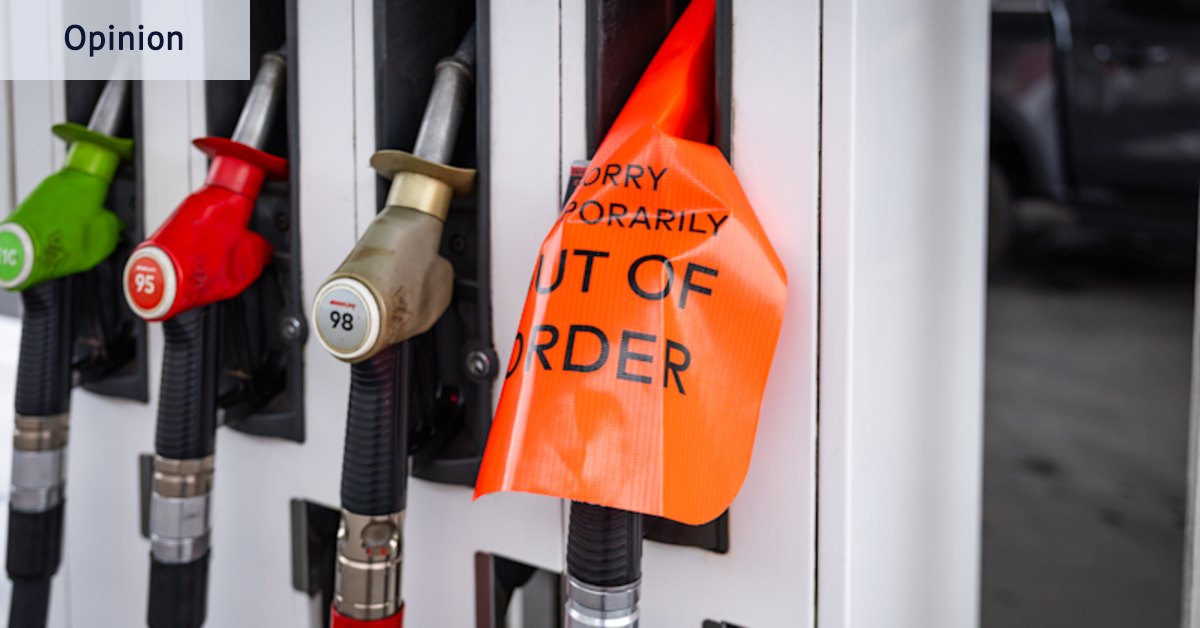
Fuel excise cuts were meant to deliver relief.
But for diesel users in Western Australia, the data tells a very different story.
Diesel prices in WA averaged $3.14 per litre on 15 April – far higher than petrol prices and just 7 cents less than they were on 31 March, just before the federal government halved the fuel excise.
Much of the benefit from the tax cut was wiped out within days by rising global oil prices as the stand-off between the US and Iran continues.
Different markets, different demands, different pressures.
Diesel markets are tighter, benchmarked differently from petrol, and demand is far less flexible – especially across freight, resources and agriculture.
This is the uncomfortable reality of a supply-driven oil shock.
And domestic policy levers struggle to hold prices down for long – especially for diesel.
For a state like WA, where economic activity depends so much on these sectors, this rigidity matters.
The result is that price relief measures designed in Canberra can evaporate before they reach those who need them most.
It is no coincidence that, at the same time, the Prime Minister has been in Singapore, Brunei and Malaysia, working to shore up Australia’s fuel supply relationships.
These visits reflect a growing recognition that energy security is once again a front-of-mind economic and strategic concern.
With tighter, more volatile global markets, access to supply is no longer something Australia can take for granted.
But securing supply is only part of the challenge.
The way prices move through the system – and who ultimately bears the cost – is just as important.
In the lead-up to the excise cut, the spread of retail diesel prices across WA narrowed. This suggests some convergence in what consumers were paying.
But immediately after the cut, that spread widened again, despite wholesale price dispersion across WA’s fuel terminals remaining relatively tight.
That divergence matters. It suggests growing variation between terminal prices and the prices charged by retailers.
This raises questions about how cost pressures are being passed through the supply chain, and where margins may be expanding.
And WA’s regions bear the brunt.
You can’t avoid driving in regional WA – there are no alternatives.
Diesel is the lifeblood of regional WA, and its price affects everything from agriculture, mining and manufacturing through to emergency and care services.
Nearly four in five businesses in a new survey from the Regional Chambers of Commerce and Industry of WA say they’re negatively affected by fuel price inflation.
And in areas like the Kimberley and Wheatbelt, diesel prices are not only higher on average, but more volatile across outlets.
These regions rely disproportionately on diesel – to move goods, power machinery and sustain production. When prices spike, there are few substitutes and limited capacity to adjust.
The burden is immediate and unavoidable.
This is why the current policy approach is falling short – and why it needs to change.
Broad-based measures like fuel excise cuts are expensive, poorly targeted, and quickly overwhelmed by global market dynamics, as recent weeks have clearly shown.
They treat fuel users as a homogenous group, when in reality, exposure varies sharply across regions and industries.
Managing demand still has a role to play.
The federal government’s “Every little bit helps” campaign may deliver marginal gains at the household level.
But demand-side nudges alone cannot offset a global supply shock, particularly in a state where diesel demand is structurally embedded in the economy.
What is needed is a shift in focus from blunt, temporary relief to targeted resilience.
This is where the WA government’s newly announced strategic fuel reserve comes into sharper focus.
Premier Roger Cook has secured 4 million litres of diesel via Cambridge Gulf – a targeted buffer, even if the sourcing details remain unclear.
At normal usage, WA consumes an estimated 16 million litres of diesel every day, so this reserve is a drop in the state’s collective fuel tank.
The reserve won’t bring down average prices – but that was never the intention.
Properly designed, the reserve can act as a buffer against short-term supply disruptions and help to smooth some of the more extreme local price spikes.
But the effectiveness of a reserve will depend on how it is used.
If it is treated purely as an emergency stockpile, its impact on day-to-day price volatility may be limited.
But if it is integrated into a broader strategy, with clear triggers for release, coordination with industry, and a focus on vulnerable regions, it could become a more active tool for stabilisation.
At the same time, there is a strong case for more targeted support mechanisms.
That could include freight subsidies or rebates calibrated to regional exposure, or measures to improve transparency and competition in retail pricing.
WA sits at the front line of global energy shocks.
Its economy is deeply connected to diesel-intensive industries, and its regions are particularly exposed to price volatility.
The prime minister’s push to secure fuel supply abroad and the WA government’s move to build a strategic reserve both point in the same direction: resilience matters.
The lesson from recent weeks is clear: when global forces dominate, domestic policy must be sharper, more targeted and more adaptive.
Start the day with a summary of the day’s most important and interesting stories, analysis and insights. Sign up for our Morning Edition newsletter.
 Professor Alan Duncan has been director of the Bankwest Curtin Economics Centre at Curtin University since 2013, having previously directed the National Centre for Social and Economic Modelling at the University of Canberra.