









However, the experienced lawyer said it was not always straightforward.
Loading
Walker said that for someone to be found guilty of helping a criminal, it must be proved they had done something “absolutely positive” with the knowledge of the accused offender’s crimes.
This could include deliberately leading police down the wrong track, hiding the accused person or providing them with food, transport or money to escape, she said.
She said the area of criminal law where harbouring was most common was in child protection.
But there have been notable cases in the state’s history, including Victorian man George Elias, who was found guilty of harbouring convicted drug lord Tony Mokbel as he prepared to flee Australia and then helped him remain on the run.


Tony Mokbel outside court before he was jailed for 30 years for drug trafficking.Credit: ninevms
Elias pleaded guilty to attempting to pervert the course of justice by allowing Mokbel to hide at his property at Bonnie Doon in north-eastern Victoria while escape plans were finalised.
Elias was jailed for 11 years in 2011.
In another case in 2007 in the Victorian Supreme Court, a woman pleaded guilty to helping a man who she knew had murdered somebody dispose of a body. She then cleaned the flat where the murder had occurred.
Another senior legal source, who spoke on condition of anonymity as they were not authorised to speak publicly, said there was cascading series of possible offences a person could face, from “moderate to very, very serious”.
“If the facts suggest that with the knowledge that a very serious crime’s been committed, and you do something to assist the offender, that’s a serious indictable offence that usually attracts jail,” the seasoned criminal lawyer said.
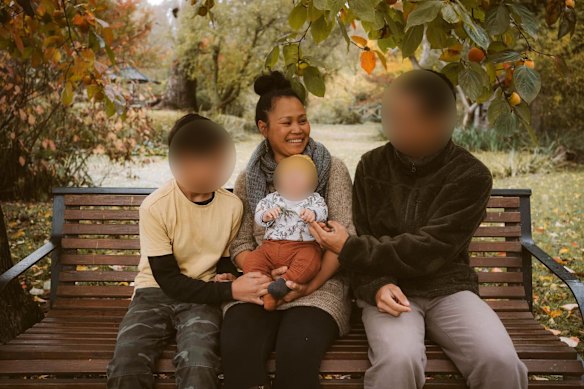
Amalia Freeman pictured in 2022 with the three children she has with Dezi Freeman.
“If you don’t have a belief that it’s a murder, the maximum is around five years.
“But if you have a belief that it is murder, you could be facing 20 years in jail. We’re talking about very serious offences that are heard in the Supreme Court.”
Freeman, who changed his surname from Philby, appeared on the Mike Holt Show podcast in 2019 to boast about how he had “arrested” a magistrate at the Wangaratta court in a civil case involving a land dispute, warning authorities had “picked the wrong person to mess with”.
Loading
In the bizarre exchange with Holt, who is also a self-declared “sovereign citizen”, Freeman erratically flipped between ranting about his disdain for police and to then saying not all officers are bad.
“The government can come in and police can come in and raid your fridge and cook your dog if you give him consent,” he said in the podcast.
He later said: “I know cops out there that seem to be decent blokes,” before adding that some had been told to do “the wrong thing by higher-ups”.
Moments later, he told the podcast police “crash tackle, handcuff and brutalise people”.
Loading
Freeman has previously labelled officers “frigging Nazis”, “Gestapo” and “terrorist thugs”.
As the hunt for Freeman continues, police have searched more than 100 homes in Victoria’s High Country. This includes a team of heavily armed tactical officers who raided a Myrtleford home late Friday afternoon.
Last week, Acting Deputy Commissioner of Regional Operations Russell Barrett revealed the hunt for Freeman was Australia’s largest ever tactical police operation, which included more than 125 specialist officers scouring dense, rugged bushland and caves.
“We consider he may still be in the area, it’s a possibility he may be harboured, or he may be dead,” Acting Deputy Commissioner Barrett said.
“We’ve had over 1100 pieces of information all up, and we’re working through that.”
Start the day with a summary of the day’s most important and interesting stories, analysis and insights. Sign up for our Morning Edition newsletter.


