



Lisa Mascaro and Paul Wiseman
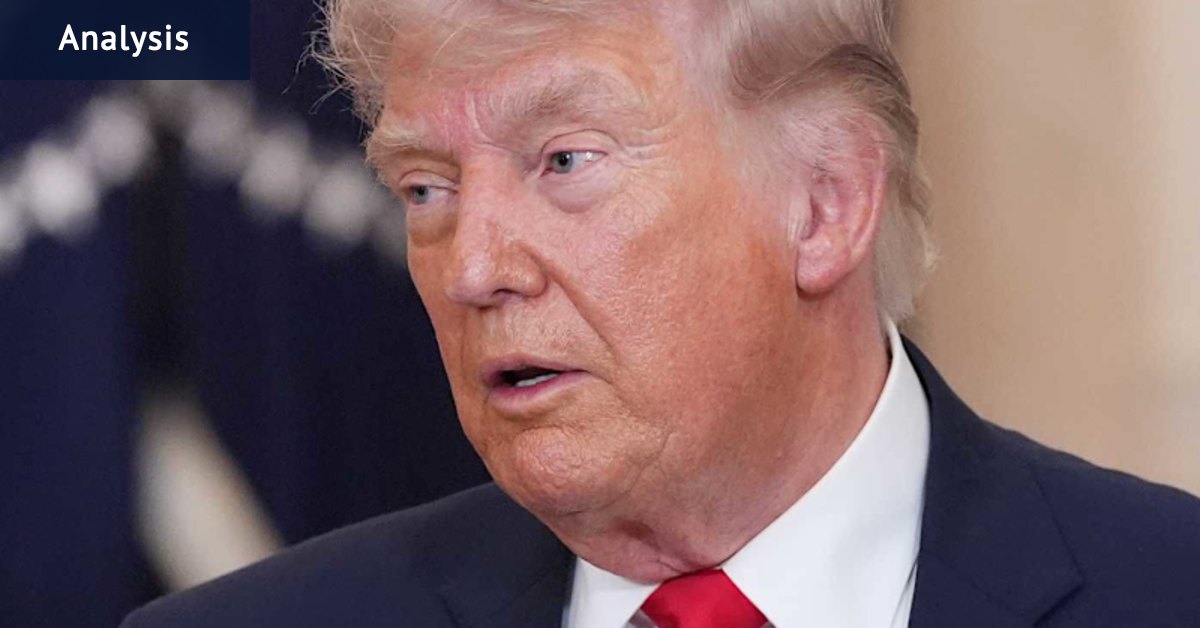
Washington: US President Donald Trump sought on Wednesday night (Washington time) to explain his rationale for the war against Iran at a pivotal moment at home and abroad, but offered few new details as he amasses extraordinary executive authority to prosecute the military operation.
The war is fast becoming a signature of his second-term agenda and the speech was a capstone to a remarkable day flexing presidential power.
Trump started the morning as the first sitting president to show up for a US Supreme Court hearing, a stunning reach of the executive into the affairs of the judicial branch. He ended with his first primetime address from the White House about a war he launched on his own, bulldozing past Congress.
On an early northern spring night, when many Americans may have been looking upwards as Artemis II astronauts lifted off for NASA’s return to the moon, Trump gave a nod to that historic milestone. Then he quickly refocused attention back to him – and to the conflict with Iran that has killed more than a dozen US service members and appears to have no easy exit in sight.
“America, as it has been for five years under my presidency, is winning – and now winning bigger than ever before,” Trump said.
Why the war is necessary
The president said at the top of his address that he wanted to “discuss why Operation Epic Fury is necessary for the safety of America and the security of the free world”, showing that part of the goal for Wednesday’s speech was to take on the confusion that has persisted as he and his administration have shifted their reasons for launching the mission and its objectives.
But he did not offer any new explanations in his speech and reiterated that Iran cannot have a nuclear weapon, calling such a prospect “an intolerable threat”.
Though he and his administration insisted that the US and Israel obliterated Iran’s nuclear program in strikes last northern summer, he said that Iran sought to rebuild its nuclear program after those strikes at a new, different location. He did not offer details but said it indicated Iran was not backing away from its nuclear ambitions.
While he said Iran’s ballistic missile capacity was greatly reduced, he didn’t explain how the operation had headed off Iran’s nuclear ambitions. Instead, he painted the threats from Iran generally as having been wiped away, though he didn’t back up that assertion, especially as several competing factions of power remain within Iran’s theocracy.
Iran has long insisted that its nuclear program was peaceful. It had, however, been enriching uranium up to 60 per cent purity, a short, technical step away from weapons-grade levels.
Regime change
Trump claimed in his speech that regime change in Iran was not a stated objective of the military operations, saying “we never said regime change, but regime change has occurred because of all of their original leaders’ death. They’re all dead. The new group is less radical and much more reasonable”.
But while an Israeli airstrike at the start of the war killed supreme leader Ayatollah Ali Khamenei, Iran then installed his son, Mojtaba, who is viewed as even more hard-line. And the month-long war has seen Iran’s paramilitary Revolutionary Guard grow even more ascendant. Iran’s civilian leadership – broadly untouched by the war – acknowledges it has little command and control over the Guard’s actions.
Both Trump and Israel have signalled they would tell the Iranian people to rise up at a point in the war to take back their government. That hasn’t happened.
Strait of Hormuz
With the Trump administration adamant that reopening the Strait of Hormuz, a vital waterway for the global energy markets, needs to be handled by other nations, the US president used his address to claim that the US doesn’t need oil from the Gulf states.
“We’re now totally independent of the Middle East, and yet we are there to help. We don’t have to be there. We don’t need their oil,” he said.
While it’s true that the US is by far the world’s leading producer of oil and relies on the Persian Gulf for a fraction (8.5 per cent in 2025) of the oil it imports, the ongoing volatility in the energy markets has sent prices soaring at gas pumps in the country.
The price of benchmark US crude oil is up more than 50 per cent since the Iran war began, and the average price of petrol in the US cracked $US4 a gallon ($1.53 a litre) this week.
Oil is a commodity, “the price of which is set in a global market”, University of Chicago energy analyst Sam Ori said before Trump’s speech, “and a disruption anywhere affects the price everywhere”.
Little information about next steps
Thousands of additional US troops are heading to the Middle East. Gulf allies are urging Trump to finish the fight, arguing that Tehran hasn’t been weakened enough. And yet, Trump himself has predicted the US will be done “within maybe two weeks”.
He said the “core strategic objectives are nearing completion” and did not signal any preparations for a ground invasion by American troops – to retrieve Iran’s enriched uranium or secure the Strait of Hormuz, where a chokehold by Iran has sent energy prices soaring.
But Trump offered few details about the next steps. He is fast approaching the 60-day mark when he must seek approval from Congress under the War Powers Act to continue any military operations. He did not announce the imminent start of peace talks or any other diplomatic effort to end the war.
No direct criticism of NATO
Trump has berated US allies for not doing their part in the conflict, even as British Prime Minister Keir Starmer said he would convene a diplomatic summit to help reopen the Strait of Hormuz after the fighting ends.
Both Trump and US Secretary of State Marco Rubio have suggested NATO will need to be reconsidered once the Iran war is over. But the president did not mention NATO by name during the speech.
Trump has gone so far as to say he is “seriously considering” withdrawing from the military alliance, which has been a bulwark of trans-Atlantic unity and security since the end of World War II.
But he cannot simply withdraw from NATO on his own without a legal fight.
“We’re going to have to re-examine the value of NATO and that alliance for our country,” Rubio said on Tuesday in an interview with Fox News host Sean Hannity. “Ultimately, that’s a decision for the president to make, and he’ll have to make it.”
The economy
In his speech, Trump also mischaracterised core elements of the US economy in a time of soaring gas prices and persistent inflation. One of his key claims was: “We were a dead and crippled country after the last administration and made it the hottest country anywhere in the world by far, with no inflation.”
But the economy Trump inherited was far from weak. In 2024, the last year of Joe Biden’s presidency, American gross domestic product grew by 2.8 per cent, adjusted for inflation, faster than in any other wealthy country except Spain.
Last year, in fact, US economic growth decelerated under Trump to a still-respectable 2.1 per cent, partly because the 43-day federal government shutdown slashed growth from October through December.
AP
Get a note directly from our foreign correspondents on what’s making headlines around the world. Sign up for our weekly What in the World newsletter.