









Updated ,first published
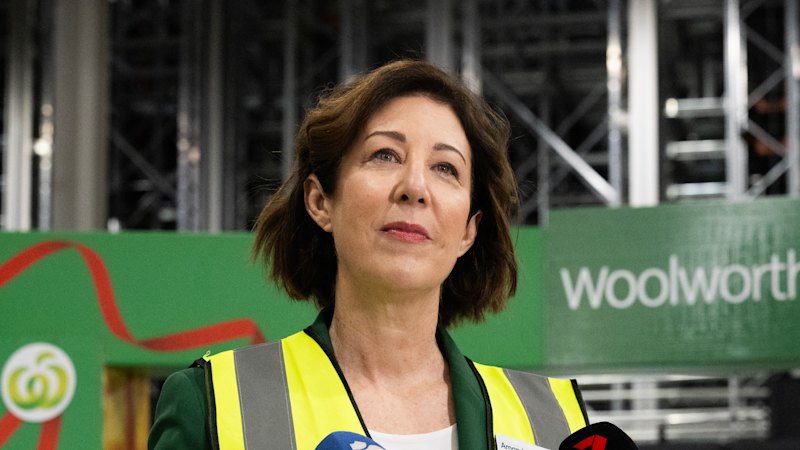
Woolworths chief executive Amanda Bardwell has promised shoppers that Australia’s largest supermarket chain will be more forthcoming about impending price rises that are already flowing into fresh produce, milk, bread and other staples as the fuel crisis drives up inflation across the economy.
Bardwell said the $45.5 billion grocery behemoth would freeze prices on 300 items as part of its efforts to help customers manage price inflation as it was committed to balancing supplier cost pressures with household budgets that are already getting squeezed by the rising cost of living.
“We’ve learned from the last inflation cycle. This time, we’ll be more upfront and transparent with our customers about where prices are rising and why,” Bardwell told reporters on Thursday morning.
Most of the items on the company’s price-freeze list are its Woolworths-branded or private label brands, such as Woolworths’ hot roast chicken, bread, a dozen cage-free eggs, sausages, tissues and toilet paper.
“We’re determined to do what we can to shield customers from higher prices, and that includes absorbing some of the extra costs in our supply chain,” Bardwell said.
Australia faced its last significant inflation burst between 2022 and 2023 when the world was hit with severe supply chain bottlenecks, surging energy and food prices as a result of the Ukraine war and robust consumer demand after the pandemic.
‘We’ve learned from the last inflation cycle. This time, we’ll be more upfront and transparent with our customers about where prices are rising and why.’
Woolworths chief executive Amanda Bardwell
The subsequent surge in grocery prices culminated in public and political fury about price gouging and prompted an investigation by Australia’s consumer watchdog and legal action over allegedly fake discounts that were offered by both Woolworths and Coles, which is still playing out in Federal Court hearings.
As Bardwell detailed Woolworths’ third-quarter sales results on Thursday, the Australian Competition and Consumer Commission was preparing to deliver its closing remarks in a fortnight-long court case against the grocery giant over sales discounts which it claims were fake. The “Prices Dropped” promotional program at the heart of the dispute was quietly discontinued in December 2024.
In a trading update, Woolworths said its supermarket sales rose by 5.9 per cent to $13.8 billion in the three months to April 5. E-commerce sales increased 20.2 per cent compared to the previous year, helping to lift its overall third-quarter sales by 4.5 per cent to $18.1 billion.
The company is subject to a wave of cost increase requests from suppliers who have been hit hard by a double whammy of rising fuel and fertiliser costs, both of which have shot up sharply over the past two months or are in short supply. Woolies expects more such requests in the coming months, Bardwell said.
“We’re still in the very early stages of these impacts, but we expect the pressures to grow,” she said.
“We do expect to see, unfortunately, prices increase in some products and some categories over the next three to six and possibly 12 months.”
Discount department store Big W, which has been a consistently underperforming business for the Woolworths group, grew sales by 4.8 per cent.
Tobacco sales, which has been moving on a downward trajectory as the illicit tobacco market booms, fell by 42 per cent compared to the same period last year.
While Woolworths’ third-quarter sales beat market expectations, investors homed in on the company’s downgrade in Australian food sales predictions, sending its shares down 7.8 per cent.
RBC Capital Markets analyst Michael Toner said the downgrade, which followed an upgrade in February, was “still somewhat surprising … in the context of very strong top-line trends”.
“On this basis, we view the result as soft,” especially given that the shares had run up 27 per cent since the start of the year, he wrote in a note to clients.
Bardwell took over from her predecessor Brad Banducci in February 2024 after he announced his resignation days after a disastrous ABC interview and at the height of the backlash against supermarket giants for their part in driving inflation. Coles and Woolworths both lowered prices to compete more aggressively with Aldi, which prompted Aldi to make its own price cuts.
The Business Briefing newsletter delivers major stories, exclusive coverage and expert opinion. Sign up to get it every weekday morning.


