









A widening gap between tech-driven private efficiency and sluggish public-sector performance is fuelling a global populist surge, according to election strategist Isaac Levido.
The internationally renowned Australian campaign operative, who helped deliver stunning 2019 electoral victories for Boris Johnson in Britain and Scott Morrison, says voters are turning to outsiders because governments are proving slower, costlier, and failing daily.
Getty Images
He said the factors that have placed US President Donald Trump in the White House twice and are prompting voters to flock to Pauline Hanson’s One Nation and Nigel Farage’s Reform UK were often misdiagnosed by the political class and required no “great Einstein-level insight”.
“If I can get a car come and pick me up from Uber in 90 seconds, but I have to wait for nine months for an NHS (National Health Service) appointment, that’s feeling less and less just the way the world is, and more and more like a political choice,” Levido told a forum at the Menzies Research Centre in Sydney.
The London-based co-founder of Fleetwood Strategy said he believed that type of “tech divergence” was sharpening voter expectations and intensifying frustration with government delivery.
“Voters are getting increasingly frustrated and confused why they can see all these massive problems being solved by big private-sector corporations. They are seeing the benefits flow to them, and government seems to be getting worse and getting more expensive.”
“All the things that we deal with in our private lives that are enabled by smartphone … whether it be Uber or food delivery or banking and other things all across the world, all in our lives, every minute of the day, we are experiencing things that just work … and it’s either free or it’s really cheap.”
Levido worked on the 2015 and 2017 UK general election campaigns before establishing up political consulting firm Crosby-Textor’s Washington DC office. He returned to Australia briefly to serve as the Liberal Party’s deputy director from January 2018 to mid-2019.
He argued the current shift in politics throughout the West was often misread as a sudden populist wave rather than the outcome of long-term economic stagnation and declining trust in political leadership.
“I think there is some lazy commentary, both here, in the UK and elsewhere in the Western world, that is trying to grapple with this populist rise, and that they sort of think it’s some exogenous new impact that has come out of nowhere,” he said.
“The reality is that there have been fundamental indicators driven by lived experience that voters in most countries in the Western world … have been very upset and very dissatisfied about.”
At the centre of that dissatisfaction, Levido said, is what he described as a breakdown in the social contract.
“In the UK, wage growth has basically been flat. There’s been no wage growth for the last 16 years,” he said. He pointed to falling disposable incomes in Australia despite overall economic growth.
“Tax take is basically at post-war highs, but the outcome that voters are experiencing … has sort of fallen apart.”
Levido said this was not a new political phenomenon, but its intensity and visibility had increased.
“It’s no great Einstein-level insight that if the economy is not doing very well and a government’s not delivering on stuff, people are going to be upset.”
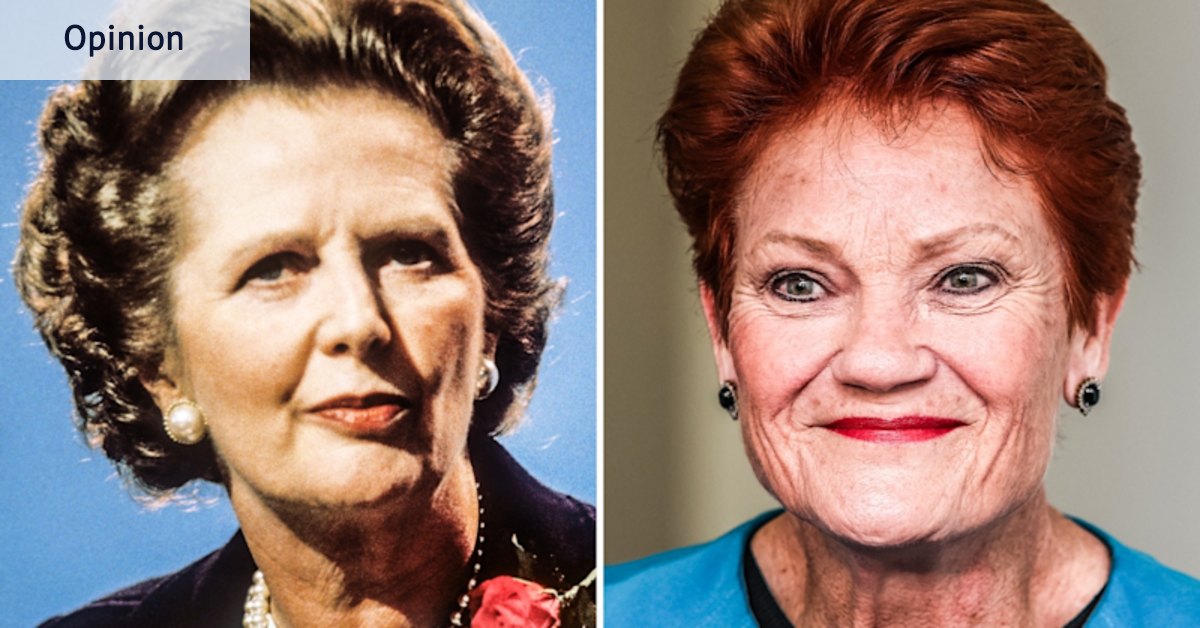
He said Hanson was “not a particularly good communicator” nor “particularly charismatic,” but had maintained support through consistency of position.
“She’s stuck by her guns and staked out very controversial positions, and she hasn’t buckled,” he said.
In a speech on Friday, Prime Minister Anthony Albanese defended his tax agenda, saying curbing negative gearing on housing and slashing the capital gains tax discount showed he was not prepared to wring his hands about “the consequences of a system that isn’t working for people”.
“We can choose whether the social and economic dislocation we see overseas is a warning that we act on or a preview of what is to come,” he said.
Levido said that environment had created fertile ground for parties such as Reform UK – which is polling ahead of Labour and the Conservatives – and One Nation, but cautioned against assuming permanent voter realignment. Instead, he said voters were behaving like consumers switching providers when expectations were not met.
“If that product exchange and the product that I’ve been forced to buy with that tax transaction is no good, like anywhere in my private life, I’m going to go and look for another vendor or another provider.”


