







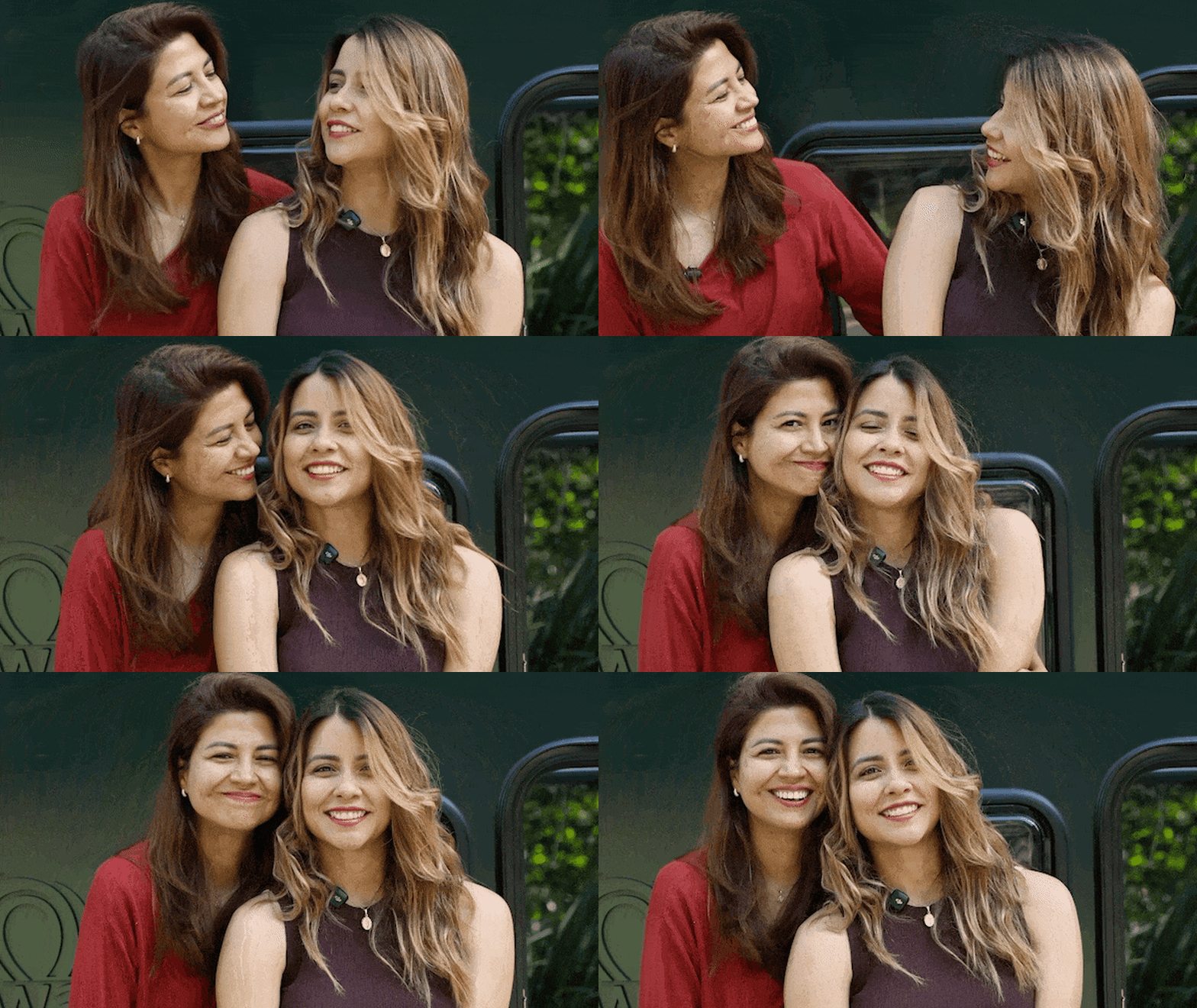
Facing threats after starting a charity for young LGBTQ Peruvians, Marianella (left), 42, and Ana Claudia Casmon, 36, came to Australia in 2018. They’ve since built a life around respect, patience – and teardrop trailers.
Marianella: I met Ana in 2012 at a party in Lima. She was so beautiful I said to a friend of mine, “I’m going to marry that girl!” I flirted with her and we danced and, at the end of the night, I dropped her home. I was expecting a kiss, but she didn’t kiss me. A few days later, we went out to dinner. We were both shy at first, but she made me laugh, which is good because I’m kind of a serious person. We also discovered that we had similar dreams: to travel, to be free, to have adventures. The day after our dinner, she came to my place and, basically, never left.
We both worked in entertainment: I was a TV producer and she worked in music. At the time, I was writing a semi-fictional blog about my relationships. It became very popular and, in 2014, Ana helped me turn it into a TV miniseries, with me as the lead. I soon started receiving lots of messages from women who had been raped or thrown out of their homes for being gay. I related because when I was 17, my dad threw me onto the streets for a year. We set up a charity to help these women, but it was stressful. My car was smashed with rocks and people tried to burn down our office. I took it all onboard, but Ana took care of me. She made me green juices with spinach and every other greenery you can imagine, plus carrots. They were horrible but healthy. I was also smoking too much, and she got me to quit.
At that time, my mum, who had divorced my dad, was living in Sydney. After our offices were attacked, she said, “You can’t go back to Peru.” So we applied for a refugee visa and got it. We arrived in 2018 with $80,000. We bought a kebab caravan at Flemington Market [in inner-west Sydney] – despite the fact we’d never eaten a kebab in our lives. It was a disaster. The other food vendors hated the idea of two Latinas making kebabs. One guy threw a corn cob at my head. We cried, but we didn’t fight. After a few months, we were broke. Ana’s sneakers were sticky-taped together, we constantly smelled of lamb and were covered in burns and cuts from cooking.
One night, we came home late, exhausted. It was Ana’s birthday. She told me to close my eyes. When I opened them, she was holding a wedding ring. She said, “You are the best birthday gift I can have” – and proposed.
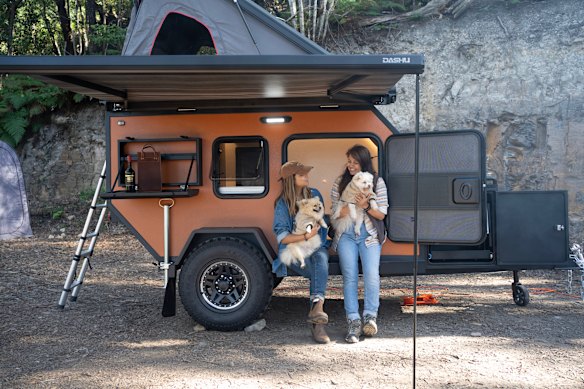
In the end, we sold the food truck and became disability carers. We also started a business together, making high-end, teardrop camping trailers. It hasn’t been easy. I love risk, but Ana has lots of doubt and is a perfectionist. Also, she has no family here. When she gets sad, I try to clown around; I speak in silly accents, but it’s hard because we live and work together. In the past year, we’ve been to therapy three times! We’ve learnt to let things go, and we’ve never given up on each other. We’ve also decided to keep the business small. That way, we can deliver each trailer ourselves, which is what we originally dreamt of: just the two of us, on the road, free to be who we are, together.
Ana: I met Nella at an LGBT party in a pub in Lima in 2012. I wasn’t sexually -attracted to her, but I felt at home with her, which was different to other people I’d met. There was a travel magazine on our table with an old-style teardrop caravan in it, which we’d never seen before. We started talking about how amazing it’d be living free, as gay women, travelling around in a caravan and exploring. We hung out that night, but nothing happened. When she dropped me home, she tried to kiss me, but I didn’t know how to react and we missed each other’s lips, which wasn’t very sexy.
Nella was the first openly lesbian writer in Peru. She wrote about her relationships as a single woman; then, when we began dating, she wrote about us. We began getting messages from lesbians on Facebook and Instagram, hundreds of them every day, saying they loved the stories, but also how they were in danger or wanted to commit suicide. Nella tried to reply to all of them, but it became too much.

We decided to set up a Peruvian arm of the charity It Gets Better, to connect young LGBTQ people with psychologists. It started in 2016 but, in a religious country like Peru, some people were not happy: we got hate mail and rape threats. We had to flee and came to Sydney in 2018. We lived in the garage at Nella’s sister’s place and, eventually, managed to get refugee status. The word “refugee” had a bad feeling for me; I was embarrassed, but I preferred being called that to being dead.
The transition was weird. Unlike in Peru, we could walk holding hands in the street here and no one cared. But old patterns are hard to change: Nella still thought, “What if people see us?” Plus, our English was horrible and everything was expensive, and Marianella can be high-maintenance. She’d buy a chicken for $16 when there was one for $8. We then bought a caravan for making doner kebabs at Flemington Market, but the market was all Lebanese people running Lebanese food businesses. One guy said to me, “Hey, this isn’t tacos!” and threw food at us. In that situation, getting married was the last thing on our minds, but I felt that it was something we needed to do, so I bought a ring. On the night of my 29th birthday, still covered in onions from work, I proposed.
When you’re a refugee, you feel a need to make every day count because you left so much at home. We work together at Iwana, but we have different styles. Marianella sometimes forgets I’m her wife and talks to me like I’m her worker. So we agreed that if you need to say something, sometimes it’s best to send an email. Also, because I don’t have family here, I became dependent on Nella. Recently, she encouraged me to have therapy to help find out who I am as an individual, which helped me grow. That’s why we’re still together. Despite how hard it’s been – no matter if you become a refugee or go broke or people throw corn at you – it doesn’t matter if you have someone like Nella.


