






Opinion


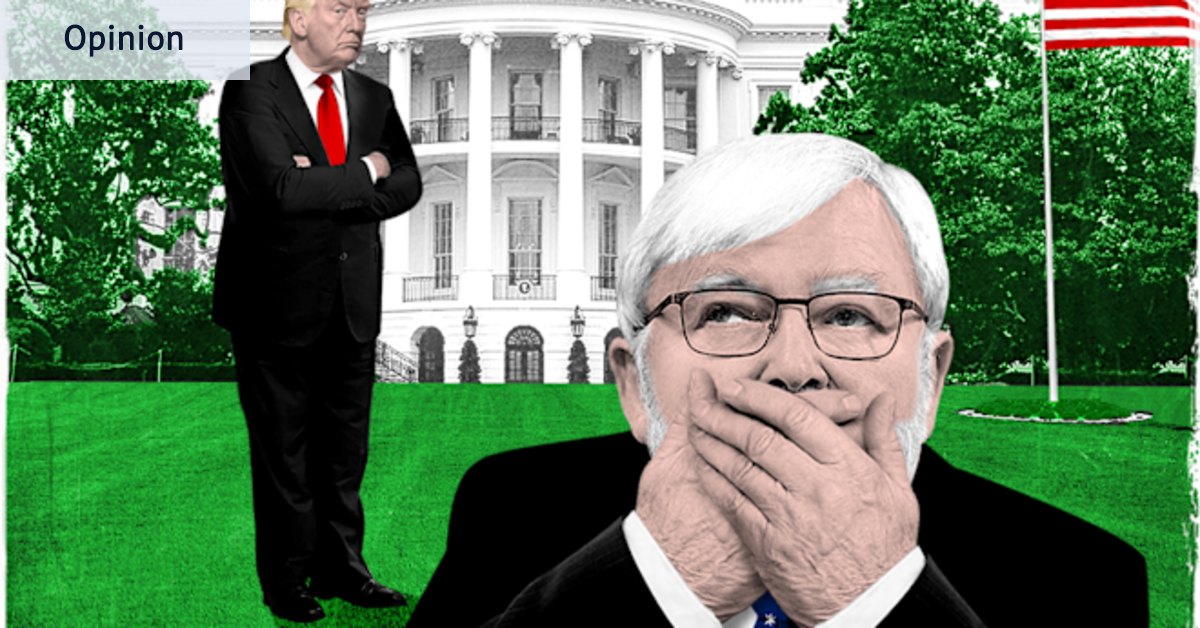
Kevin Rudd’s supposedly great insult to Donald Trump was to call him “a traitor to the West”. An uncomfortable Rudd eventually apologised to Trump in front of the world’s TV cameras.
But he was, of course, exactly right. US presidents spent 75 years painstakingly building and maintaining the NATO alliance. It’s commonly described as the most successful alliance in history.
It excelled in its purpose “to keep the Soviet Union out, the Americans in, and the Germans down”, in the immortal words of its first secretary-general, Britain’s Lord Ismay.
But while NATO defied the Soviet reds, it couldn’t withstand the tangerine titan. Attacked from within, its credibility today is in tatters. With the Americans on the way out, the Russians are testing its borders and the Germans are rearming.
“My absolute priority will be to strengthen Europe as quickly as possible so that, step by step, we can really achieve independence from the USA,” pledged German Chancellor Friedrich Merz. While alienating allies, Trump panders to the dictators of Russia and China.
Now that Rudd has returned to life as a private citizen living in New York, he would be entitled to claim vindication. Offered the opportunity, Rudd replies: “Next question.” And then: “Life’s complex,” he told this masthead, his first Australian interview since leaving government service.
Rudd has learnt restraint, and learnt it the hard way. His brilliance is that he has been so right about many of the great matters of our time. His tragedy is that he alienated some of the very people he most needed in order to fulfil his reformist ambitions.
Most consequential was his prime ministerial alienation of Labor’s faction chiefs.
The result was that the most consistently popular prime minister that Australia has had since the invention of the opinion poll was not only struck down in a lightning coup; he remained so potent in seeking vengeance that Labor systematically denounced him mercilessly in order to destroy him. No political party would defend him and the Murdoch media pursued him.
He told graduating students at the University of Southern California in a commencement address last week that resilience was of central importance in life.
“My most recent record of the last decade has been one not of systematic promotion, but of systematic demotion,” he said. “I’ve done it all in reverse: first prime minister, then foreign minister, then ambassador, now head of a think tank. Maybe my next job will be back in Beijing as first secretary in the embassy where I began 40 years ago.”
This Australian self-deprecation, so rare among alpha Americans, surprises and delights US audiences. It reveals a man fully self-aware and reconciled to his reality. “Life is never smooth,” he counselled.
After his political fall, he moved to New York as Australia’s most high-profile political refugee. Anthony Albanese and Penny Wong, by appointing him to the Washington role, rehabilitated him. Rudd fully grasped the opportunity. He was so effective that Scott Morrison praised him and not even Peter Dutton called for his removal.
Yet, at 68 years of age and after three intense years as Australia’s ambassador to Washington, Rudd’s ambition burns as brightly as ever. And he is, if anything, more ambitious than ever.
In the event, Rudd’s criticism of Trump did not harm his ability to work with the US political system. He navigated the enabling legislation for AUKUS through both houses of the Congress. He was relentless. One Republican congressman told me that Rudd had so conditioned him that, whenever he spotted the ambassador’s silver bouffant moving towards him in a Capitol corridor, he would go into a minor panic as he ran a mental checklist of whether he’d done everything Rudd had demanded for AUKUS.
Rudd managed to negotiate the release of Julian Assange. He was indispensable in setting up new arrangements for US capital to finance Australian rare earths and critical minerals projects. Likewise, he was instrumental in creating an agreement for Australian-US co-operation on tech, including AI.
He created a foundation for Australian superannuation funds to invest in the US with the support of Washington: “This is a big resource, and President Trump, it had a visual effect on him as I handed over to him a simple placemat which described the quantum of our funds relative to the British and Canadian funds and relative to the Saudi and the Emirates sovereign funds.”
The head of the US Studies Centre at Sydney University, Mike Green, formerly a senior Asia expert in the White House of George W. Bush, says that “it wasn’t clear what a former Australian PM would do as ambassador to Washington” – there had never been one.
“It turned out that he was more like a tradie than a prime minister – he rolled up his sleeves, got his hands dirty and got things done, to great effect and to his great credit.” Green puts him in the very top rank of effective Washington ambassadors from any and all countries.
Trump only learnt of his “traitor to the West” remark when it was thrown out by an Australian reporter from Sky News. The reporter hoped that Trump would bristle. He obliged: “I don’t like you, and I probably never will,” he told Rudd at in their celebrated exchange.
But a few minutes later, when the cameras were out of view, Trump and Anthony Albanese had a brief exchange about Rudd. It began with the president asking the prime minister “who is this guy?” and ended with Trump turning to Rudd and saying “all is forgiven”.
And, as we well know, others said worse yet went on to become key members of Trump’s administration after recanting. Vice President JD Vance, no less, once called Trump “America’s Hitler”. Today he is one heartbeat away from replacing him. The only thing Trump likes more than a sycophant is a convert.
The “traitor to the West” line was important only because it allowed Rudd’s enemies and detractors to torment him. His criticisms of Trump, made years earlier, were endless fodder for speculation that his position was untenable.
In truth, it was never in doubt. Albanese was not going to be spooked by malicious whispering campaigns and reporters, some mischievous and others simply gullible, looking for a yarn. Yet they persist. The rumour that Albanese sacked Rudd is false; in truth, he approached Albanese to allow him to return to his post at the Asia Society in New York before the option expired.
And he rejects the speculation that he’s scheming to become the UN secretary-general. Under the geographic rules of rotation for the job, it won’t become available to the “Europe and others” category for decades, he points out.
So what is his burning ambition? “I’m seeking – to the extent that I can, I don’t overestimate this – to have an influence on US-China strategy, from both the US side and the Chinese side. Because what’s my galvanising interest here? I don’t want us to end up in a crisis, conflict and war over Taiwan. If you like, I’ve worked on this for decades.” Such a war would be “unbelievably catastrophic”.
But isn’t it delusional that an Australian running a think tank in New York – the Asia Society and its affiliated Asia Society Policy Institute – could change the course of history?
Rudd has a couple of advantages. One is that he is, as Mike Green points out, “a world-class expert on Chinese ideology and policy”. His views on China are keenly sought in the US. Indeed, he probably commands more respect in the US than he does in his homeland.
His televised White House encounter with Trump was not their first meeting. In January last year, Rudd was lunching at Trump’s West Palm Beach golf club with Chris Ruddy, a longstanding Trump friend and the founder of the right-wing US media group NewsMax.
When the president-elect entered the grill, Ruddy (no relation) introduced Rudd as former prime minister of Australia and an expert on China. It was a brief exchange, maybe 15 minutes in duration, but Trump used the opportunity to pepper Rudd with questions about China and Xi Jinping. He evidently didn’t recognise the Australian when Rudd arrived with Albanese nine months later.
The point is that America’s thirst for China expertise is real, Rudd’s credentials are recognised, and he doesn’t intend to harm his potential future influence by claiming vindication of his criticism that Trump is a “traitor to the West”. Even if he was dead right.
Rudd intends to live in Australia again some day. But, for now, he’s following the advice that his wife, Therese, likes to dispense. Rudd relayed it to the fresh-faced graduates in California last week: “Whatever gives you the most joy in life, that is what you are going to be best at. And we are all wired differently.”
Rudd doesn’t intend to fade into obscurity or go into political lobbying. He is turning his inexhaustible energy to the grandest ambition in the greatest of causes. It gives him joy. It’s not for everyone.
Peter Hartcher is political and international editor. He writes a world column each Tuesday.
Get a weekly wrap of views that will challenge, champion and inform your own. Sign up for our Opinion newsletter.


