


Last year, or perhaps the year before, I heard on the radio someone in the police hierarchy talking about the increasing lack of respect he had observed between people sharing the roads. Drivers weren’t as careful around pedestrians. Pedestrians weren’t paying attention to cars. Cyclists and motorcyclists may have got a mention, too.
The point stayed with me – perhaps because, around that time, I twice watched as a car drove through a red light when, as a pedestrian, it was my right of way. Both times I was shocked; once, because my partner and my son were with me, I was furious.
The anger was justified, I feel – if hypocritical, because I, too, have made my share of driving mistakes, including one that resulted in a penalty, I think not too long after those experiences. I was shocked at myself – ashamed. But it makes sense that I, too, am part of the problem. Most of us are not only drivers or only pedestrians. Sometimes we are one, sometimes the other.
It follows that the lack of respect the policeman mentioned is general rather than tribal. It is not that drivers hate pedestrians or vice versa. There is a broader lack of care: a turning inwards or away. A not-looking-properly, in every sense.
Thankfully, the opposite stubbornly persists. A week ago, the grandmother of one of my son’s friends came by to pick him up. She brought treats from her garden: basil, tomatoes, chillies. I thought of a passage I had read not long before: German novelist Jenny Erpenbeck describing a neighbour who “would always carry something in her hands when she came to visit me – a head of lettuce, or two or three apples, or some mushrooms, or a plate of cakes”. This was so alien to me – and yet here, within a day or two of reading about it, was someone doing just that.
Mostly, though, I felt the exception proved the rule, reminding me of what we used to have. What did we used to have, then? Was it something less closed, more human?
The way most politicians have talked, recently, about the Australians in Syria, particularly the children, has been shocking. Angus Taylor was asked about his labelling of those Australians as “ISIS sympathisers” – did he mean the children too? His response: “They are ISIS sympathisers.” One of his frontbenchers used this phrase: “so-called children”. Anthony Albanese, while expressing sympathy for the kids, said it was their parents’ choice to take them: “you make your bed, you lie in it”.
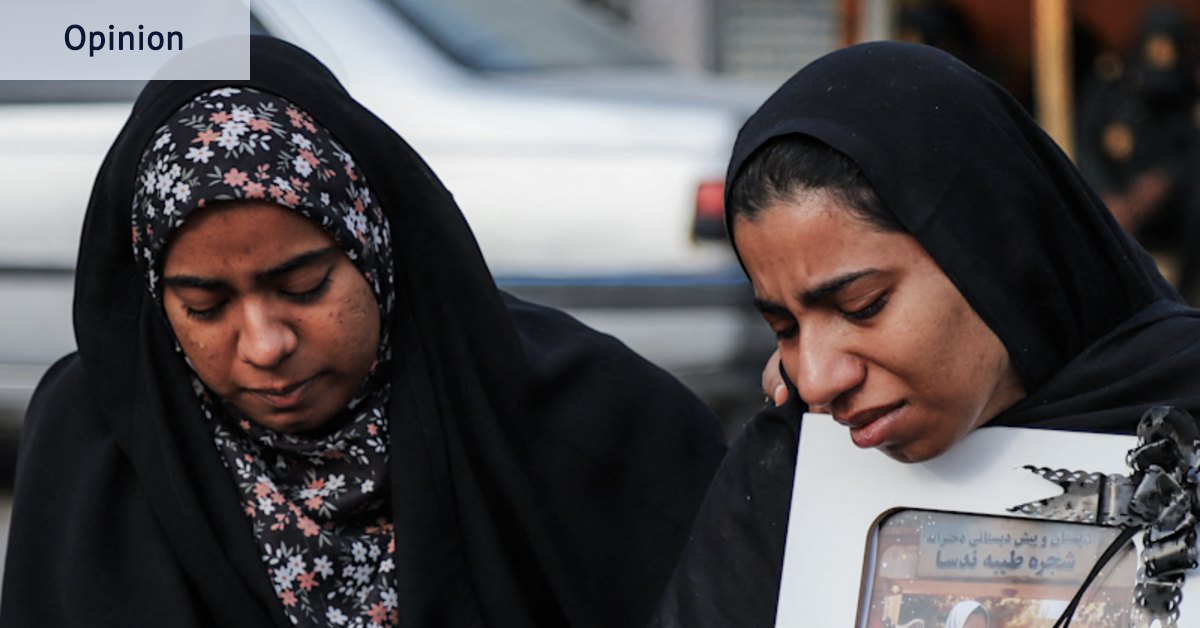
While this depressing discussion continued, the United States and Israel attacked Iran. Early in those attacks, a primary school was bombed. About 170 people died. Many were girls aged between seven and 12. Nobody has claimed responsibility, though The New York Times has reported the US seems likely to have been responsible.
In all the commentary about Australia’s rapid decision to support the attack on Iran, those girls have hardly figured.
The issue of the attacks generally is not a simple matter. The Iranian regime was horrific: it killed thousands upon thousands of its own citizens. I do not know what the answer was in Iran. But one of the experiences of getting older is realising you have seen things before. I know that the United States has often, in the past, not had enough of a plan for the future of a nation that it attacks. I know, too, that Donald Trump seems, of all recent American leaders, the least likely to have a plan.
Mostly, though, amid all this discussion of geopolitical and moral arithmetic, I worry that we lose sight of people. Very quickly, they are abstracted away by the need to make a case.
Given recent years, this is unsurprising. In Ukraine, in Hamas’ massacre of Israelis, in Israel’s sustained killing of the people of Gaza, we have watched as murder, including the murder of children, becomes a daily fact to be expected. We have watched as Trump told lies about the murder of Americans by ICE. We have seen Jewish Australians murdered, then turned immediately to the purposes of political debate.
I have in mind Norwegian novelist Karl Ove Knausgaard writing of the 2011 massacre by Anders Breivik: of finding a way to see those events so “that day becomes something concrete, not a phenomenon, not an affair, not an argument in a political discussion but a dead body bent over a stone at the water’s edge”.
How did Breivik manage to kill? By lowering his eyes, Knausgaard answers. “The most powerful human forces are found in the meeting of the face and the gaze. Only there do we exist for one another.” When we lower our eyes, he writes, a distance opens up, the other disappears.
When social media first arose, we all remarked on how dehumanising it was, as people began to speak not directly to each other but via the mediation of computers. Now we are moving into a new era, as many people begin to conduct both their most frequent and most intimate conversations not through the mediation of computers but directly with them. This is occurring within an economic system that many are coming to distrust, even detest, for the way it treats them as something other than people.
These are large and embarrassing things to talk about. We tend to discuss the rise of One Nation with labels that feel familiar: inequality and racism. We have more difficulty discussing the larger changes in our culture as they might relate to politics: the fact we have all learnt to distance ourselves from others, to stop feeling certain ways about certain things.
That affects politics – but it affects us, too. As Stan Grant recently wrote, of the danger of treating people “as mere points to be made”: “If we cannot recognise the soul of another, we sacrifice our souls.”
Again, that need to look: to see others properly. Perhaps it is that ability that we used to have. To get it back, we must learn again to raise our gaze: in both our lives and our politics, which after all are never really separate.
Sean Kelly is author of The Game: A Portrait of Scott Morrison, a regular columnist and a former adviser to Julia Gillard and Kevin Rudd.
Get a weekly wrap of views that will challenge, champion and inform your own. Sign up for our Opinion newsletter.
 Sean Kelly is author of The Game: A Portrait of Scott Morrison, a regular columnist and a former adviser to Julia Gillard and Kevin Rudd.Connect via X.