


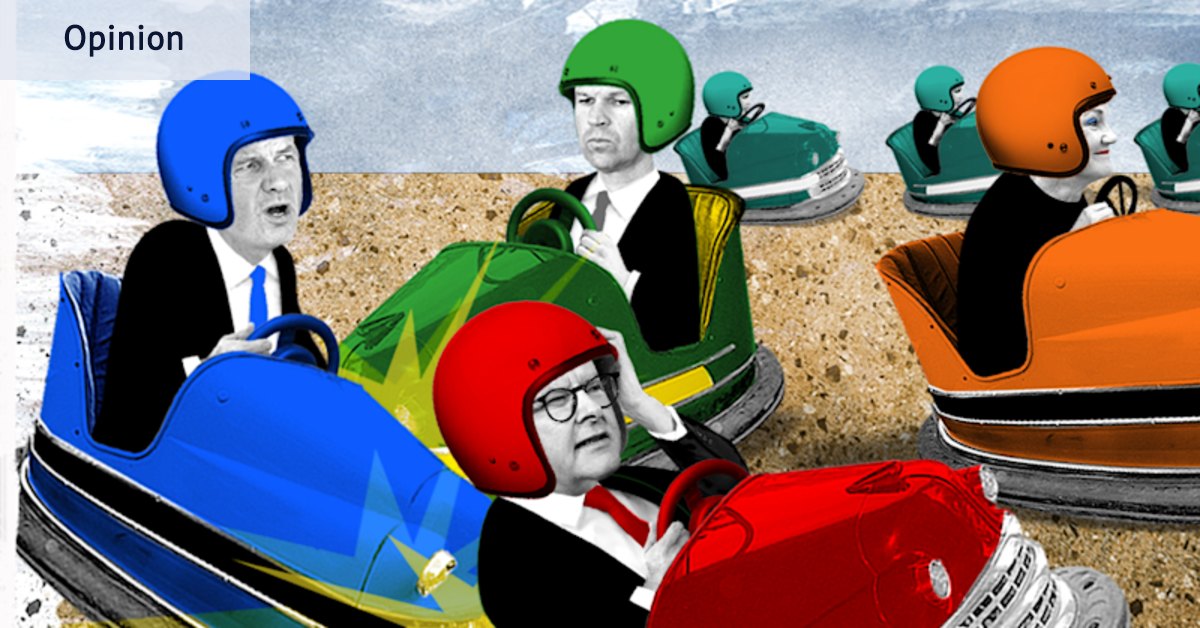
A tune that has bobbed up from time to time going all the way back to the mid-’90s is now on high rotation, bigger, louder and impossible to avoid. With apologies to Rodgers and Hammerstein, How Do You Solve a Problem Like Pauline? began as a novelty ditty but in its new form is closer to a death metal banger. At least, that’s what it sounds like to anyone with any sense inside the Liberal and National parties. After all, the rampant Pauline Hanson, with her fellow political careerist Barnaby Joyce by her side, is attracting ever more numbers of Coalition supporters into her column. Labor Party listeners should be finding the song disturbing too.
In short, the surge by an ever-increasing number of voters in the direction of One Nation marks the collapse of the Labor-versus Coalition arrangement that has operated federally since the 1920s. In much of the discussion since the South Australian election, which proved the polls had been right to show One Nation doing better than the Liberals, there remains a sense that it is merely a situation to be managed. Surely the adoption of some Hansonist rhetoric, a few borrowed and slightly diluted policies, and maybe some preference swaps, can get things back to the way they used to be so that the old verities can be reinstated.
I don’t think so: those verities are gone and won’t be coming back any time soon – if ever. It took decades of intentional deafness, unintentional cluelessness and ideological pigheadedness to bring about this situation. For 30 years, the established parties have let too many people down on affordable and available housing; appropriate, inexpensive and satisfactory education; secure employment and the ability to bargain for better incomes; quality of life and access to services, especially low-cost or free health services; and, generally, the maintenance of a sense of hope and the ability to feel comfortable within society.
Given how long it took for these fundamental problems to embed themselves in the lives of millions of Australians, it seems pretty rum – or deluded – to expect to be able to reverse or wash away such high levels of disillusionment inside a short time frame; the inequities for people in blue-collar outer suburbs, the regions and the bush are baked in.
The South Australian election was basically a Petri dish for the modern political environment because of its particular circumstances. Most South Australians were satisfied with the performance of the Malinauskas government. Having served just one term, it was far from having run out of puff. By any definition, Peter Malinauskas was highly popular. And yet, the Labor Party could muster a primary vote of only 37.5 per cent. The Liberals as the official opposition couldn’t muster even 19 per cent, and Pauline Hanson’s One Nation – note the cult of personality, that is its official title – attracted a healthier 23 per cent. At the previous election, it had won 2.6 per cent.
Close enough to one in four voters rejected orthodox politics. The easy take is to see the surging support for One Nation purely as a form of protest, but it is more than that. For sure, protest is part of it but in practice it amounts to a “blow it all up, start again and let’s go back to the way things used to be” vote. Where we direct our vote is obviously a political choice, but it can also involve a moral choice. In shifting to the One Nation cause, each voter has to negotiate a series of attitudinal lines relating to Hanson’s stated positions on First Nations people, Asians, those of the Muslim faith, Donald Trump, and the general presence of immigrants in Australian society and whether they should be shipped back to where they came from.
But for many those considerations appear to be subordinate to Hanson’s inchoate message, which is that the modern economy leaves too many behind the rest, especially smarties with their university degrees and expensive houses only they can afford to buy. Consider how far from the fringe One Nation has travelled. A widespread populist, nativist political uprising is here and is getting close to being able to make or break governments at the state and federal levels.
The price of housing stands as the ultimate failure of politics in this century. It never made any sense to assume that housing prices could keep rising well beyond inflation and real wages. Once interest rates started to go up, that was the end of the show. Who was out there sounding the alarm about this? The ALP at the 2016 election and again in 2019 sought to grandfather the generous tax treatment of property – a step forward but not a whole solution – but lost both times and abandoned the approach. Now, four years into office, it’s said to be looking at having another go in next month’s budget. Expect the opposition to promise to reverse any changes. That is politics-as-usual in action: a blend of unresponsiveness, sloth and wilful blindness.
The major parties – we will probably have to drop that nomenclature – can only blame themselves for their predicament. In the five electoral terms between 2007 and 2022, with Labor in office for six years and the Coalition for nine, the country had five changes of prime minister. Little wonder that there was so little active monitoring of the effects of policy and the economic distortions across the country; all too frequently, squabbling and self-advancement were the preoccupations. The professionalised politics that has become the norm has a lot to answer for.
Federal Labor’s incumbency is right now protecting most of its vote. Because it can disperse funds across the community, it has at least the opportunity to maintain favour with the widest number of voters. But elsewhere Labor will have its reckoning with the Hanson juggernaut on the last Saturday in November when the fantastically unloved Labor government in Victoria seeks a fourth consecutive term. Imagine that: Hanson and her agents in Victoria determining the shape and nature of the government in Australia’s biggest leftie state. It could happen. That’s what things have come to.
Shaun Carney is a regular columnist, an author and former associate editor of The Age.
The Opinion newsletter is a weekly wrap of views that will challenge, champion and inform your own. Sign up here.
 Shaun Carney is a regular columnist, an author and former associate editor of The Age.