


However, the Victorian Chamber of Commerce and Industry said the state must move quickly to exploit the critical minerals and rare earths that could help drive decarbonisation across the globe. Achieving net-zero targets will require mining six times more minerals by 2040 than what was produced in 2020, according to the International Energy Agency.
“The opportunity remains for Victoria to do more than ‘dig and ship’,” the chamber said. “With its advanced manufacturing … regional Victoria can become the hub for value-adding capability in critical minerals”.
Under the deal, Australia and the US will each contribute $1 billion over the next six months into rare-earths projects that are immediately available, and fast-track project approvals.
The Australia-US agreement is designed to weaken China’s domination of critical minerals and ensure both countries have access to the rare elements that are essential for renewable energy, electric vehicles and the manufacturing of advanced technologies, such as artificial intelligence. China recently cracked down on exports of rare-earth materials and magnets.

Donald Trump and Anthony Albanese meet in the White House.Credit: Prime Minister’s Office
Amir Razmjou, associate professor at Edith Cowan University, said Western Australia, Queensland and South Australia had the most to gain from the deal, followed by Victoria.
“This is huge for Australia,” he said. “The idea is to do mineral processing in-house in Australia. This will bring a lot of jobs and diversify our export base. It won’t create conflict between farmers and the mining sector, it’ll add more value to our resources.”
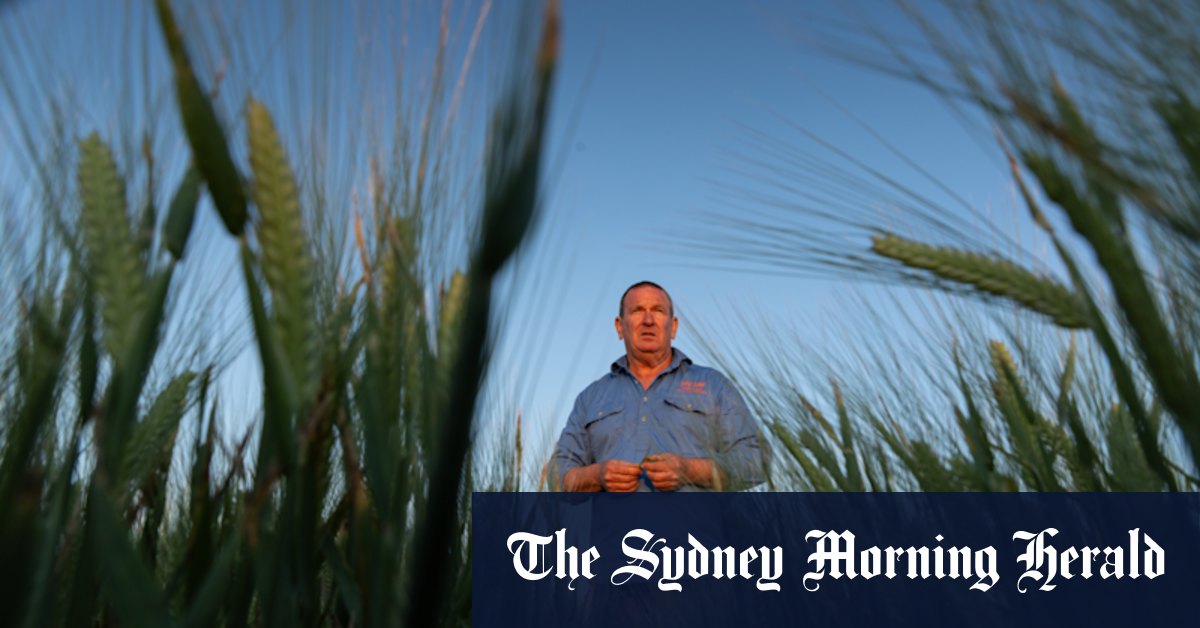
Grain farmer Tony Fox has a property near Swan Hill, about 300 kilometres north-west of Melbourne, where small listed company VHM wants to build a rare earth and mineral sands project. Shares in critical mineral companies including VHM surged after the announcement of the deal on Tuesday.
“Rare earths need to be found, but digging up prime agricultural land is ludicrous,” said Fox, who grows wheat, barley, peas and lentils.
He said there’d been talk of rare earth mining for the past six to eight years, but it had gathered pace lately.
Fox is concerned about dust on his property from the 24-hour facility, as well as the possibility of contamination.
“These are radioactive products that they’re talking about shipping out. And while they’re 40 metres down, they’re relatively safe. But the contamination potential is a real challenge.”
Mining industry veteran Chris Bevan welcomed the deal and raised hopes Australia would swap “selling its dirt” overseas to turning out end products within a decade.
Bevan heads up Metallicum Minerals Group which plans to build Australia’s first magnet-manufacturing facilities, which is the final step of rare earth processing.

Arafura Rare Earths CEO Darryl Cuzzubbo at the Diggers and Dealers event.
Currently, Australia holds the world’s second-largest resource of rare earths, but they are shipped to Shanghai for processing. Bevan said building local magnet-manufacturing facilities would guarantee that China could not block Australia’s access to critical minerals.
Loading
“Instead of making our living selling shiploads of iron ore, bauxite, nickel, copper, ore and so on, we do it here, making some of the smaller stuff, like drone magnets, solar panel magnets, some of the smaller car magnets,” Bevan said.
“It’s all about having an entire supply chain in Australia and having all the processing, intellectual property, skills in Australia so that in 10 years’ time, we have amongst the highest-paid people in the world.”
The Australian government defines critical minerals as “essential to modern and advanced technologies, including computers, heavy industry, defence, and renewable energy”.
Its list of 31 critical minerals include antimony (used in solar panels), cobalt and lithium (used in EV batteries) and silicon (used in computing chips).
Australia is in the early stages of growing its critical minerals sector, the federal government said. “While exploration and mining continue to grow, mid-stream processing and down-stream manufacturing are not yet developed. Agreements with international partners may help ensure stable supply chains internationally.”
Australia has also signed critical minerals deals with Canada, the UK, Japan, India and Germany.
Cut through the noise of federal politics with news, views and expert analysis. Subscribers can sign up to our weekly Inside Politics newsletter.
