









As far as first days go, Nick Bilton’s debut at the American television juggernaut 60 Minutes was a doozy.
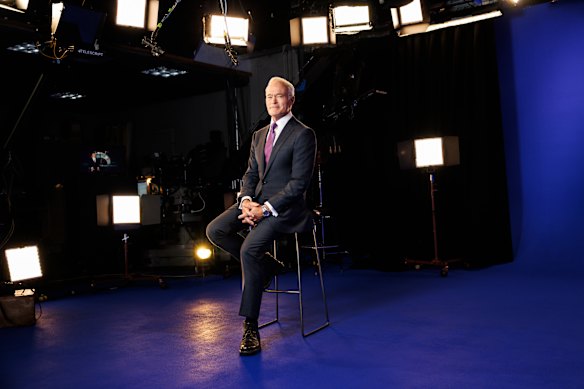
Bilton, a technology journalist, filmmaker and newly installed executive producer of the 57-year-old program, gathered staff for a meeting in New York City on Monday to talk over his plans for the show and its roster of high-profile reporters. What was meant to be a polite meet-and-greet soon turned to disaster.
60 Minutes star Scott Pelley – the equivalent of a Ray Martin, Leigh Sales, Jana Wendt or Sarah Ferguson in Australian media terms – unleashed on his new boss, saying he had “slender” qualifications for the job and blasting earlier decisions by the CBS network to fire Bilton’s predecessor and two presenters.

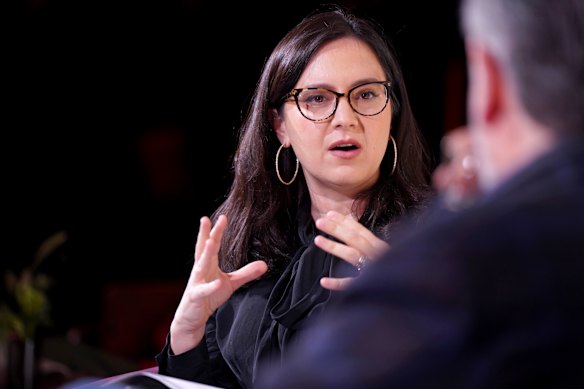
His most devastating critique was reserved for Bari Weiss, the polarising editor-in-chief of CBS, who critics claim is doing the bidding of US President Donald Trump and his billionaire media mogul mates. Weiss, Pelley said according to a leaked audio recording, was “murdering 60 Minutes”.
“She does not love this place. She was brought in to kill it and is doing exactly that.”
Bilton was having none of it. “I have no problem taking a job in a place that I am not welcome in,” he shot back. “I have been a journalist for 25 years, Scott. I’ve sat across from incredibly powerful people like you have, and none of it intimidates me. OK? So you are not going to intimidate me in front of this group of people.”
The implosion of 60 Minutes is huge news in America. To some, it is a story of messy cultural change in a stuffy legacy media organisation stacked with precious, self-aggrandising on-air talent. Others believe it represents something more sinister: a media landscape increasingly bending and compromising to placate a vindictive White House.
Weiss and Bilton are kindred spirits, sharing similar perspectives on the problems with legacy media and how to secure the industry’s future. Weiss, who quit The New York Times in 2020 citing bullying by colleagues and a newsroom too fixated on “woke” ideology (among other criticisms), was appointed to the powerful role last year by billionaire media tech mogul David Ellison.
Ellison’s father, Oracle magnate Larry Ellison, last year briefly surpassed Elon Musk for the title of world’s richest person with a fortune of $US393 billion ($551 billion), and is a close friend of Trump.
Less than two days after that fiery staff meeting, Pelley’s contract was terminated. In a letter delivering the news, Bilton wrote to Pelley: “You hijacked my first meeting with staff to disparage me, my qualifications, and my intentions with remarkable incivility and contempt.” Monday’s outburst was a “performative display of hostility” that proved Pelley had “no interest” in the show’s future success.
Pelley is not backing down. On his way out, he lobbed more grenades, claiming new management had instructed him to inject falsehoods and bias into a politically sensitive story, without offering evidence to support the assertion. He also complained that politicians had recently been invited to choose which correspondents they would like to be interviewed by. “Giving politicians control over 60 Minutes interviews is not how this is done,” he said.
The remarks were widely interpreted as a dig at the decision in May to bypass veteran correspondent Lesley Stahl for an interview with Israeli Prime Minister Benjamin Netanyahu.
Finally, he said the American television institution was now at the mercy of Trump after CBS’s parent company Paramount was purchased by the Ellisons’ Skydance Media corporation last year. “The new owner of our network is casting this legend aside, apparently to curry a moment of favour with the Trump administration,” said Pelley, who has been at CBS since 1989. “The waste is heartbreaking.”
In an era of declining television audiences and advertising revenues, 60 Minutes has been holding its own. It is both a ratings winner, averaging 9.1 million viewers a week, and a cash cow, with reported annual advertising revenue of somewhere between $US67.5 million and $US80 million.
Its protectors say 60 Minutes’ success means it should be a long way down the to-do list at CBS, which, like all networks around the globe – including in Australia – is battling to stay ahead of rapid technological, cultural and commercial change.
Before Monday’s calamitous staff meeting, Bilton sent a memo to staff saying it was his duty as the show’s new executive producer to push ahead with change, and to disrupt the program for the digital era while it is strong, not struggling.
“I’m here to lead this show, not preserve it under glass,” he said. “That means honouring what works and being honest about what doesn’t. I have a notebook full of ideas.” Viewers, he said, were now stalked by algorithms that they wake up to and go to sleep to.
“Between AI rewriting how information is made and everyone with a phone calling themselves a media company, this is the most precarious moment for journalism and society I have ever seen. There was a time I would have written the story about what happens to television news next. Instead, I am here to make sure that story doesn’t get written about us. That is why Bari hired me. Evolving or dying isn’t a threat. It’s simple math.”
The memo contained some home truths about the state of media, but landed badly with staff and contributed to the tensions that exploded at Monday’s newsroom showdown.
Suspicion about Weiss and her team had been brewing for a week following the ousting late last month of 60 Minutes’ executive producer Tanya Simon, reporters Sharyn Alfonsi and Cecilia Vega, and other editorial team members. Weiss was the architect of the bloodbath, which came to be known within CBS as “Black Thursday”.
Weiss divides opinions in American media because, unlike some other editors and reporters, her place on the ideological spectrum is hard to pin down.
Charming and intelligent, she is far more contrarian than conservative. She is no fan of MAGA leaders, but detests elements of the progressive left agenda. She has previously described herself as “politically homeless”, among other labels.
Former CNN president Jeff Zucker once said the 42-year-old is “just unafraid, and I think that confidence scares a lot of people”.
A staunch Zionist, she is married to journalist Nellie Bowles. After leaving The New York Times, Weiss and Bowles established The Free Press, an opinion website built on the ideals “that once were the bedrock of great American journalism: honesty, doggedness, and fierce independence”. The endeavour became such a hit with subscribers that Paramount bought it for $US150 million last year. The Ellisons promptly installed Weiss as editor-in-chief of CBS.
The empire-building Ellisons are now in the process of buying Warner Bros. Discovery. The deal would bring CNN – a news channel frequently critical of Trump and his administration – under their control. The drama at CBS has set off alarm bells for journalists who think the upheaval in New York is a taste of things to come at CNN’s Atlanta headquarters.
Trump looms large over these and other media mergers because the deals require approval from a string of government agencies. The chairman of the Federal Communications Commission, Brendan Carr, is a pal of Trump and critic of several media identities, outlets and programs. Carr has vowed to block media and telecommunication mergers if companies like Disney and Paramount don’t axe their diversity, equity and inclusion policies – a pet hate of the Trump administration.
An avid TV viewer, the president is notoriously sensitive to criticism. He has previously labelled 60 Minutes’ reporters “cheaters”, called for the program’s termination and demanded CBS lose its broadcasting licence. Getting him offside can cause serious harm to a billionaire mogul’s bottom line – and they know it.
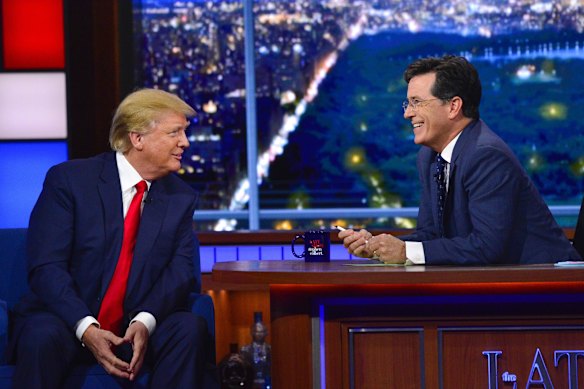
The cancellation of The Late Show with Stephen Colbert one day after its host criticised a decision by Paramount to settle a lawsuit with Trump for $US16 million renewed fears about a broader silencing of dissent in America. Trump had accused the show of deceptively editing an interview with the then-Democratic presidential candidate Kamala Harris, claiming it interfered with the election.
At the time the storied late night show was axed, the Ellisons were seeking federal approval to merge their Skydance Media company with Paramount. Colbert told Trump to “go f—” himself and said the settlement was a “big fat bribe”.
Whether the political impact of these super mergers is making its way down to Weiss’ decision-making is an open question. Critics say it’s a no-brainer. Her supporters say the idea she would be doing what she can to help Trump and his friends is preposterous. The Herald sought comment from Weiss.
There are likely one of four scenarios playing out. Scenario one: Weiss and her new team are what CBS needs, but are encountering misguided resistance to change. Two: Weiss and others are well-intentioned but out of their depth and making poor decisions. Three: the new management is indeed reshaping the company to respond to their corporate overlords and Trump. Or, four: a combination of all of the above.
Respected CNN media analyst Brian Stelter this week said there had been many “self-inflicted wounds” at CBS since the new broom swept in. He said it was management’s view that 60 Minutes was valuable but archaic, and that some staffers, including the 68-year-old Pelley, were “stubborn and sanctimonious”.
“Most TV news veterans believe that even if Weiss has the right instincts and is trying to do the right things, she has gone about it the wrong way,” Stelter said.
But Bill Owens, a former executive producer of 60 Minutes, said in a speech that Pelley “can smell fraud a mile away”. Owens resigned last year – well before Weiss took over at CBS – claiming he had lost editorial independence.
“It’s a pity, because CBS News and 60 Minutes are institutions, not places where partisans and ideologues should be employed.”
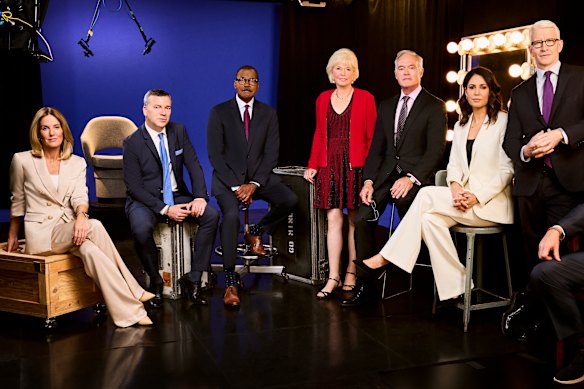
When the new season of 60 Minutes returns in September, just three of seven correspondents who featured in the prior season will appear; Anderson Cooper quit the show this year, and Sharyn Alfonsi, Cecilia Vega and Pelley were fired over the past fortnight. Just Lesley Stahl, Bill Whitaker and Jon Wertheim remain. There is now huge pressure on Weiss and Bilton to rebuild the show and prove this week’s turmoil will have been worth the pain.
Steve Kroft, a legendary American reporter who spent three decades at 60 Minutes, told PBS this week that Paramount’s primary objective has been clearing a path for its various mergers. He said the upheaval at 60 Minutes had been “disastrous”.
“I think that this is journalistic interference,” he said of recent firings and other decisions.
“It makes no business sense whatsoever. The show is still doing very well; it’s the highest-rated news program on television, and it has been that way for more than 50 years.
“Why would you mess with that?”
Get a note direct from our foreign correspondents on what’s making headlines around the world. Sign up for the weekly What in the World newsletter here.


