









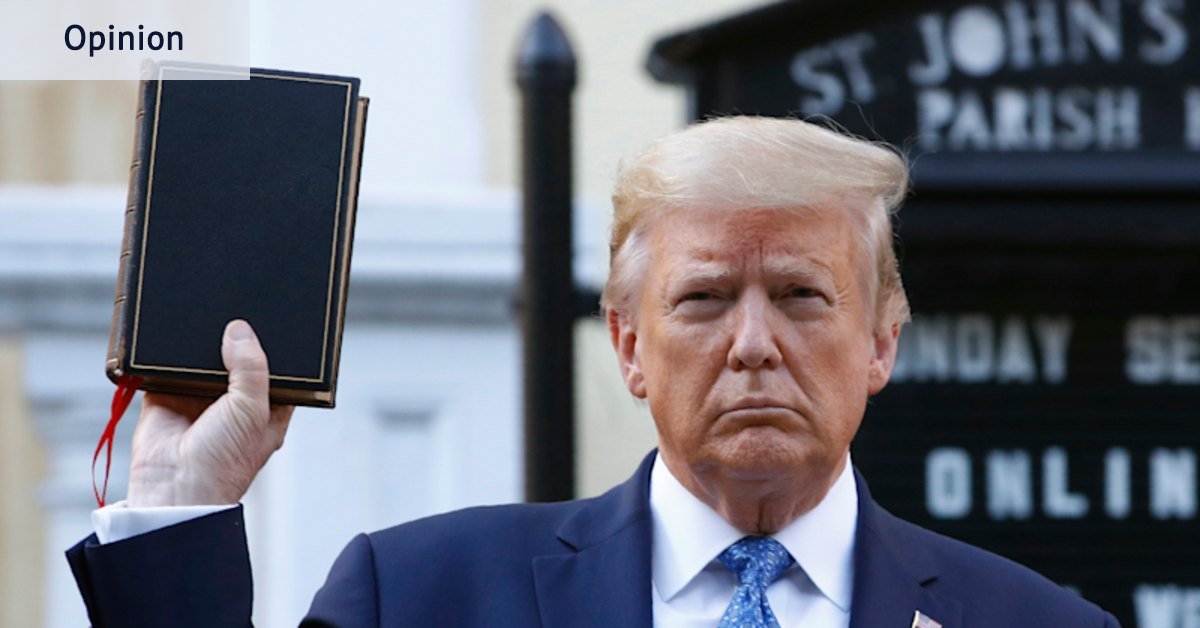
What’s notable about this administration is how widely the religious deficit extends. When the Trump administration slashed foreign aid programs that often reflected an explicitly Christian humanitarianism, some religious conservatives welcomed or made their peace with the cuts. But with the exception of the transgender issue, more “right wing”-coded religious priorities have also received little attention from this administration.
It has conspicuously kept the antiabortion movement at arm’s length. It has offered at best symbolic moves toward the regulation of spreading vices (pornography, drugs, gambling) that evangelical Christianity especially once vigorously opposed. Nor has it yet offered serious responses to the newer religious concern over falling birthrates.

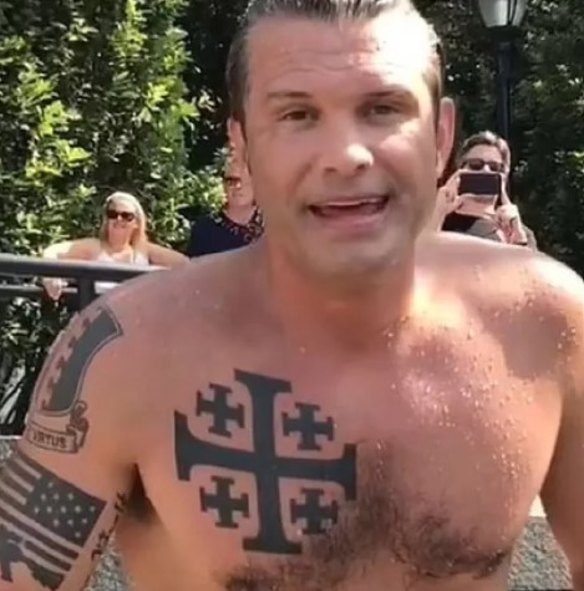
Pete Hegseth’s Jerusalem Cross tattoo, one of a number of tattoos and religious tattoos sported by the defence secretary.Credit: Instagram
And it has done little to address growing Christian anxieties about the dehumanising effects of an artificial intelligence future. If the right’s coalition is divided between an AI-boosting donor class and a potentially AI-sceptical base (which has Steve Bannon as its would-be spokesperson), the Trump administration has strongly favoured the side that wants to build the Machine God.
The administration has offered a lot of general rhetoric about the value of Christianity to American civilisation, along with presidential complaints about Christian persecution overseas and pious social media posts on Catholic holidays. But in the absence of religious-informed policymaking, this sometimes feels more like a performance of a Christian politics than a full reality.
In offering this analysis, I should stress that sincerely Christian policymaking can go badly astray (where the Middle East is concerned, I prefer Donald Trump’s pagan transactionalism to George W. Bush’s evangelical idealism) or simply prove unpopular (I don’t imagine that a war on porn would dramatically improve Trump’s approval ratings).
And sometimes the Trump administration’s not especially religious priorities simply reflect what its supporters want. The right’s coalition is more secular than in the past, and even many churchgoing conservatives seem more concerned about immigration than abortion. Many very-online converts are more invested in meme wars than morals legislation. And religious fears about AI are inchoate: There isn’t some clear “trad” alternative to outracing the Chinese.
Loading
Nonetheless, I think a more Christian politics could serve the White House on three fronts. In policymaking, a Christian social vision would help the administration come to grips with the central social problem of our time, the substitution of transient hedonic vices for permanent commitments. In politics, a public rhetoric infused with more Christian charity might win an increasingly unpopular administration some badly needed friends.
And morally, in certain concrete cases — from the treatment of the detainees we shipped to a Salvadoran prison to the fate of alleged drug runners our missiles might have left helpless in the sea — a little more Christianity in its nationalism might simply prevent this administration from doing wicked things.
This article originally appeared in The New York Times.
The Opinion newsletter is a weekly wrap of views that will challenge, champion and inform your own. Sign up here.


