



Defence Minister Richard Marles may not want to admit it, but the Trump administration’s badgering of allies to spend more on the military has changed the way the Australian government is calculating defence spending.
But while the US president can take responsibility for the government fiddling with spending figures, he cannot claim credit for pressuring Australia to inject $53 billion more into defence over the next decade.
Two years ago, Marles stood at the National Press Club and proudly declared that Australia would spend “around 2.4 per cent” of gross domestic product on defence by 2033.
Speaking at the same venue on Thursday, Marles said the nation would now spend almost 3 per cent of GDP on defence by 2033. Those figures may not sound wildly different, but, in the context of the entire economy, it is a giant discrepancy.
The reason for the difference is that the government has adopted the North American Treaty Organisation’s definition of defence spending to compare Australia to like-minded nations in Europe and North America. The NATO method includes spending on veteran pensions, defence housing, intelligence and other areas not covered by the Defence Department, explaining why it looks more generous than the traditional Australian formula.
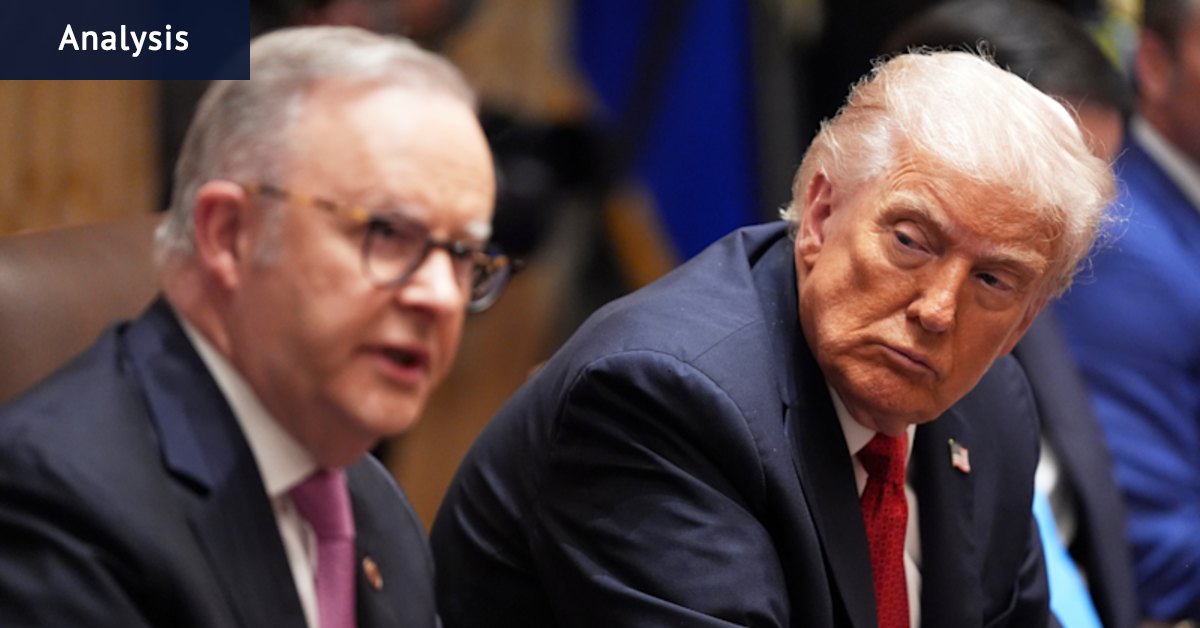
Trump himself appeared blase about defence spending when he met Prime Minister Anthony Albanese at the White House last October, quipping that “you can only do so much”.
Key administration officials, however, have kept up the pressure. Pentagon policy chief Elbridge Colby said Australia should spend at least 3 per cent of GDP on defence and War Secretary Pete Hegseth upped the demand by calling for 3.5 per cent. The US national defence strategy released last year said the administration would be asking all its allies, not just in Europe, to meet this standard.
Senior government sources, speaking on condition of anonymity, say that Australian ministers have been firm in meetings with US counterparts that Australia will not allocate more money for defence simply to meet such a target.
But given the US is using this benchmark as a litmus test, the Albanese government says it needs to be applied fairly. Using this formula, Marles says Australia is spending more on defence than any like-minded country in the Indo-Pacific, more than most NATO countries and more than all the G7 nations except the US.
More importantly, however you calculate it in GDP terms, the move to significantly increase defence spending should not be interpreted as a sop to Trump or a sign that Australia has caved to bullying from an increasingly transactional security partner.
Defence spending is growing because there is a compelling, indeed overwhelming, case for Australia to strengthen its military capabilities to respond to a more dangerous world. Especially when you consider the vast amount that is being ploughed into the AUKUS submarine program over the next decade: up to $91 billion according to the government’s new spending plan.
As the new national defence strategy released on Thursday says: “We have entered a more dangerous and unpredictable era, characterised by a more overt struggle among states where thresholds against the use of force are being eroded. This will elevate risks to Australia’s security and prosperity over the coming decade.”
It singles out China’s “growing national power and increasingly potent military capabilities” as the key driver for a more contested Indo-Pacific. Last year’s circumnavigation of Australia by a Chinese naval flotilla, including surprise live-fire exercises, made this clear.
In other words: the relatively benign post-Cold War era that has allowed Australia to coast on defence spending and rely on protection from America no longer exists. Marles and Defence Industry Minister Pat Conroy deserve credit for convincing their colleagues in cabinet that more defence spending is needed, even if it is not enough to please the more hawkish defence experts (dismissed by Marles as “washed-up bureaucrats” in a press club swipe).
Regardless of who was in the White House, Australia would need to spend significantly more on defence to avoid leaving the nation badly exposed as China becomes a military superpower. The fact the US is becoming more unreliable and unpredictable under Trump only makes that requirement more compelling and urgent.
Cut through the noise of federal politics with news, views and expert analysis. Subscribers can sign up to our weekly Inside Politics newsletter.
 Matthew Knott is the foreign affairs and national security correspondent for The Sydney Morning Herald and The Age.Connect via X, Facebook or email.