







Australian states and territories have to “follow through” on their commitment to deliver cost-of-living relief despite grievances over the GST carve-up, Treasurer Jim Chalmers has warned.
State and territory leaders on Monday agreed not to receive a windfall from GST revenues as a result of higher fuel prices following a meeting of national cabinet.
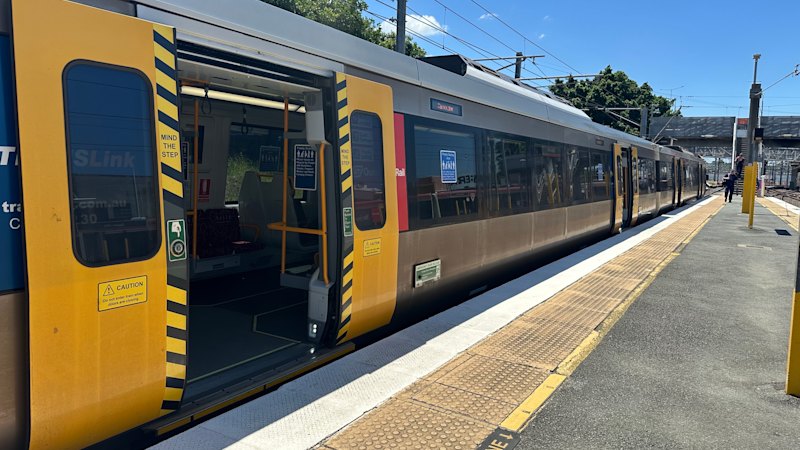
Leaders also agreed to help ease cost-of-living pressures following the outbreak of war in the Middle East, with Victoria and Tasmania – governed by Labor and Liberal governments respectively – announcing temporary free public transport.
Speaking on Wednesday, Mr Chalmers said the public transport relief, which has been ruled out in NSW, were “good developments”.
It comes as the Albanese government slashes the fuel excise in half – albeit that reform will not come into effect immediately.
“We’re doing our bit, and we need them to do their bit,” Mr Chalmers said of the states and territories.
“When they signed up to this at the national cabinet, the Prime Minister did a good job making sure that the states and territories signed up to this commitment.”
Mr Chalmer said he was not “going to have a shot” at the states and territories but warned that they “they need to follow through on that commitment”.
“If the GST calculations are too complex, we don’t want to see this drag out forever,” he said of the fuel excise changes.
“We don’t want to see the states and territories at war over this. We want to see the relief flow to motorists.”
The 10 per cent goods and services tax (GST) is applied on top of the total amount motorists pay for petrol, including the fuel excise amount.
Any change to the excise, which would bring down the total price paid by consumers, would also impact the GST amount.
Mr Chalmers said on Wednesday that was a “good thing”.
The states and territories had agreed to “return some of that” to motorists in the form of cost relief, Mr Chalmers said.
“We need to see them come to some kind of agreement,” he said.
“Ideally, that would happen in the fuel tax system or the GST tax system somehow.
“But, they need to get their skates on so it doesn’t drag on forever.”
NSW Premier Chris Minns on Tuesday said there were complexities around GST arrangements that “if we had more time would be easier to sort out”.
“We want to look at a common sense and practical way of returning that. I think there’s a pathway through it,” he said.
“It may well be that we drop the excise to the extent of the windfall gain from the GST.”
Mr Minns warned that bureaucrats were dealing “big figures … the GST is massive, it’s billions and billions of dollars”.
Treasurer Daniel Mookhey said the state government was “working on a principle that simply says that we’re mirroring the policy that the federal government’s adopted on excise”.
“So, that is if the price has gone up by a dollar, we are giving back the same reduction that the commonwealth government’s giving on excise,” he said.
“It will end up being between seven to 10 cents in addition on excised tax.”
Grievances over the GST carve-up were inflamed last month after the Commonwealth Grants Commission released its recommendations for the GST share in the 2026-27 financial year.
The GST pool was estimated to increase in the forthcoming financial year from about $97bn to $103bn.
A 2018 legislated GST floor would mean Western Australia stood to walk away with an additional $1.3bn over last year’s carve-up, bringing its share to a whopping $9.3bn.
The GST share for Queensland, which has regularly agitated against the current arrangement, was more significantly reduced in 2026-27 than in 2025-26 under the 2018 legislative amendments; however, “no worse off payments” increased.
Queensland’s share will increase by $1.68bn in 2026-27, the biggest of any state, to $18.4bn.
NSW, Australia’s most populous state, is projected to receive only an additional $316m over 2025-26, with a share of $26.1bn.
Last month, Mr Mookhey urged the Productivity Commission introduce an equal per capita distribution of GST grants, with top-ups funded by the federal government from outside the GST pool.


