







Opinion


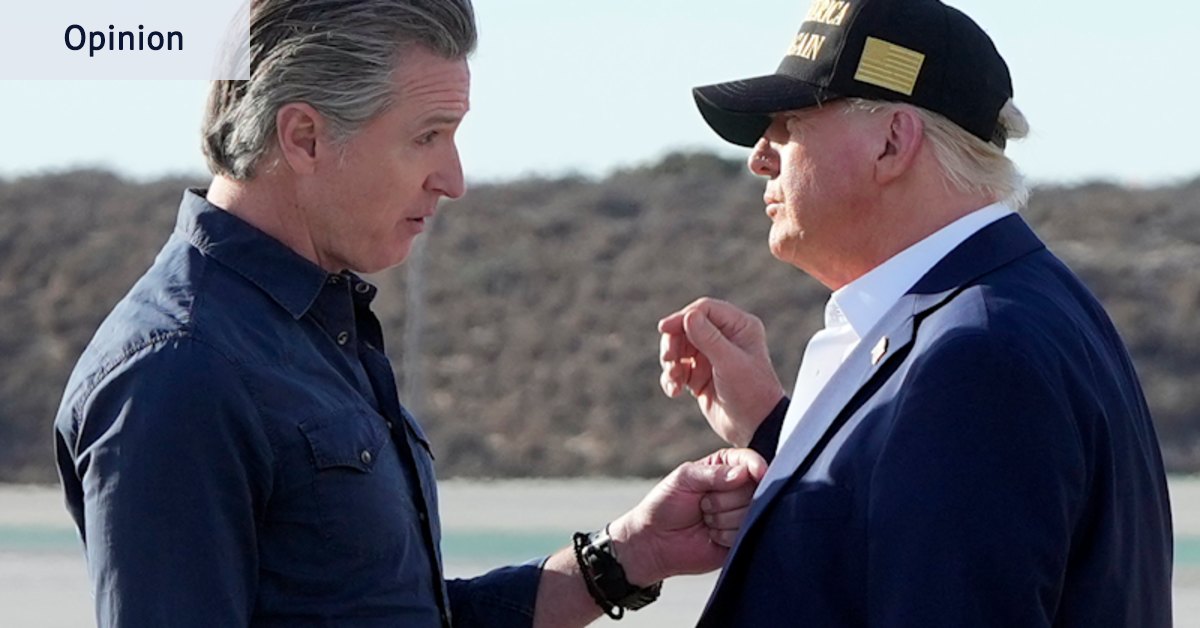
Donald Trump has opined that a president should not have dyslexia. “Honestly, I’m all for people with learning disabilities,” he said, “but not for my president – a president should not have learning disabilities.” The US president’s remark was in reference to California Governor Gavin Newsom, a possible 2028 presidential candidate.
Trump added: “Everything about [Newsom] is dumb.”
Presidential aides will hopefully educate Trump that America has already had a president with dyslexia. That was Woodrow Wilson, the 28th president. They might also let Trump know that other highly successful people with dyslexia have included Albert Einstein, Thomas Edison, Steve Jobs, Sir Richard Branson, John Lennon and Agatha Christie.
I, too, am dyslexic, and I’m proud to hold a leadership position at a university that welcomes students with learning differences. Like Woodrow Wilson, I struggled to learn to read as a child, but this did not stop me from growing up to own and operate a successful business; to gain a doctorate in my 40s; to hold a marginal seat in the NSW parliament for 12 years and a leadership position in the state government; and to become a deputy vice chancellor at Western Sydney University.
Trump’s comments are not only hurtful; they are wrong and they are dangerous for children everywhere.
Dyslexia remains widely misunderstood. Dyslexia is not connected to IQ and people with dyslexia are not “dumb”. It is best understood as a persistent difficulty with reading and spelling.
It is a lifelong condition but early treatment can help re-pattern the brain and improve reading skills, which is why it is important to reduce the stigma surrounding it and foster a culture where children with learning differences receive the help and encouragement they need to thrive.
People with dyslexia often have unique cognitive abilities that allow us to excel in many fields.
In their 2011 book The Dyslexic Advantage: Unlocking the Hidden Potential of the Dyslexic Brain, Brock and Fernette Eide write that people with dyslexia are not defective; they are simply different. And these brain wiring differences often lead to special strengths in processing certain kinds of information. The authors demonstrate how this difference predisposes dyslexic individuals to the development of valuable skills and that by learning how to recognise, nurture and properly use these strengths, they can be helped to achieve success and personal fulfilment.
‘Dyslexia isn’t a weakness. It’s your strength.’
California Governor Gavin Newsom
While dyslexia is not a barrier to becoming a successful adult, it can be highly distressing for children who haven’t yet received the learning support they require.
In his recently released memoir, Newsom outlined this distress: “I couldn’t read; I couldn’t spell; I couldn’t write. I’d run out of the room screaming that I didn’t know what was wrong with my brain.”
These feelings resonate with me. I also found my early school days incredibly difficult.
Decades later, I know that my learning differences did not mean the door to higher education, and the career opportunities that followed, were closed to me. Students with learning differences are not any less worthy of learning.
At Western Sydney University, we welcome students with diverse learning needs. We offer special admission schemes and academic adjustments to ensure access for students with disabilities. Our goal is to empower our students throughout their studies.
Responding to Trump’s criticism, Newsom posted a message on social media addressed to children with dyslexia: “Dyslexia isn’t a weakness. It’s your strength.”
As a fellow dyslexic, I echo his comments, and I am proud to work at an institution that recognises and celebrates the unique strengths and abilities each student brings to our community.
As a society, we need to stop the harmful rhetoric of labelling people “dumb” because they learn in a different way. Every child deserves to learn in a supportive environment. They deserve equal opportunity to pursue their dreams, even if that dream is to become president.
Professor Geoff Lee is deputy vice chancellor at Western Sydney University.
The Opinion newsletter is a weekly wrap of views that will challenge, champion and inform. Sign up here.


