








“We’re consulting closely with networks, energy users and industry.”
Solar Sharer, if designed well, could help lower system-wide costs and “make the energy transition fairer and more accessible”, EnergyAustralia said in its submission. But without “careful implementation”, the retailer said, there was a material risk that it could “actually make customers worse off, or at best involve material implementation costs without delivering savings for individual customers or the energy system”.

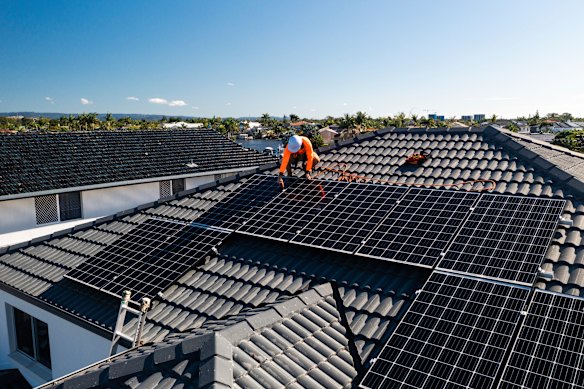
The government’s Solar Sharer scheme is due to start on July 1.Credit: Getty Images
AGL, one of only a few Australian retailers to already offer a plan built around free access to power in the middle of the day, said it believed it was premature to lock “free” periods into the regulated pricing structure, and more time was needed.
“We are concerned that a rushed implementation risks creating unintended consequences and will introduce further complexity into the regulatory framework,” the company said in a submission.
A key problem, industry leaders argued, was that the proposal mandated retailers offer $0 per kilowatt-hour for a three-hour window without reforming other underlying costs that they must pass on. These include network tariffs for the use of power line infrastructure, which account for about one-third of a typical bill, and the cost of environmental certificates to demonstrate the use of renewable energy.
Loading
Unless other costs are also reformed, retailers would need to charge higher fixed rates and charges for afternoons and evenings to recoup their losses, they said. This could create a risk that customers who sign onto the Solar Sharer plan, but are unable to shift enough of their electricity usage into the free daylight hours – such as people who work during the day – could find themselves paying higher bills.
AGL said the scheme should include safeguards and limits on which customers could use the scheme to avoid unfair “cross subsidies”.
The Australian Energy Council, which represents top power generators and retailers, said the policy in its present form was “not cost-reflective, introduces systemic risk and may lead to negative outcomes for the very consumers it is intended to help”.


