










Anthony Albanese’s decision to halve the fuel excise for the next three months is economically irresponsible, damaging to the budget bottom line and will put significant pressure on interest rates.
It’s also the right thing to do for ordinary Australians struggling with spiralling petrol prices and a smart move, politically, as it buys the federal government some time while Donald Trump’s war with Iran plays out.
For Australians feeling the pain at the bowser, the 26¢-a-litre cut and the suspension of the heavy vehicle road user charge for truckies comes just in time for road trips over the Easter long weekend.
In practical terms, the excise cut means a 65-litre tank of petrol will cost about $20 less, a significant saving and welcome cost-of-living relief.
The prime minister’s low-key delivery throughout this crisis has been deliberate: Albanese is trying to assuage the fears of anxious Australians with a calm, methodical style – almost boring – throughout the last month’s shortages.
The prime minister had made clear, several times, that his government won’t rush to respond to the crisis, mentioning more than once that this isn’t COVID times and his government won’t overreact with punitive measures. Nobody is being ordered to stay home.
But when we are hanging on the results of a hastily arranged national cabinet, it’s hard not to think back to the years of interminable daily updates.
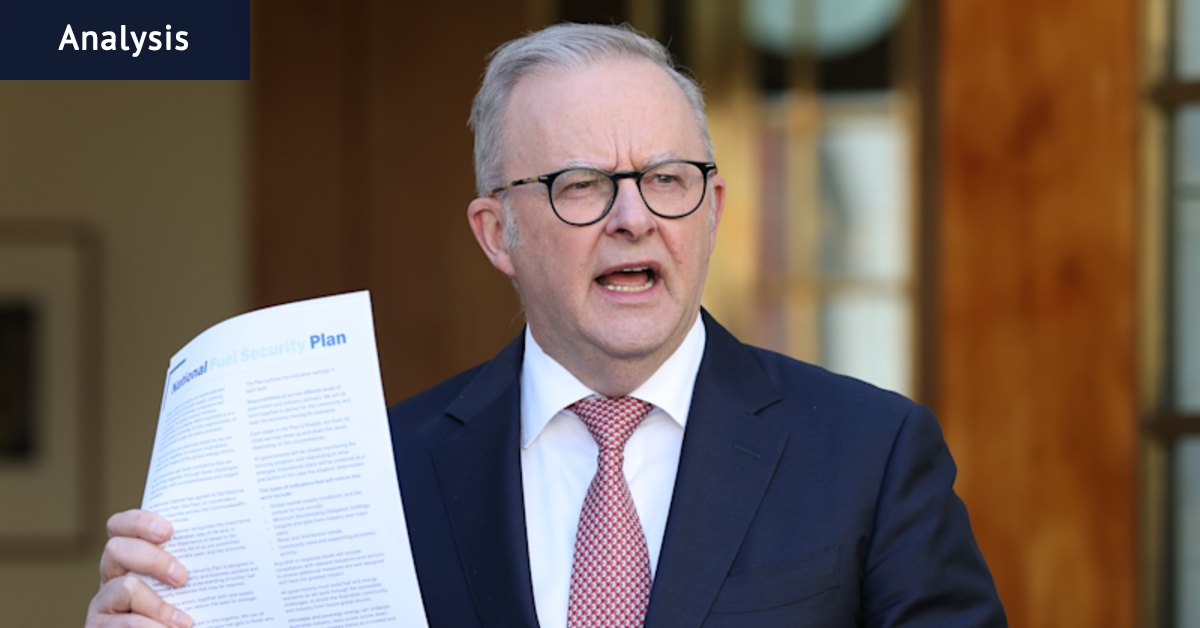
The national fuel security plan, released as the excise cut was unveiled, is long on motherhood statements and short on details, but that is a design feature rather than a flaw. The document does what it was designed to do, which is to make clear that more severe measures, such as rationing, could be required if the global oil trade is constrained for months rather than weeks.
Albanese and his state counterparts are loath to lock themselves into specific actions – a key lesson learned from the early response to the pandemic – to ensure maximum flexibility and avoid any suggestion of government overreach.
Until last Friday, Albanese had largely left it to Energy Minister Chris Bowen to do most of the heavy lifting, but the prime minister has finally moved to centre stage, using the weight and authority of his office to navigate the crisis.
The fuel supply road map, the excise cut and the prime minister’s presence are all designed to do the same thing: reassure anxious Australians.
Asked during his press conference what longer-term plans the federal government was working on to increase Australia’s resilience – such as increasing fuel storage capacity from 30 to 90 days, and increasing refining capacity – Albanese ducked the question.
In other words, this is a short-term fix and the longer-term problems Australia could face if the global oil crisis rolls on are problems for “future Albo” – just as he will worry later that this fuel excise cut could mean more interest rate rises.
Despite the complaints from policy boffins and economists about the excise cut being inflationary and bad for the budget, Albanese made the call that calming Australians, and giving them a bit of relief at the bowser, was more important than an orthodox economic response.
Few Australians would have thanked him for that.
Cut through the noise of federal politics with news, views and expert analysis. Subscribers can sign up to our weekly Inside Politics newsletter.


