






In many ways, Caracas feels like Sydney in the summertime: lush green trees line the pavements, walkers feel every degree incline on the hilly streets, and the bustling city centre suddenly gives way to stunning, long coastlines.
But it was different on Sunday. It was mostly quiet.
“It’s a loud city, Venezuelans are a loud people, but it’s noticeably quiet,” he said. On Saturday, small numbers of Caraqueños – as the residents of Caracas are called – took to the streets, some celebrating the dictator’s removal, others concerned about what comes next. But across most of the city, it was quiet.

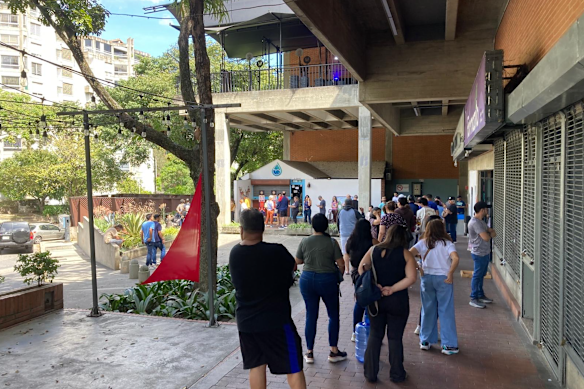
The queue for groceries at a Caracas supermarket in the hours after the attacks.
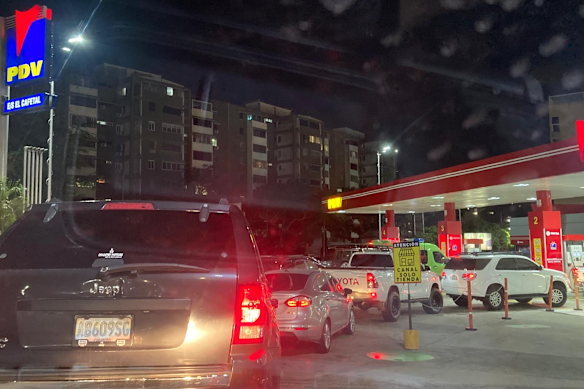
There was a long queue for petrol at the state-owned petrol station on Saturday evening in Caracas.
Though there were changes: residents, concerned about the sustainability of already fragile trade and imports, formed queues hundreds of metres long outside supermarkets to hoard groceries, and cars waited 20 deep to fill up at state-owned petrol stations.
Alexander’s wife stood in line for three hours to buy eggs, toilet paper, milk and filtered drinking water. In the queue, she heard people talk about future economic opportunities, and what businesses people were thinking of starting.
“This country has been through so much over the last 25 years or so, and has had so many high hopes, and had so many of those hopes dashed, that they are very wary to get prematurely excited about any sort of outcome,” he said.
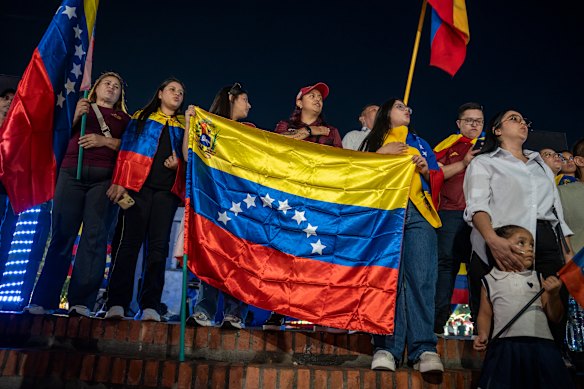
Venezuelan citizens gather at the Colombian border after Nicolas Maduro’s capture.Credit: Getty Images
They are alright, staying with family, but they want to fly back to New York – a difficult prospect. They had booked a flight out of the city that was due to go via Curaçao, a small island off the coastline. But flights across the country’s airspace have been suspended, and they have struggled to get in contact with their airline. They are considering driving to the border and leaving via a neighbouring country.
Loading
Alexander went to the airport’s official Instagram page for advice. There was only one post: a photo of Maduro hugging his wife.
“The empire kidnapped them,” the post read. “We want them back!”
Get a note directly from our foreign correspondents on what’s making headlines around the world. Sign up for our weekly What in the World newsletter.


