







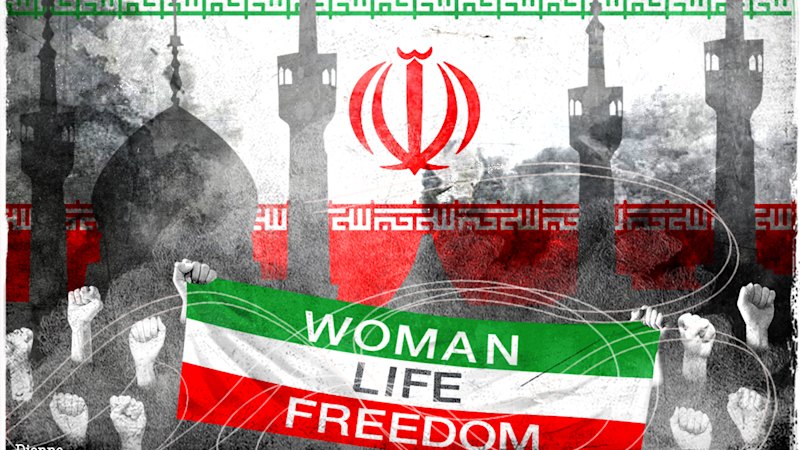
For decades, regime elites have treated the state as their personal fiefdom, siphoning off the country’s vast oil and gas reserves to enrich and reward close family members and loyal cronies. The Revolutionary Guard, a military force within Iran tasked with defending the Islamic Revolution against internal and external threats, has made billions out of the sanctions, developing monopolies over entire industries and trading oil extensively on the black market. As in Venezuela, the people of Iran face impoverishment while a small group of regime insiders plunders the country’s vast resource wealth with impunity.
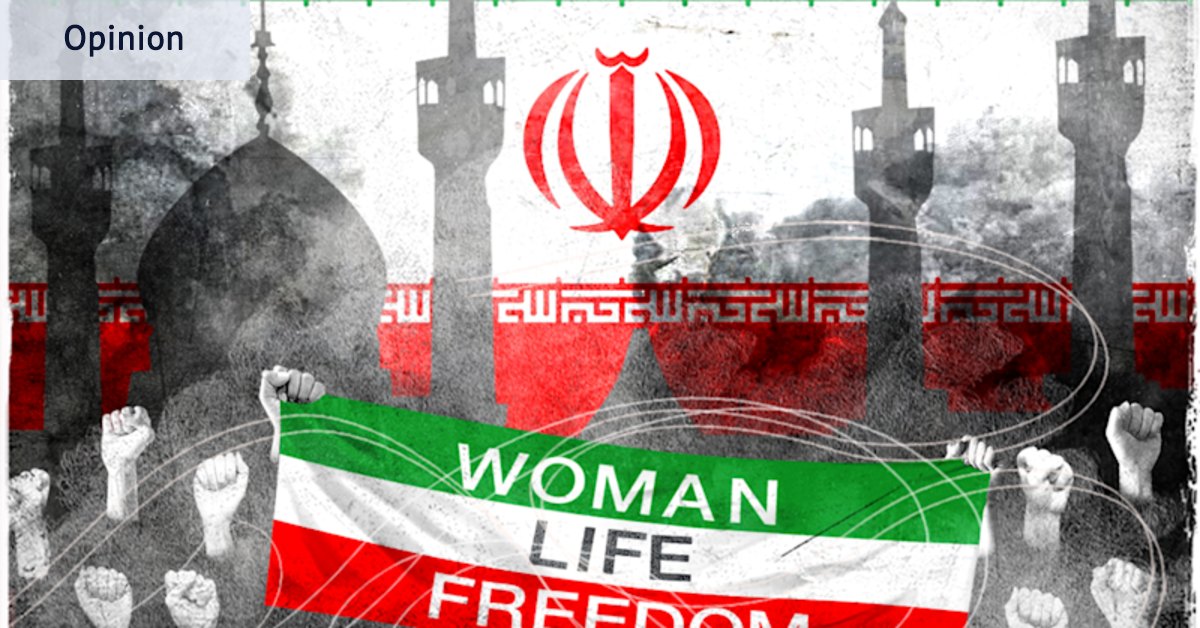
But the vibe of the protests feels different this time. The 2022 Woman, Life, Freedom movement was characterised by a sense of hope that, just maybe, the unprecedented numbers of people on the streets might topple the regime. The Iranian diaspora was galvanised, and Iranians abroad furiously lobbied foreign governments to further crack down on the regime as well as do more to support the domestic protest movement.
Loading
Heroes emerged, such as dissident rapper Toomaj Salehi, whose defiant lyrics saw him imprisoned, tortured and briefly sentenced to death, and singer Shervin Hajipour, whose ballad Baraye became the movement’s unofficial anthem. Murdered protesters became household names, among them nine-year-old Kian Pirfalak, who was shot dead by security forces and whose sweet phrase “in the name of the God of rainbows” went viral throughout the country.
The mood on the streets in Iran today seems to be characterised by a sense of desperation rather than hope. The protests themselves, while significant, have not come close to the scale or extent of those of three years earlier. The diaspora, exhausted from years of advocacy, is now preoccupied with infighting, in particular over the role the son of the deposed Shah, Reza Pahlavi, should play in a democratic transition, forgetting that the hard work of actually removing the regime is yet to begin.
Will the Islamic Republic survive the current unrest and continue to hold on to power? My sense is yes, it will, although as we have seen in recent years, the Middle East is a highly volatile and unpredictable place, and Khamenei’s regime is clearly teetering. Israel’s successful campaign of bombings and assassinations in June 2025, and the joint US-Israeli attack on the country’s nuclear program, have reduced the Islamic Republic’s domestic legitimacy to threadbare, at the same time that the regime watches its “axis of resistance” regional proxies in Syria, Lebanon and Gaza crumble at the hands of those same forces.
Loading
The Iranian regime has proven itself again and again to be more resilient to internal unrest than might be expected. Surveys have shown that up to 80 per cent of Iran’s population want the regime gone, yet while the Revolutionary Guard and other security forces continue to hold all the guns, and have no compunction about using them, the cycle of protest and repression feels doomed to repeat itself.
There is still hope. It is now almost inconceivable to think that Khamenei and his Islamist cronies will continue to rule Iran into the medium term. As we saw during the Arab Spring, and more recently with the Assad regime in Syria, rapid shifts in the regional balance of power can trigger the swift downfall of long-established dictatorships which have lost the support of their people.
For now, young protesters like my friend Soheila Hejab will continue to take to the streets, facing violence, imprisonment and even death, hoping to create that spark which will somehow trigger the downfall of the Islamic Republic, and with it the opportunity to build the kind of Iran that its brave and long-suffering people so richly deserve.
Kylie Moore-Gilbert is an academic in Middle Eastern political science at Macquarie University, the author of memoir The Uncaged Sky: My 804 Days in an Iranian Prison and a regular columnist.
The Opinion newsletter is a weekly wrap of views that will challenge, champion and inform your own. Sign up here.


