










In soccer terms, a big question loomed over Mary Fowler before the 2026 Women’s Asian Cup. The 23-year-old had been sidelined for nine months with an ACL injury, and how much time she would spend on the pitch during the tournament was anyone’s guess.
But no amount of doubt could deter the businesses queuing up to sponsor Fowler in the months that sidelined her from the game that made her famous.
In fact, Fowler’s personal brand has become so lucrative that even though her salary at Manchester City is estimated to be less than half what partner and NRL star Nathan Cleary earns at the Penrith Panthers, she likely takes home far more as a result of her ventures off the pitch.
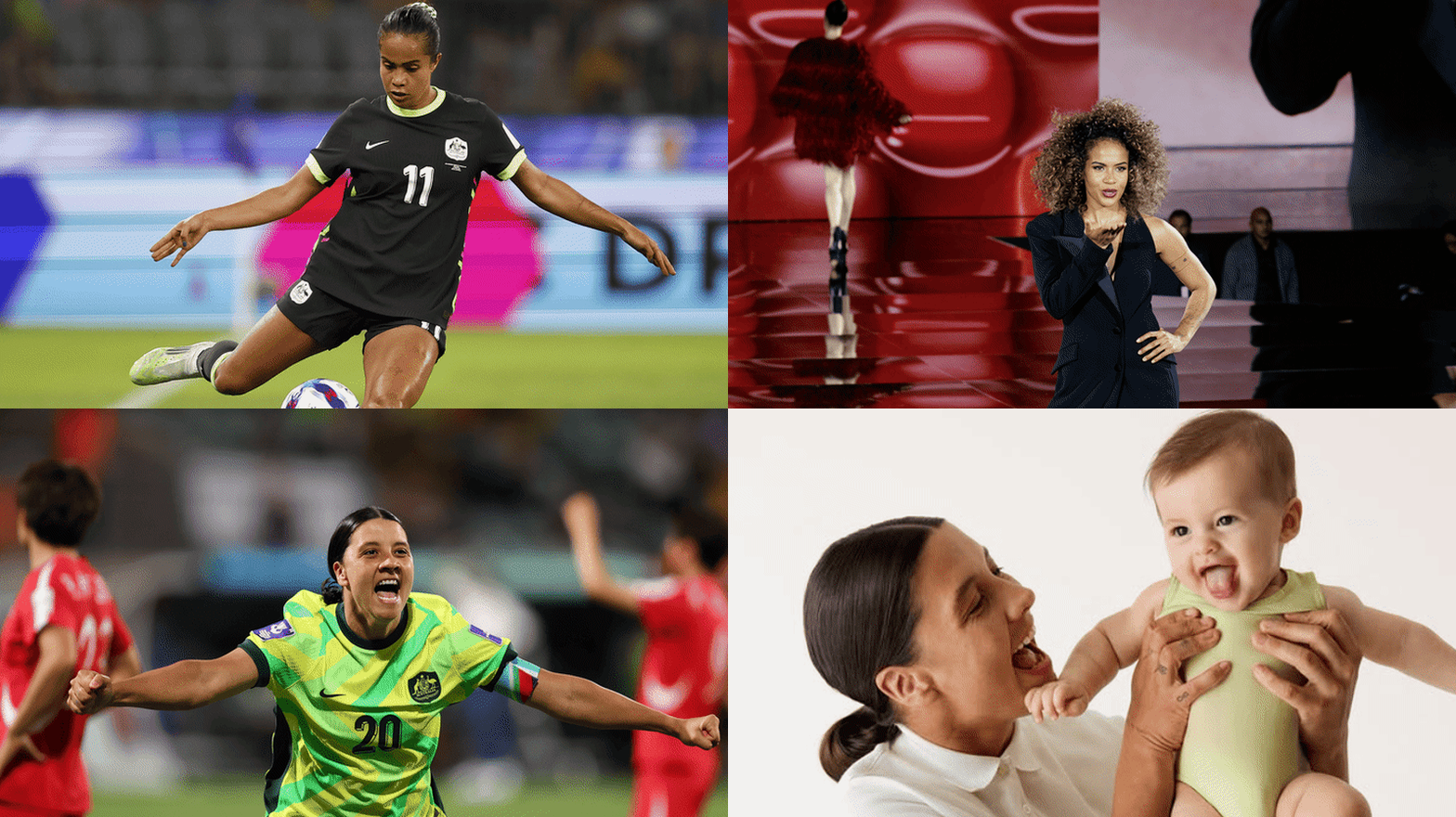
Advertisements before and during every Asian Cup match remind us that Fowler eats Weet-Bix cereal and banks with CommBank. On Instagram, she shares photos from her Samsung phone, wears adidas and applies L’Oreal Paris make-up.
When she’s not promoting other products, she’s plugging the three books to her name: two children’s books and a young-adult memoir called Bloom. She’s even had a Barbie doll made in her likeness.
Fowler shows just how lucrative the Matildas brand, and that of individual squad members, has become since the 2023 Women’s World Cup, also staged in Australia. During the tournament, Fowler’s social media feeds were filled with photos of her playing; afterwards, the on-field pictures were dispersed between paid-for partnerships.
She’s not alone. Stand in the skincare section in a Woolworths or Coles and you will be met with the varying brand partners for Steph Catley, Caitlin Foord, Mackenzie Arnold and Katrina Gorry. In the fridges are rows of a2 milk, which sponsors Catley and Amy Sayer. Where the socks and underwear hang, lies Bonds, which has partnered with not just Sam Kerr but her baby, Jagger.
By this measure, the Matildas were winners before the Asian Cup began. The promise of a home tournament less than three years after the Women’s World Cup created fertile ground for investment.
“[It’s] meant that sponsors have continued investing in them, that media has continued covering them, that Football Australia and everyone has continued putting resources behind them,” said Fiona Crawford, author of The Matilda Effect.
“And I think that was very deliberate because the danger could have been, like every other major tournament women’s sport generally has, that it’s great in the moment, but then everything goes away after that like a flash.”
Crawford said that because salaries and prizemoney are lower in women’s football than men’s, players build their personal brands as a way of supplementing their incomes. So, even though the tournament prizemoney has not increased, despite record-breaking ticket sales and despite Fowler being paid less by her club than partner Cleary, she will make up the difference in brand partnerships.
“It always has been more than the sport because there hasn’t been money in the sport,” Crawford said. “You have to be remarkable because you can’t just be an athlete, you’ve got to be a well-rounded person, and I think people have really picked up on that. That’s why people are interested in [Mary Fowler] off the pitch. That’s why she’s getting offers to walk the catwalk or why they want to have a Barbie.”
But without another home tournament on the horizon, and with more Matildas playing overseas than in Australia, it would be fair to ask whether the team’s brand can continue increasing in value. And certainly, there have been doubts about whether the “Matildas mania” that took hold of Australia after the World Cup is still just as strong.
But Mark Crowe, managing director of Brand Finance, which valued the Matildas after the 2023 World Cup at $200 million, says there is nothing to suggest that value has not been reached, even if the tournament has not sold out.
“We’ve certainly estimated twice in the last few years that women’s sport on a global basis is still undervalued relative to a number of men’s sports and club brands,” he said. “So there’s still a lot of opportunity for the Matildas to exploit the brand and continue to grow.”
Asian Cup chief operating officer and ex-Matilda Sarah Walsh agrees.
“If the Matildas are constantly measured by the success of only having full stadiums, it’s really dangerous because that’s never applied on men’s sport,” she said. “It never is, and it never has been. We are still growing women’s football.”


