









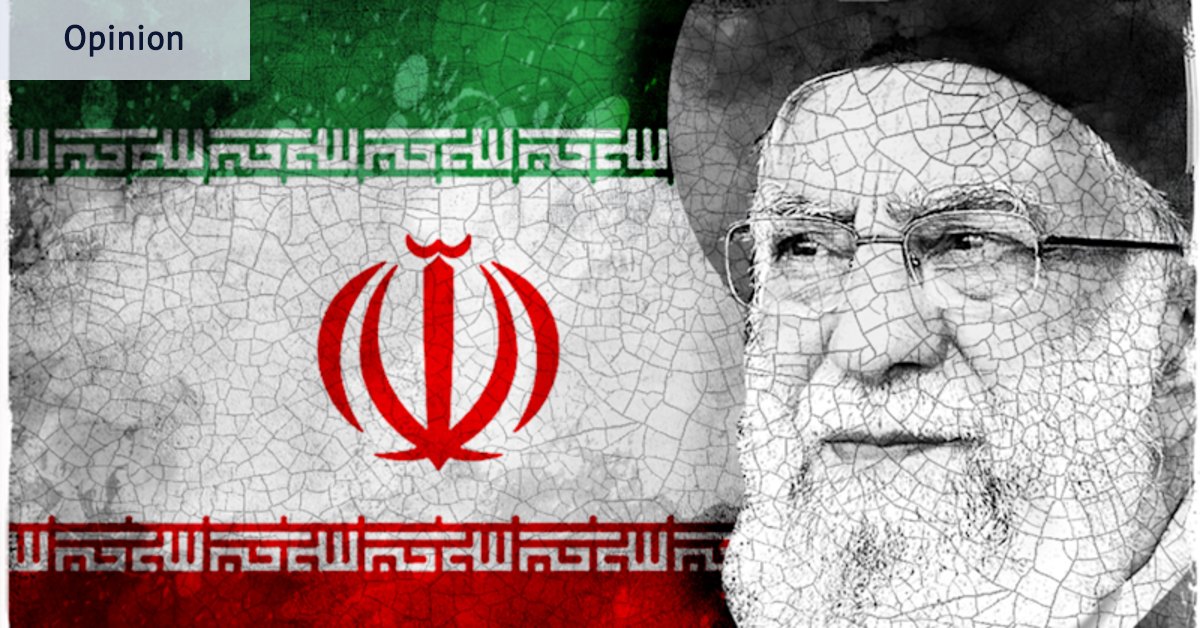

The Islamic Republic’s vulnerability is deep-rooted, but recent miscalculations by its 86-year-old Supreme Leader have arguably hastened what could be the gravest challenge to clerical rule since the country’s 1979 revolution.
Ayatollah Khamenei was the only world leader to publicly support the horrific massacre in Israel on October 7, 2023, which was carried out by Hamas, one of Iran’s terror proxies. Like the immolation of Tunisian fruit-seller Mohamed Bouazizi in 2010, which set in train events that led to the fall of dictatorships in Tunisia, Egypt, Libya, Yemen and, ultimately, Iran’s client state headed by Bashar al-Assad in Syria, the October 7 terror attack appears to be one of those history-shaping events whose aftershocks flow across borders, reshape alliances and affect geopolitics in unexpected ways years into the future.
Loading
The fall of Assad, who had fought a brutal war of survival against his own people for 14 years, was complete in less than 11 days. It took Israel less than two months to comprehensively rout Hezbollah, a long-feared enemy thought to have been perched atop its northern border with more than 100,000 rockets. Hamas and Iran’s proxy militias in Iraq have also been cowed, for now. In this post-October 7 world might the Islamic Republic itself, which sits at the head of its so-called “Axis of Resistance” in the Middle East, be the next to crumble?
Khamenei’s longstanding refusal to implement any meaningful reforms to Iran’s highly repressive system of government, his inability to crack down on rampant corruption, and his rejection of genuine attempts to negotiate offered by both the Trump and Biden administrations primed the Islamic Republic for the current existential collapse in support of its populace. Iran’s ill-advised 12-day war with Israel of June 2025, which led to the humiliating destruction of Khamenei’s prized nuclear program and the assassinations of dozens of senior military, scientific and political figures, revealed the regime to be a paper tiger.
Loading
Iran was a powder keg in search of a spark, and on December 28, when merchants and currency traders in Tehran’s bazaars went on strike, it found one.
Will extreme violence yield a temporary reprieve for a regime that has revealed itself to be in terminal decline? The catastrophic collapse of Iran’s economy, coupled with widespread outrage at the unimaginable cruelty of the brutal crackdown on citizens voicing what President Masoud Pezeshkian had earlier acknowledged were “legitimate demands”, almost guarantees another round of protest.
The Islamic Republic is moribund. The question is not if it will fall, but when, and in what manner. And, most tragically of all, how many brave and innocent lives will it destroy on the way out?
Kylie Moore-Gilbert is an academic in Middle Eastern political science at Macquarie University, the author of memoir The Uncaged Sky: My 804 Days in an Iranian Prison and a regular columnist.
The Opinion newsletter is a weekly wrap of views that will challenge, champion and inform your own. Sign up here.


