



London: Every airstrike on Iran is taking America and its allies closer to a chasm that could leave them exposed to a critical shortage of the weapons they need most.
The sheer scale of the bombardment has stunned observers and sparked warnings that countries will struggle to replace the missiles being used in vast numbers for attack and defence in the Middle East.
Ukraine is at risk of losing access to weapons from the United States, after a strong hint from US Secretary of State Marco Rubio, and is using its expertise in drone warfare to help offset a severe challenge with missile supplies.
The war in the Middle East now sets up a question: who will lose most from the missile shortage?
One study concludes that American and Israeli forces used 11,294 munitions in the first 16 days of the war with Iran at a cost of $US26 billion ($38 billion).
Another study points to the link with Ukraine because of the sharp increase in drone and missile strikes in that war, highlighting the race with Russia to build new weapons.
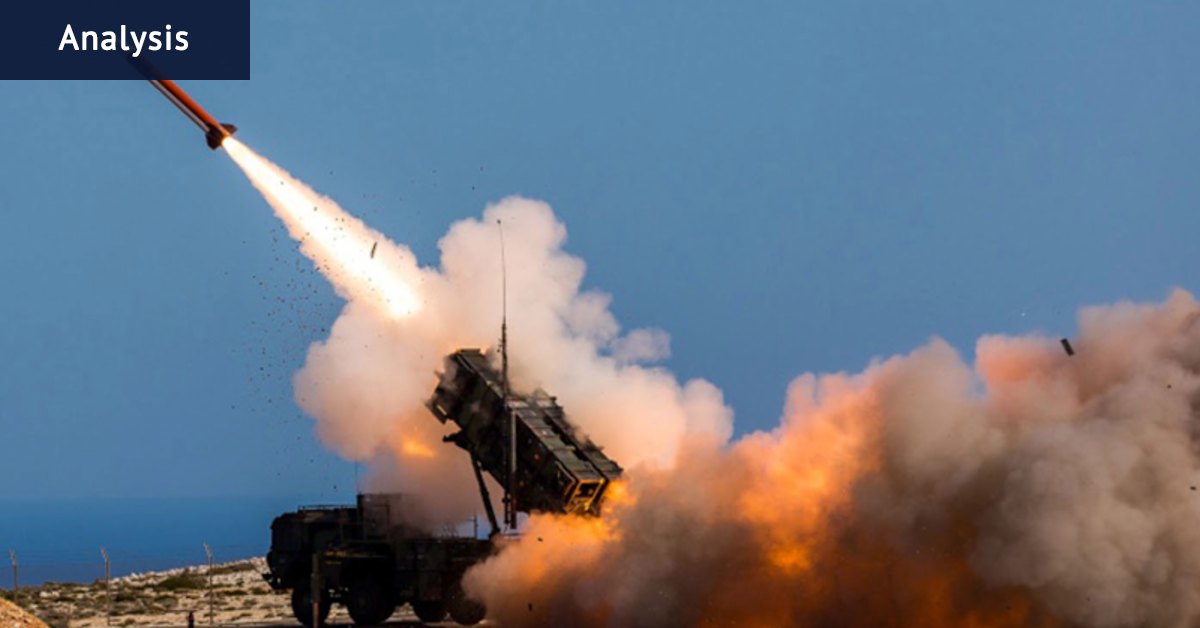
One major source of pressure is the supply of Patriot missile systems to replenish the stocks used in the Middle East, says Witold Stupnicki, the Europe and Central Asia senior analyst at Armed Conflict Location & Event Data (ACLED) a non-profit defence-monitoring agency based in the US.
“The US and its allies in the region used more than 900 of their Patriot missiles in just four days – so that’s 18 months of the production stockpile, which is somewhat crazy,” he says.
“It’s actually more than Ukraine has received over the entire course of the war. This is really devastating, this comparison.”
The Patriot system is a cornerstone of missile defence for the US and its allies, and it has been essential for Ukraine in shooting down Russian ballistic missiles. It is now in such short supply that Spain has agreed to transfer five of its Patriot missiles to Ukraine to help fill the gap.
‘Every interceptor and Tomahawk fired from a finite, slow-to-replenish stockpile reduces the US’s ability to deter and defend in another theatre, such as protecting Taiwan and supporting Ukraine.’
Royal United Services Institute analysts
Stupnicki, who monitors missile and drone strikes in the Ukraine war, says there has been a sharp escalation since January 1. While Ukraine has launched 3364 air or drone strikes, Russia has launched 7503.
“For both sides, we’ve seen an increase in drone strikes,” he tells this masthead.
“Looking at Russia’s production, their missile and drone manufacturing continues at scale. This means Russia can now sustain this mass attack at a very large scale.”
The scale of the Russian assault reveals the confidence in the Kremlin about manufacturing enough munitions to replace the missiles and drones used each week. Russia is estimated to be making 400 drones each day on the Shahed design, the triangular model from Iran, and is aiming to increase this to 1000 per day.
While each Shahed is tipped to cost less than $US50,000 ($73,000), the cost of using a Patriot battery against a drone attack is estimated at $US4 million ($5.8 million) per shot.
It is not clear if there is any shortage of supplies to prevent the Russian industry from achieving its goal of 1000 per day, he said.
The calculations about missile supply highlight the connection between the war in Iran and the supply of weapons to Ukraine, as well as the scenarios for conflict with China over the Taiwan Strait.
“Endurance is not local,” say the analysts at the Royal United Services Institute in London.
“Every interceptor and Tomahawk fired from a finite, slow-to-replenish stockpile reduces the US’s ability to deter and defend in another theatre, such as protecting Taiwan and supporting Ukraine.
”This is also where alliance politics becomes industrial politics. If the US prioritises replenishing its own stocks, it slows deliveries to other partners, creating a credibility dilemma.“
The RUSI report warns that the US will have to fix a huge shortage after using 11,294 munitions in the opening stage of the war in the Middle East.
“If the war in Ukraine was a wake-up call for the Western defence industrial base, the first 16 days of the Iran conflict are a fire alarm signalling a crisis of endurance,” write the three analysts, Macdonald Amoah, Morgan Bazilian and Jahara Matisek.
They use the phrase “command of the reload” for this challenge because it is basically about industrial capacity.
This does not mean Iran prevails, given that it is also rapidly depleting its stocks. Admiral Brad Cooper, the commander of US Central Command in the Middle East, said on Tuesday that the US forces were “dismantling” Iran’s ability to launch drones and missiles.
Cooper said the Iranian air-defence and missile-defence systems had “largely been destroyed”, but he did not use the same phrase in regard to Iran’s offensive systems.
Even so, Iran can continue to inflict civilian casualties on its neighbours and disrupt shipping with relatively small numbers of drones, and there are reports that it is receiving some from Russia via the Caspian Sea.
The Pentagon is alive to the problem. It moved last week to accelerate the supply of missile systems and components from three big manufacturers – Lockheed Martin, BAE Systems and Honeywell Aerospace.
Lockheed has promised to quadruple the production volume of its Precision Strike Missiles, the long-range munitions fired from the HIMARS launchers used in Ukraine. (These are also being purchased by Australia).
BAE Systems will increase the supply of the Terminal High Altitude Area Defence interceptor, or THAAD, which is used for missile defence. These systems are so valuable that the US rushed to move one from South Korea to the Middle East to defend against Iranian attacks.
Honeywell will increase the supply of air-to-air missiles used on fighter jets.
This will not be fast enough to fix the immediate shortage of Patriot systems. Lockheed Martin struck an agreement with the US government in January to increase the annual supply of its Patriot interceptor missiles – the PAC-3 – from 600 to 2000. But it will take seven years to get there.
The greatest danger is to Ukraine, which relies on the supply of American weaponry paid for by European nations through a NATO program called PURL, short for the Prioritised Ukraine Requirements List.
There are also implications for any country that depends on the US industrial base for the supply of missiles or other weapons. This includes Australia.
Speaking at a G7 meeting in Paris last Friday, US Secretary of State Marco Rubio did not rule out diverting weapons from Ukraine – or elsewhere – if the US needs them instead.
“It hasn’t happened yet. Nothing yet has been diverted, but it could,” he told reporters.
“Let me be clear: if the United States has a military need, whether it is to replenish our stocks or that fulfils some mission in the national interest of the United States, we’re always going to come first when it comes to our stuff.”
 David Crowe is Europe correspondent for The Sydney Morning Herald and The Age.Connect via X or email.