


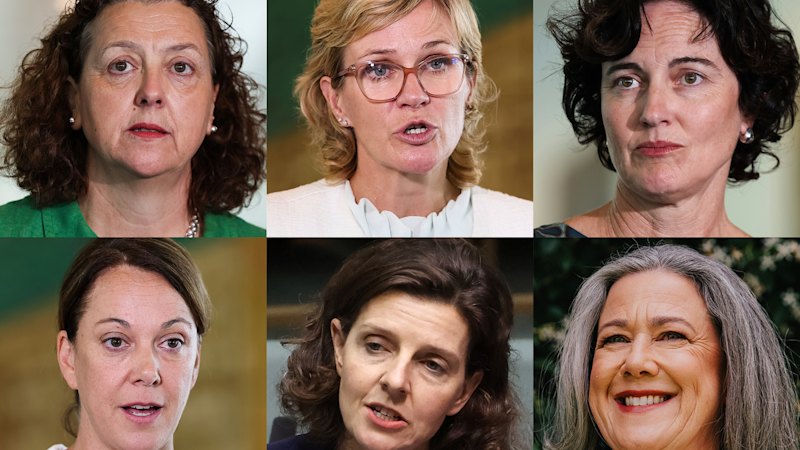
Teal independents are in advanced talks to create a new political party that may be announced within weeks, sources close to the deliberations say, with MPs Allegra Spender and Zali Steggall leading the push.
However, the project is facing complications, including that moderate Liberal figures have so far refused invitations to defect, making it more difficult for a new outfit to appeal to a larger cohort of disaffected voters.
Several sources familiar with the project, speaking on the condition of anonymity to protect negotiations, said the MPs and their supporters have been planning the party’s formation for months, and an announcement could be weeks away unless new hurdles emerge or the MPs change their minds.
The sources said conversations have centred on how the party should be presented to voters, including its name and policy positions.
Senior moderate Liberals inside and outside the parliament have been approached about the prospect of joining a new centrist party since the end of last year, according to sources familiar with the approaches.
Former prime minister Malcolm Turnbull has been one of the people making the approaches but the extent of his involvement is unclear, and one source said they did not expect he would become a public face of the party. Turnbull was contacted for comment.
Independent senator David Pocock – who has arguably the most popular brand of any Australian independent and has rejected Climate 200 funding to maintain his independence – was approached to join the party a fortnight ago.
Quiet plans to form and announce the party over the coming months may have been hastened by his Sunday-morning appearance on the ABC, in which Pocock left the door open to a party being formed and a potential move to the House of Representatives.
Sources close to the senator have said he intends to contest the next election in the Senate as an independent but did not want to make definitive statements on the record.
A centralised party with high-profile incumbent MPs could potentially make inroads into the Senate in New South Wales and Victoria. However, if the party fails to peel off any moderate Liberals it may struggle to broaden its appeal beyond the existing teal seats.
Proponents believe a new centrist outfit could generate significant support in middle suburban seats that are presently Labor-versus-Liberal contests, including seats such as Menzies in Melbourne and Bennelong in Sydney.
Sources involved in the party’s formation have said extensive polling and focus group research has been conducted over recent months to convince potential members, candidates and financial backers that the party was viable. This masthead first reported talk of the creation of a centrist party in January.
Backers of the new party have privately shared that the teals needed to present a more united, solutions-based front to build support and garner attention amid escalating anti-establishment sentiment as evidenced by One Nation’s rise in the polls.
In a statement to this masthead Steggall said: “The community independents are always talking about how we can collaborate more effectively and find efficiencies. I’m open to exploring new ways for the movement to evolve and strengthen its influence on policy and the national conversation.”
Steggall expressed concerns over One Nation’s rise and former prime minister Tony Abbott’s appointment as federal president of the Liberal Party. Steggall unseated Abbott at the 2019 election.
“I don’t think the community independents can approach the question of forming a party in the traditional sense,” Steggall said.
“Communities and independence must remain at the heart of everything we do. Australia does not need another model like the Labor Party, where members are constrained by caucus discipline and too often unable to speak freely, or genuinely reflect the needs and aspirations of the people who elected them.
“The challenge is to build something that expands our impact while preserving the independence and community-first values that define us.”
Some MPs are wary of giving up their independence – the cornerstone of their pitch to voters – while others feel party formation would provide a more powerful voice in combating an emergent right-wing populism in the country.
The teals have thus far unseated nine Liberals in heartland seats. The Liberals have attacked the group, arguing they are grievance candidates seeking to diminish the Coalition, rather than true independents.
The city-based independent MPs – Nicolette Boele, Kate Chaney, Monique Ryan, Sophie Scamps, Spender and Steggall – were all funded by the Climate 200 crowdfunding vehicle, share similar policy positions and have benefited from the same back-office research and administrative support.
They have been broadly dismissive of the concept of party formation since the majority of them were elected in 2022.
While the majority of candidate funding comes from local electors, their ties to Climate 200 have been repeatedly used to paint the cohort as a quasi-party.
A formalised party would face immediate questioning over previous claims that they are uninterested in formalising their structure.
However, the MPs would benefit from skirting around campaign finance reforms introduced by the Albanese government that allowed formal parties to spend more money than independents.
According to reporting by the ABC, teal candidates would have missed out on more than $8 million of funding from Climate 200 had Labor’s alterations been enacted before the last election. The changes are due at the beginning of next year.
Should at least five of the six possible members join, the party would reach minor party status. This would allow the leader an additional $100,000 in salary and extra travel entitlements. It is not yet clear who would lead the party, although Steggall and Spender are the most likely candidates.
Moderate Liberals such as shadow treasurer Tim Wilson and Andrew Bragg have dismissed the prospect of losing members of their faction to a new party and said it would not succeed.
The Coalition would likely use Turnbull’s involvement as a way to disparage the new party.
Indi MP Helen Haines is often associated with the group but sources close to deliberations say she is not intending to join.
 Nick Newling is a federal politics reporter for The Sydney Morning Herald and The Age.Connect via X or email.
 Paul Sakkal is Chief Political Correspondent. He previously covered Victorian politics and won a Walkley award and the 2025 Press Gallery Journalist of the Year. Contact him securely on Signal @paulsakkal.14.Connect via X or email.