


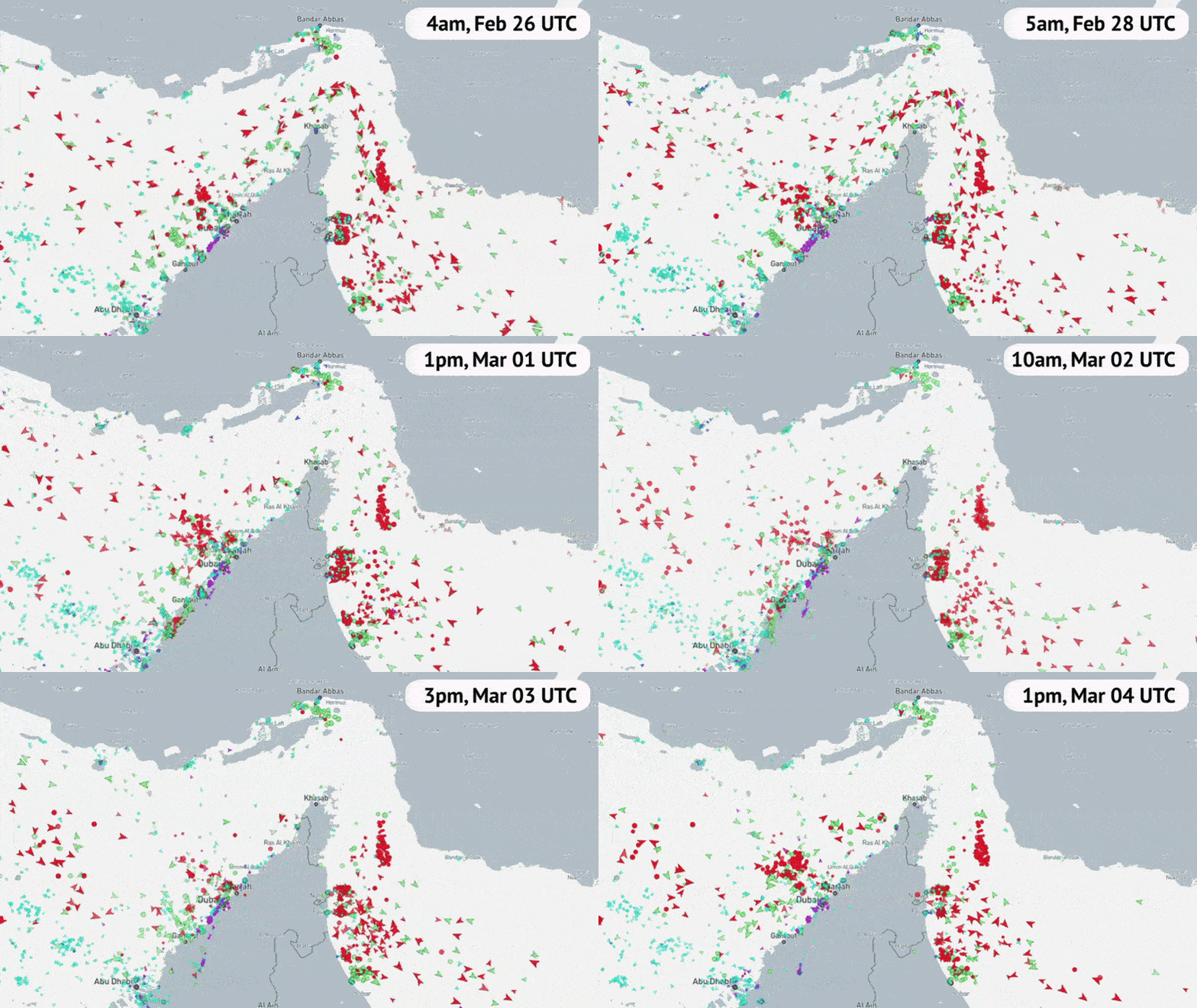

It’s the picture that should worry every motorist, every Australian grain grower and anyone who had hoped to get away to Europe for an overseas holiday.
The image shows how the Persian Gulf, one of the world’s most important waterways through which huge oil and LNG tankers move their precious cargoes to global customers, has effectively become a giant marina.
The Marine Traffic website tracks ships as they traverse the world’s oceans, seas and major rivers.
Until February 27, it showed movement out of the Persian Gulf through the Strait of Hormuz that separates Iran from Oman and the United Arab Emirates to the open waters of the Gulf of Oman. About 24 large tankers a day move through the strait.
But that came to a standstill as Israel and the United States began their attack on Iran, and Iran retaliated while threatening to close the waterway.
The seriousness of the situation was made apparent when the Maltese-flagged container ship the Safeen Prestige, which had left the UAE port of Ghantoot on March 2 on a short trip to the Saudi Arabian city of Jeddah.
Just a few hours into its run, it was hit by an unknown projectile. Its crew abandoned ship, which is now sitting just off the Oman coast.
It was a reminder of the danger faced by about 200 ships that sit inside the Persian Gulf, and the hundreds in the Gulf of Oman that had planned to head to key oil and gas ports in the UAE, Bahrain, Iraq, Kuwait and Qatar.
About 60 so-called very large crude carriers, which can carry around 2 million barrels of crude oil, are trapped in the Persian Gulf, according to data compiled by Lloyd’s List Intelligence.
US President Donald Trump has offered to shield tankers with the US Navy as they move through the strait, something that was done in 1987 and 1988 to protect Kuwait tankers from Iranian attack. No commercial ships have yet taken up the offer.
It means about 20 per cent of the world’s oil is stuck in the gulf with no clear sign yet when it will start to move to ports in Japan, South Korea, Singapore and China.
The flow-on impact has been immediate. Global oil prices have climbed by 15 per cent since the war, spot prices for LNG in Europe have jumped by almost 50 per cent, while there has been an increase in fertiliser prices of around 6 per cent, never mind accusations of price-gouging at Australian petrol pumps.
Both the federal government and the Reserve Bank are watching closely the increase in oil prices with concerns it could add an inflationary pulse to an economy struggling to keep a lid on overall prices.
The increase in oil is nowhere near the surge that occurred in 2022 after Russia’s invasion of Ukraine, when crude soared from $US67 a barrel to $US111 in four weeks.
Another concern is how airlines respond to the turmoil. Prices for one-way flights out of the Middle East soared when the war began.
Australians, who in December took a record 2.45 million trips to another country, spend more on international travel than they do on takeaway food. A lift in airline fares would hit the inflation rate.
Barrenjoey chief economist Jo Masters said the most immediate impact would be on oil prices, but shipping costs, which have already jumped since the war started, would broaden the inflationary impact.
Apart from the higher cost diesel to power tankers and container ships around the world, some are being rerouted away from the Suez Canal for fear of attack. Such long detours delay deliveries and increase travel costs.
She said if the transport costs increased this would flow on to everything imported into Australia.
“We’re going to get upward pressure on the headline CPI but whether that feeds into underlying inflation will depend on how high [headline inflation] gets and for how long it lasts,” she said.
Fertiliser prices are also a key concern, although these are likely to first hit farmers in the northern hemisphere who are about to top-dress their summer crops. Australia has an estimated five-week stockpile of fertiliser with industry analysts arguing most farmers have enough for autumn planting.
Prominent economic historian Adam Tooze said the timing of the war was “disastrous from the point of view of the modern agricultural cycle”.
From rice growers in India to wheat producers on America’s Great Plains, a lack of fertiliser now could produce longer-term price pressures on key crops.
“The Gulf region handles about one third of the global trade in inorganic nutrients, and in terms of the agricultural cycle, this is the key moment for shipments to be steaming out from the gulf towards the major agricultural zones of the world,” he said.
The Business Briefing newsletter delivers major stories, exclusive coverage and expert opinion. Sign up to get it every weekday morning.
 Shane Wright is a senior economics correspondent for The Age and The Sydney Morning Herald.Connect via X or email.