


Opinion

Increasing housing supply has been the government’s focus for four years, to solve an affordability crisis. But no matter how much cash, or rhetoric, is thrown at supply, it’s now apparent that it’s not helping Millennials to enter the housing market.
Supply was doomed from the get-go. The government’s initial target of 1.2 million new homes in five years could never be met. Reasons are manifold: steeply rising construction costs, material shortages, lethargic council approvals and increasingly onerous regulations, as well as critical labour shortages.
Extra workers are hard to find. Tradies can earn more on infrastructure projects, and it’s hard to lure the young off keyboards into arduous work such as bricklaying. TAFE has not kept up with apprenticeships, and immigration has not prioritised the skilled trades needed for housing.
Projects don’t stack up financially; there are increased insolvencies among builders; crackdowns by the NSW Building Commissioner mean fewer builders will take risks. The industry can’t be driven any further or faster.
Consequently, there’s a physical limit to the number of homes that can be built in any year. Supply is not keeping pace with population growth or increasing as fast as the government hoped.
A better way to see, and solve, the problem is to pivot from “supply” to “ownership”. The recent budget is evidence of a change of tack. Supply is still mentioned throughout (you can’t easily shake a shibboleth), but now the language used to support changes to negative gearing and capital gains tax emphasises intergenerational equity, to assist “ownership”. Touting ownership as the new aim helped empower a broken election promise.
Home ownership is a powerful rubric. Before and after World War II, it was invoked by Labor leaders Ben Chifley and John Curtin as the main aim for Labor, and Robert Menzies promoted Australia as “a property-owning democracy” in his appeal to the “forgotten people” in 1942.
Home ownership is a great idea in three ways: social strength and inclusion, environmental improvement, and financial security. These are often referred to as the triple bottom line.
In an owned home, a household’s health, security and stability grows, fostering identity and belonging, a sense of agency and civic pride. It gives dignity and a base from which people can participate in a community and society generally. It creates communal social security.
Second, an owned home is environmentally better than an equivalent rental, as owners have an incentive for better maintenance and to invest in upgrades, including using grants for photovoltaics to reduce energy demand and improve climate resilience.
Home ownership provides financial stability for a household, and society generally, building modest wealth over time without speculative risk. It enables households to borrow against it for health, education and lifestyle.
But ownership is heavily skewed in Australia: a third of households own their home outright, and many have a second, third or 10th dwelling. Another third are mortgaged, hoping to join the first third, but suffering the vagaries of the Reserve Bank of Australia’s decisions on interest rates. And the last third can only rent, often from the first third.
The solution to the housing crisis is to move that last third into ownership. And that’s not an issue of supply. Arithmetically, we have enough homes: our last census showed about 11 million dwellings for 10 million households.
It’s a problem of distribution, which could be accelerated with two further pivots: change our dwelling types, and change the funding.
We build the wrong homes for Millennials. Seventy per cent of our existing housing stock comprises suburban family homes, but less than 50 per cent of households are families. The demographics have changed. The recent alternative has been high-rise apartments, but they are too costly to build (and maintain). Most of our housing is too big or too expensive for singles and couples starting out.
We do need to build more dwellings, but we need them to appropriately house the people we have. It means changing the type and size of what is built.
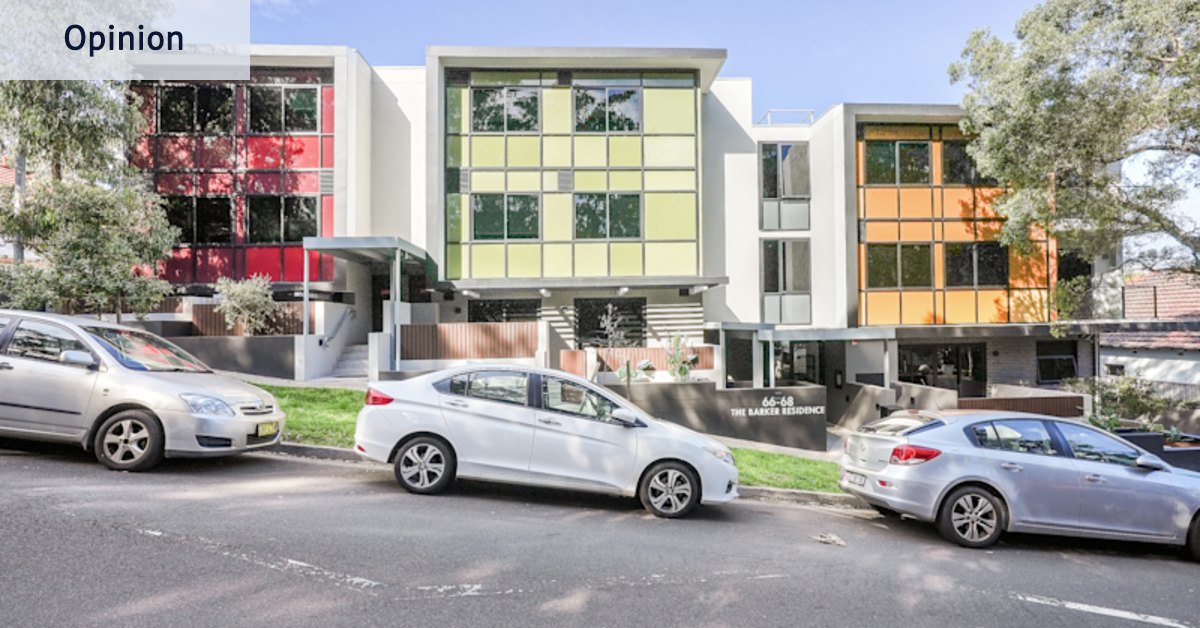
Townhouses are good, but better is the “low and close” of a well-known typology: the three-storey, walk-up flat. Loved by occupiers but also loathed for the plain bulky form and garish coloured bricks – especially those built in the ’70s – three-storey blocks of flats have been largely banned from our cities by planners’ zoning rules. And yet modest apartment buildings are ideal infill housing in the “missing middle” suburbs where they fit right in, using existing infrastructure and enhancing the “three S’s”: services, shops and schools. Where appropriate, they could replace standalone houses and yield a tenfold increase in households.
The suggested tax changes don’t go far enough. It’s not enough to discourage property investment; we need to positively discriminate towards home ownership by swapping tax breaks away from negative gearing and towards first home buyers. There’s a raft of measures to be considered, including tax relief on mortgage payments and differential interest rates, with first home buyers charged less (say 2 to 3 per cent) than buyers of second or investment homes.
Ownership is a better goal than increased supply, and the budget measures are a good start, but there’s lots more unpalatable work in the next budget if real change is to come.
Tone Wheeler is president of the Australian Architecture Association and the design director of environa studio, which specialises in social and sustainable architecture.
 Tone Wheeler is president of the Australian Architecture Association and the design director of environa studio, which specialises in social and sustainable architecture.