


Australian farmers are bracing for a global fertiliser crisis that will hit the price of bread and beer, as soaring shipping costs threaten to drive up prices for pharmaceuticals and online shopping orders.
US strikes on Iran have derailed fertiliser exports from the Middle East, where around 45 per cent of the world’s fertiliser supply is produced.
The timing could not be worse for local farmers, with the price spikes biting just as rain kickstarts the winter cropping season and farmers begin to start buying fertiliser.
Shoppers are likely to feel the pinch as the rising costs of growing wheat, barley and canola flow through to higher prices for a range of products, including bread and beer.
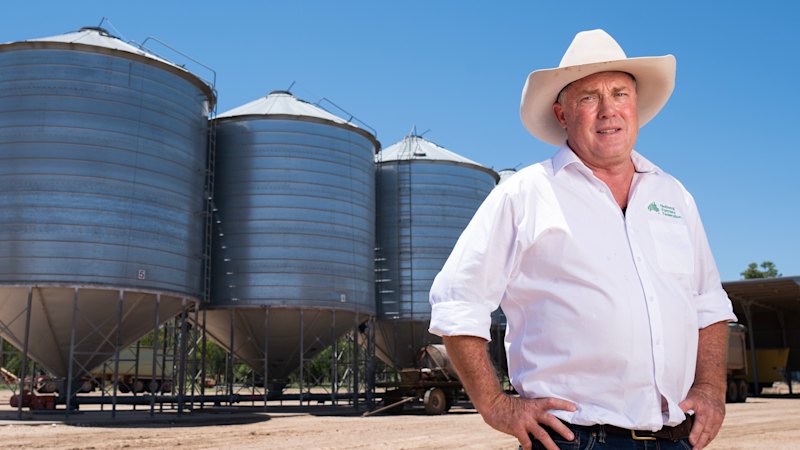
“It is very confronting for farmers now,” said Justin Everitt, a grain grower near Albury in NSW’s Riverina region and the NSW Farmers grains committee chairman.
“You try not to worry about the uncontrollables, but when it’s caused by other people, you get frustrated by it.
“We’ve got a potentially dry season coming up, we don’t have enough stocks of fuel and fertiliser in the country.
“It’s very hard to comprehend as a farmer out in his paddock, wondering what’s going on in the world.”
Freight disruptions have sent the cost of transporting freight skyrocketing, – something experts warn will almost certainly flow through to prices paid by Australian consumers.
“It’s likely going to get way more expensive for consumers doing online shopping from places such as Europe,” said Tom Jensen of the Freight and Trade Alliance.
Shipping companies have already introduced “conflict” and “war risk” surcharges, ranging from $US2000 on the cost of a standard 20-foot container, up to $US4000 on refrigerated containers.
Pharmaceuticals, as well as online shopping orders, are likely to be slow in arriving to Australia by air, while the costs to ship each order are expected to rise significantly as postal services and courier companies adjust their operations.
“It’s more of a fair call if these surcharges only applied to new bookings, but shippers are applying it to containers already in transit, so costs have gone up pretty much immediately,” said Jensen.
Shipping has already been halted, and insurance companies have cancelled their cover due to war risks, sending export costs soaring.
More than 150 vessels are anchored to avoid potential attack, while three have been damaged by drone strikes and one sailor has been reportedly been killed.
The Middle East produces about half the world’s urea, the globe’s most widely used fertiliser, and about one-fifth of the world’s nitrogen, which is also used on cereal crops.
“Fertiliser prices have potential to rise quite aggressively, particularly urea,” said Rabobank analyst Paul Joules.
On Tuesday, a senior Iranian official said that the Strait of Hormuz, a narrow choke point for shipping between the United Arab Emirates and Iran, was closed and that Iran would fire on any ship trying to pass. About 20 per cent of the world’s oil and seaborne gas exports move through the Strait.
Joule said the Iran war could drive greater price spikes than when Russia invaded Ukraine.
When that conflict started in February 2022, the price of urea rose 80 per cent. However, Russia only produces about 12 per cent of global urea supply, compared to 45 per cent from the Middle East.
Disruption to energy markets is compounding the squeeze on global fertiliser supply. Qatar, which supplies about 20 per cent of the world’s liquified natural gas, has halted exports. The drop in global supply is set to drive up the cost of gas, which is crucial for the manufacture of fertiliser that will further push up prices for farmers.
“There definitely is a risk of substantially higher prices,” Joules said. “If the Strait of Hormuz is disrupted for the next few months, then you could be talking about substantially higher fertiliser prices. If we see things quickly start to move again, then you’d imagine we could go back to more normal levels.”
National Farmers Federation president Hamish McIntyre said grain prices are depressed and fertiliser price spikes would add further stress.
“Our gross margins are always very tight and any further rise in our fuel price and our fertiliser price erodes that gross margin even further,” said McIntyre, whose family business McIntyre Agriculture grows around 25,000 hectares of cereal crops a year, largely for cattle feed.
Australia imports around 90 per cent of its urea, and McIntyre said the Iran war showed the need for more local production of essential agriculture inputs.
“It highlights the importance of having more manufacturing and refining in Australia, just so we can ride out these highs and lows.”
 Mike Foley is the climate and energy correspondent for The Age and The Sydney Morning Herald.Connect via email.
 Elias Visontay is a National Consumer Affairs Reporter at The Sydney Morning Herald and The Age.Connect via email.