






Last month, tax expert Bob Breunig told a Senate committee: “I don’t think we’re back to pre-French-Revolution times, but I’m worried about that.”
On Saturday, Australia got its clearest indication yet of its proximity to revolution. One Nation won around 20 per cent of the vote in the South Australian election. On primary votes, at the time of writing, it is the second-strongest party in the state. Yes, One Nation’s seat count remains limited – though perhaps higher than many thought. But any hope the pollsters were wrong, that people would not vote the way they said they would, turned out to be misplaced.
There are lots of reasons. One is the awful performance of the SA Liberals. Federal Liberals, take note.
Why One Nation, then? There are two broad points here, both important. The first is One Nation’s specific appeal: nationalist, racist, anti-Muslim, anti-immigration. For some voters, the One Nation taboo is gone: they are willing to declare their fealty to the party’s values.
For others, their desperation to vote for someone else is significant enough for them to abandon reservations. This is the second factor – where One Nation acts more as a proxy. Voters are dissatisfied. With what? With everything.
One Nation’s national rise is recent but is only the most recent symptom of a frustration growing for years, apparent in the sliding support for both major parties. How this frustration is expressed is volatile: remember that most of One Nation’s rise across the country has happened in just the past twelve months.
This means we don’t know who is most likely to gain from it. One Nation might continue to rise. A new party might appear. It is also possible the Liberal Party figures out how to use it.
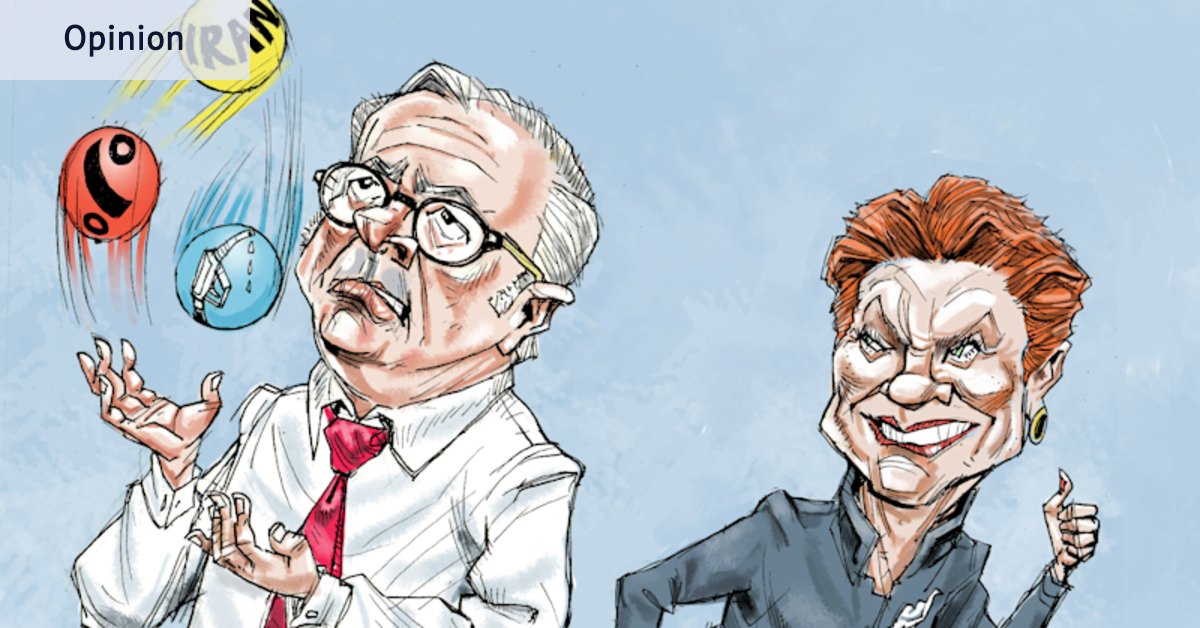
But there is only one party with the ability to tangibly address those feelings in the next few years: not just to take advantage of them but to assuage them and prevent us entering a new political era. Because it is in government, that is the federal Labor Party. This means that Anthony Albanese may be the most consequential prime minister of our time.
Interestingly, current conditions favour change of exactly the type you would expect Labor to pursue.
First, on climate. The fuel crisis is a chance for Labor to push harder than it has for a swift transition to renewable energy. It can do so because we now have a stark illustration of the need for self-sufficiency outside of pandemic conditions. Albanese spoke last week of the need for a “new economic model” that allows Australia to operate without dependence on others. But rhetoric will never cut through to voters like action will.
Second, on inequality. I pointed out recently that what One Nation voters share with other voters – except the diminishing number of Liberal voters – is a desire to shrink the gulf between rich and poor. This is an area Jim Chalmers has been talking about in the lead-up to the budget. The political case for strong action has now been underlined in South Australia. This is what Breunig was talking about – asked if we were heading back to “neo-feudal” times when inheritance defined a person’s life, he said, “That is the trajectory that we are on”. That’s how you get a revolution – or One Nation.
Finally, inflation gives Labor a persuasive explanation for the need to cut spending and close tax loopholes. This government is heir to a problem that has been developing for years: growing expectations of government services without money to pay for them. Chalmers has been foreshadowing difficult conversations since 2022. In recent weeks, he has made clear he believes now is the time those conversations will be understood.
In its first term, Labor was active in each area – while proceeding very slowly. There were two reasons for this. First, Albanese wanted to win voters’ trust by governing carefully. Second, inflation made reform difficult and – after the Voice referendum – pushed the government towards managing what was immediate.
We may be heading into another such phase. Friday’s warning from the International Energy Agency that measures like working from home and rostered road use should be implemented – which will be emphasised when its chief speaks in Canberra today – indicate this possibility.
But if war in Iran ends, then focus will be purely on the resurgence of inflation. The question Labor then faces is this: will it allow inflation to kill the ambition of its second term too?
This is an encapsulation of the dilemma this government has always faced. It has largely chosen a calm tone and management over large-scale reform. This has been an effective short-term political approach.
But in delaying dramatic reforms, another crisis – around inequality and the desire of some voters to change the system – remains largely unchecked. In the next two months that dilemma reappears in concentrated form. If Labor merely manages, does it win the short-term while sacrificing the long term, steering the country through one crisis while steering it into another?
There is no doubt the government is caught in a difficult spot. But then this is a consequence of its approach in its first term. That delay now means there is arguably too much weight put on this budget. But the danger is that without a forcing moment – like the budget – delay is always the more inviting option.
Over the four years of this government, its policy themes have bubbled away, mostly in the background: concern for issues like self-sufficiency, climate, services, inequality and inflation. They have been largely subsumed, though, by the government’s greater theme: its sense of acting slowly, carefully, cautiously. Perhaps the next months will make clear that it is gradualist all the way: that what you have seen is what you will get. Or it might be that Labor finds a different, sharper definition, as the themes which have so far hovered in its background come to the fore. A quiet revolution in its governing approach, you might say, in order to head off a noisier, disastrous one in the country at large.
Sean Kelly is author of The Game: A Portrait of Scott Morrison, a regular columnist and a former adviser to Julia Gillard and Kevin Rudd.


