










Australia’s new online age verification codes risk driving pornography consumers toward illegal content, stripping sex workers of income, and generating records of citizens’ sexual viewing habits, according to warnings from sex workers and independent content creators.
The nation’s most popular pornographic websites went dark in Australia on Monday after the eSafety Commissioner’s Age-Restricted Material Codes – two years in development and formally registered six months ago – went live. They require online platforms to verify users are over 18, with non-compliance carrying penalties of up to $49.5 million per breach.
Canadian private equity-owned Aylo – which operates Pornhub, RedTube, YouPorn and Tube8 – responded by blocking Australian users entirely, while VPN downloads have surged.
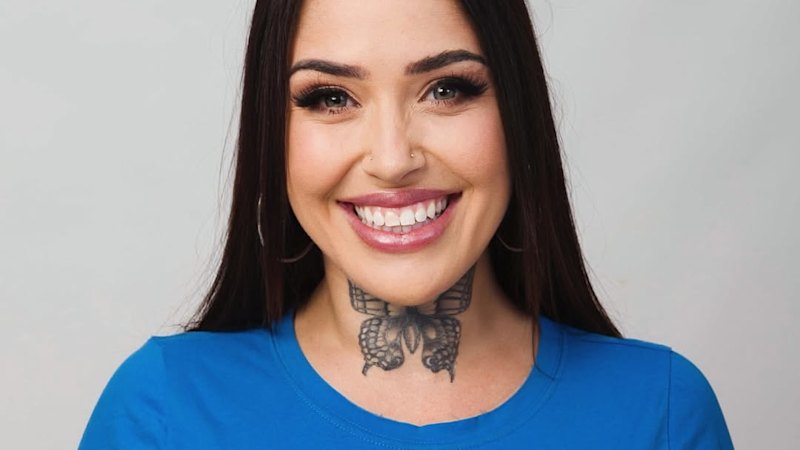
The laws are facing mounting criticism from Australia’s sex workers and content creators. Nikki Justice, an Australian comedian and top 0.2 per cent global OnlyFans creator, said she supports the laws’ stated goal but that their design is fundamentally flawed.
“I work in the adult industry, so I’m probably the last person some people expect to say this, but I actually agree with the goal of the new age verification laws,” she told this masthead. “None of us got into this industry thinking, ‘Great, I hope teenagers are watching this.’ That’s a completely reasonable objective and most adult creators I know agree with it.”
Requiring adults to upload government identification linked to their sexual viewing habits across dozens of individual websites creates what Justice describes as a structural privacy failure, however.
“Major corporations and even governments get hacked all the time. Many creators support age verification being handled at the device or operating-system level instead, through phone providers or app stores. That allows age to be verified once without requiring people to upload sensitive documents to dozens of different websites.”
Justice said that sex workers were already feeling the economic impacts of the new laws. “The adult industry isn’t just giant corporations any more. It’s thousands of self-employed creators who run their own small businesses online,” she said. “When traffic drops because of these regulations, it’s us independent workers who feel it first.”
Mish Pony, chief executive of peak sex worker body Scarlet Alliance, said the laws would push consumers toward offshore sites that host stolen and illegal content. That’s been the case in the UK, where similar legislation took effect in July 2025. Pornhub traffic fell 47 per cent, but research found significant audience migration to smaller, less-regulated platforms with fewer content checks and greater likelihood of hosting illegal material.
“That leaves sex workers not earning income from their content,” Pony said, “with obvious flow-on effects to lower earnings and being pushed into working in ways that are less safe.”
Blue Mountains-based sex worker Jenna Love said non-compliant sites were rife with stolen content. “People find ways around things, and the ways around them are particularly damaging to the people in the content,” she said.
“Those sites tend to be the ones that have all of our content stolen and uploaded without our consent … We’re not getting any benefit, and most of the time we don’t even know it’s up there.”
eSafety said it was monitoring compliance across a wide range of services and noted that a number of providers were in the process of implementing additional age assurance processes. It also said that Aylo had not withdrawn its paid subscription services in Australia, only its free services.
“The codes do not prevent adults from accessing, viewing, and paying for material such as online pornography,” a spokesman said, adding that Pornhub receives three times the monthly site visits of its closest Australian competitor and nearly 10 times as many monthly users as the tenth-largest provider.
“Smaller providers are not getting a free pass, and we will be watching for migration to their services,” he said.
The regulator also pushed back on characterisations that the framework had blindsided the industry. eSafety said it had been consulting on age verification since 2021, held roundtables with stakeholders – including Scarlet Alliance – between November 2021 and July 2022, and had worked with the peak body to produce regulatory guidance for members. A Senate inquiry last year received submissions from Scarlet Alliance and other sex industry groups; the committee ultimately made no recommendations relating to the codes.
In South Australia, where aspects of sex work remain criminalised, identity documentation collected through verification systems could potentially be used against workers. Pony said sex workers are legally barred from entering the United States, making any digital record of their professional activities a material legal risk extending well beyond browsing habits.
Under eSafety’s news codes acceptable verification methods include photo ID, facial age estimation, biometric scans, credit card checks and digital identity wallets.
Digital Rights Watch head of policy Tom Sulston said the codes’ broader privacy implications fell disproportionately on vulnerable users. “Young people will trivially sidestep age verification with VPNs or similar tools, while the rest of us take a privacy hit when our IDs become associated with our internet browsing,” he said. “That’s a problem for everyone, but particularly minority groups such as LGBT Australians who may want to keep their sexual preferences private.”
Justice, Pony and Digital Rights Watch all said that device-level or operating-system verification – through phone providers or app stores – would be a more coherent alternative, confirming age once without generating distributed identity records across hundreds of sites. That argument that has also been prosecuted by social media apps including Snapchat in relation to Australia’s teen social media ban.
Love said the policy debate had consistently excluded those most affected. “There’s often talk about protecting women and children. I’m always asking, which women and children? Because it’s certainly not the women who work in the sex industry. That’s how we feed our kids.”
Sulston said the evidence base for the entire framework remained absent. “Rather than lazy, half-baked age-assurance schemes, we should focus on protecting privacy and equipping young people with media literacy and sex education. That’s more work, and more expensive, but it will actually help.”
The Market Recap newsletter is a wrap of the day’s trading. Get it each weekday afternoon.


