








Updated ,first published
The remaining seven women and 14 children linked to Islamic State have arrived in Damascus after leaving the al-Roj camp, and are on their way back to a frosty reception in Australia.
Family advocate and Western Sydney doctor Jamal Rifi confirmed the group were in the Syrian capital and told this masthead he hoped they would be back in Australia next week. He would not confirm they would be met there by Australian supporters, saying only, “we have things in process”.
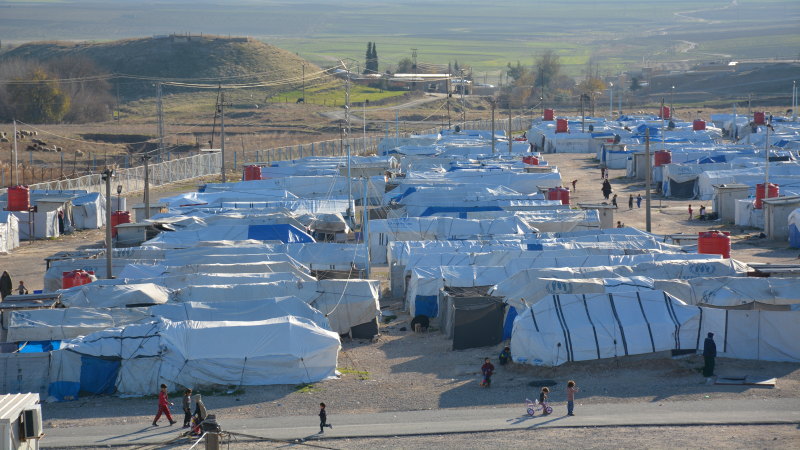
Camp director Haval Rashid confirmed the movement of women overnight Australian time, saying there were now no Australians left in al-Roj, where they have lived for the past seven years.
Five of the women and seven children are expected to return to Sydney, and two women and seven children to Melbourne. It’s unclear what criminal charges, if any, the women might face when they arrive.
New exclusive polling, conducted in mid-May after an earlier cohort of four other women and their children had re-entered Australia, confirms the women’s return is deeply unpopular in this country.
The Resolve poll asked what the government should do with them. It found 39 per cent of Australians believe the women should be jailed or put in detention “until we know it is safe to release them”.
A series of options were presented to respondents, and only 11 per cent said the women who went or were lured to live under Islamic State should be able to live freely in Australia unless they are charged with a crime.
Those on the right of politics significantly favoured harsher treatment, with almost half – 49 per cent – of Coalition voters, and 60 per cent of One Nation voters favouring indefinite detention. Eight per cent of Coalition voters and just 2 per cent of One Nation voters believed they should be able to live freely unless they are charged with a crime.
Almost a quarter of respondents to the poll agreed the women should take part in deradicalisation programs to “ensure they fit back into Australian life”, and about 16 per cent said they should be monitored with electronic bracelets or via surveillance.
Another 23 per cent agreed with the proposition that they “should take part in deradicalisation programs to ensure they fit back into Australian life”.
Labor and Greens voters were only slightly less likely to favour the detention option. The wide suspicions have been echoed in the political response in Australia.
Social Services Minister Tanya Plibersek told ABC TV on Friday: “I can tell you that they’ll face the same consequences as the first group, which is if there are any crimes that they’re accused of, they’ll be taken into custody and treated with the full force of the law.”
And Opposition leader Angus Taylor said the government “should be doing everything in its power to prevent these people from coming.
“They turned their back on this country to support a terrorist organisation – one that has been guilty of extraordinary atrocities, including on Australians.”
Meanwhile, advocates for the women’s cause, including family members, have been largely silent about the group, who they are, and the seven years they have spent in detention.
Rifi said Australians were safer with this cohort being repatriated.
“Having those children growing up into adulthood in the Middle East is a false sense of security. There was a risk those kids would fall under the influence of radicalised people and when they reached 18 or 19, nothing would stop them.
“Having them and their parents here in Australia, under the watchful eye of our authorities, and undergoing reintegration, deradicalisation and other educational courses, I believe means Australians are safer with this cohort here.
“Our security agencies have proved time after time that they are on top of things.”
He added: “If their mothers have broken any Australian laws, we have full confidence in our authorities and our judicial systems to deal with it appropriately.”
When an earlier cohort of four women and nine children returned with family members on May 7, three of the women were arrested. Two were charged with crimes against humanity relating to enslavement and using a slave, and one was charged with entering a terrorist zone.


