


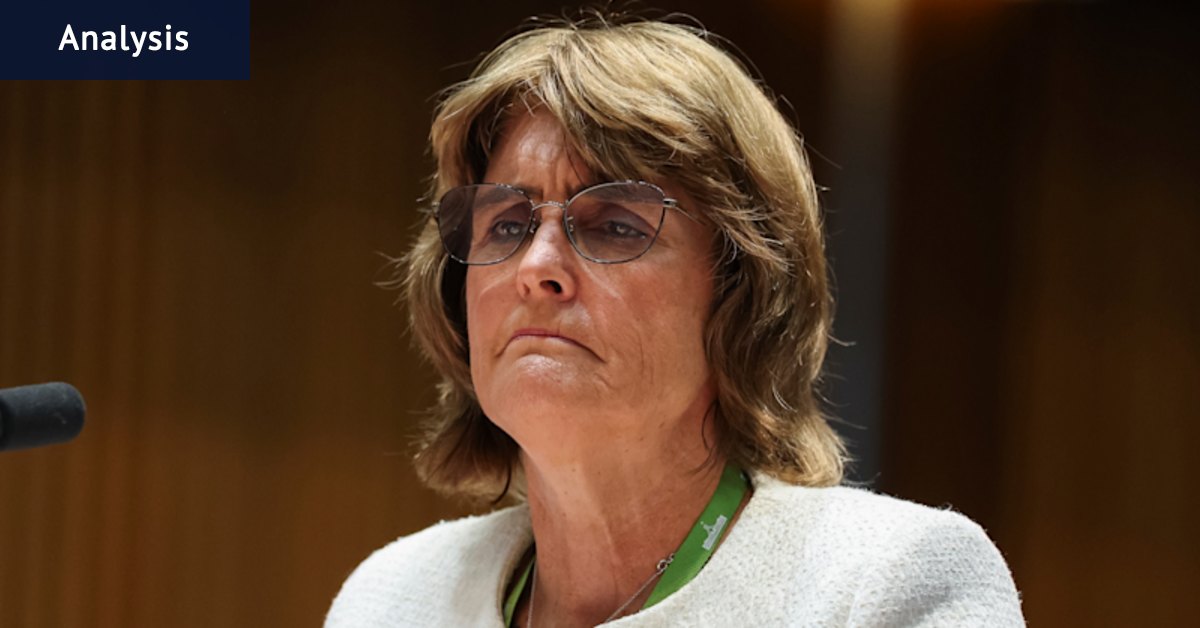

Reserve Bank governor Michele Bullock knows how not to answer a question.
When every interlocutor wants Bullock to back their particular view of the world, the governor – like her predecessors – usually goes out of her way to avoid saying something that may be politically contentious.
This skill is most often tested during the various parliamentary committee hearings where one side of politics or the other seeks to get Bullock to agree with their take.
Almost always, she smiles and offers a couple of carefully chosen sentences that give nothing away.
But on Thursday, the governor was pushed to the point of anger as Nationals senator Matt Canavan suggested Bullock was gaslighting Australians with her view of the economy.
Canavan, upset that Bullock had the temerity to suggest the country was not the smoking ruin of disaster the Coalition says it is, took exception to her description that the economy was “OK”.
“I think people are only going to get angrier in this country if they’re gaslit into thinking the economy is OK when their lived experience is absolutely terrible right now,” he said.
Bullock, who had already spent much of the previous hour pushing back at Coalition efforts to put words into her mouth, had clearly had enough. The subdued face of a central banker was dropped.
“I take exception to that comment. I am not gaslighting anyone,” she said with a flash of anger.
Accusing your political opponent of gilding the lily is one thing. But Canavan had accused the person who is singularly most important to the day-to-day operation of the Australian economy of lying to the public.
It demanded, and received, the contempt it deserved.
Bullock conceded the economy was not “good”, but pushed back at the professional moaning class that believes the world’s end is just around the corner.
Household disposable income, the best measure of whether people have money in their pockets as it takes into account wage growth, taxes paid, inflation and interest, has been climbing for the past two years and is well north of where it was pre-COVID.
While the bank has failed (for a decade) to hit its 2-3 per cent inflation target, it continues to succeed on its equally important performance indicator – keeping as many Australians in jobs as possible.
With unemployment at 4.1 per cent, Australia has one of the lowest jobless rates in the developed world. In the G7, the group of the world’s richest nations, only Japan (at 2.6 per cent) is lower.
“[There] are some parts of the economy that are doing well, and the labour market, I think, has been a really positive thing for his country,” she said.
Canavan complained that the labour market wasn’t “doing that well”.
If you want a labour market that’s not doing well, check out Canada, where, despite interest rates being at 2.5 per cent, the unemployment rate is 6.8 per cent. If Australia had that jobless rate, instead of 628,000 people being out of work there would be more than 1 million.
Former Federal Reserve head Alan Greenspan, who went out of his way to ensure that his prognostications about the American economy were effectively unintelligible, once told a US Senate committee: “If I seem unduly clear to you, you must have misunderstood what I said.”
There was no misunderstanding Bullock. If you’re going to have a crack at her, it would be better to bring some facts rather than just a vibe and hollow rhetoric.
Cut through the noise of federal politics with news, views and expert analysis. Subscribers can sign up to our weekly Inside Politics newsletter.
 Shane Wright is a senior economics correspondent for The Age and The Sydney Morning Herald.Connect via X or email.