











School principals are set to have authority to decide which provisions HSC students receive, such as extra time or writing essays on a computer, following a sweeping review aimed at levelling the playing field between public and private school students.
A growing number of students with disabilities ranging from ADHD to autism are sitting HSC exams each year, with one in six students applying for provisions ranging from snack breaks to using a computer.
But the provision system has been plagued for years by a disparity between rich and poor schools. The independent review by Urbis noted that high costs of psychiatrists and other specialist appointments effectively priced some students out.
The NSW Education Standards Authority, which runs the HSC, has agreed in-principle to implement eight of the review’s recommendations, with principals from this year able to approve the use of a fan, eye drops and wearing a hat in exams.
For other provisions, such as rest breaks for students with anxiety, the authority will explore which mechanism and guidelines should be put in place over the next two years after consultation with education leaders and principals.
“The expansion is not because we’re being soft,” said NESA chief executive Paul Martin. “It’s because more kids need more support, and we have to respond to that, as anyone else in society does.”
He said while principals would be given more power to decide, the consultation would work through a way of giving principals the power to grant extra time in a way which was consistent across the board.
“If rest breaks are given to some students in some schools but not given to other students in other schools – and students have exactly the same presentation – we’ve got an equity problem.”
Evidence requirements will also be changed to reduce the burden on students, schools and the health sector. NESA will investigate removing the need to provide recent evidence of a disability for students who already receive NDIS funding.
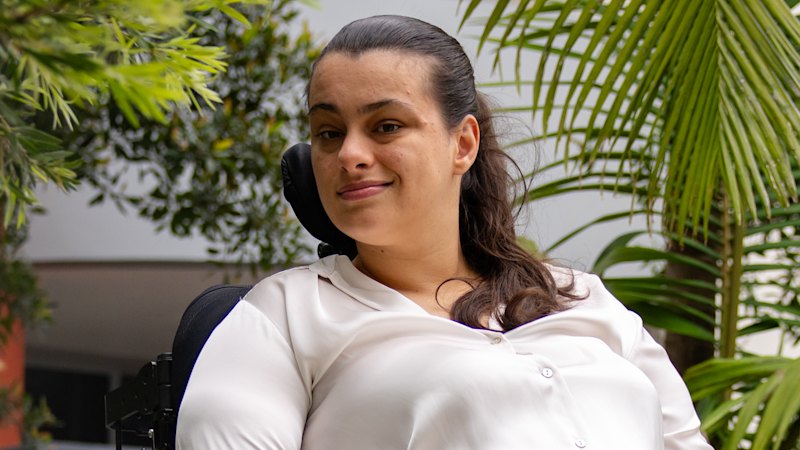
Sophie Geeves, who graduated from Pittwater High in 2015, found the process to prove she had cerebral palsy and was deserving of adjustments was unnecessarily arduous, prompting her to campaign for a better system with advocacy group CPActive.
“It’s not as simple as writing a report and saying ‘I’ve got cerebral palsy and I’ve got a hearing and listening impairment’. It should be that simple, but unfortunately, it is not,” she said.
For her HSC, she obtained reports from rehabilitation specialists, occupational therapists, psychologists, physiotherapists, audiologists and surgeons.
“These reports went on for pages and pages about the impact of my disability, and really intricate details of my life and my diagnosis.
“I was often taken out of school to go to these appointments to prove … the level of impact of my disability on my education.”
Year 11 Bishop Tyrrell student Lachlan Woodful, who has cerebral palsy, welcomed the change because it would save him hours of time in appointments with medical specialists.
“That will make the process a lot more streamlined and easier. It will save families having to spend thousands of dollars for a specialist to write a report,” he said.
The biggest benefit for him under the changes is a move to allow more students with a physical disability to use a computer with more speech-to-text and text-to-speech technology.
He has used a scribe in school exams previously, which required the extra skill of being able to think and dictate in entire perfect sentences, as well as use upper and lower case and punctuation correctly.
“I’m expecting to be able to use a computer with all my examinations, which is a huge relief for me,” he said.
His mother, Tina Woodful, said using a scribe made writing essays in the HSC so much more difficult than simply learning the content and answering a question.
“He just has to put in so much more effort to get that information in his head down on paper than what his siblings had to do,” she said.
She said their family had been collaborating with his school and medical specialists for more than a decade and welcomed the move to give principals more power.
“As far as being really across instinctively what provisions would be appropriate for a child, I think that it makes a lot of sense for the school to have more input into that,” she said.
Start the day with a summary of the day’s most important and interesting stories, analysis and insights. Sign up for our Morning Edition newsletter.


