


Meanwhile, the White House has said the planned Trump-Putin summit meeting to discuss ending the war in Ukraine, which was called off this week, is not completely off the table.
“I think the president and the entire administration hopes that one day that can happen again but we want to make sure that there’s a tangible positive outcome out of that meeting”, White House spokeswoman Karoline Leavitt said at a news briefing.
Rising tensions
In Europe, Lithuania’s Foreign Ministry said it would summon Russian embassy representatives to protest the airspace violation amid rising tensions in the region. The Baltics – formerly part of the Soviet Union – are increasingly concerned by neighbouring Russia’s aggression against Ukraine.
“This incident once again shows that Russia is behaving like a terrorist state, disregarding international law and the security of neighbouring countries,” said Lithuanian Prime Minister Inga Ruginiene on Facebook.
“Lithuania is safe. Together with our allies, we look after and will defend every centimetre of our country”, she added.
Loading
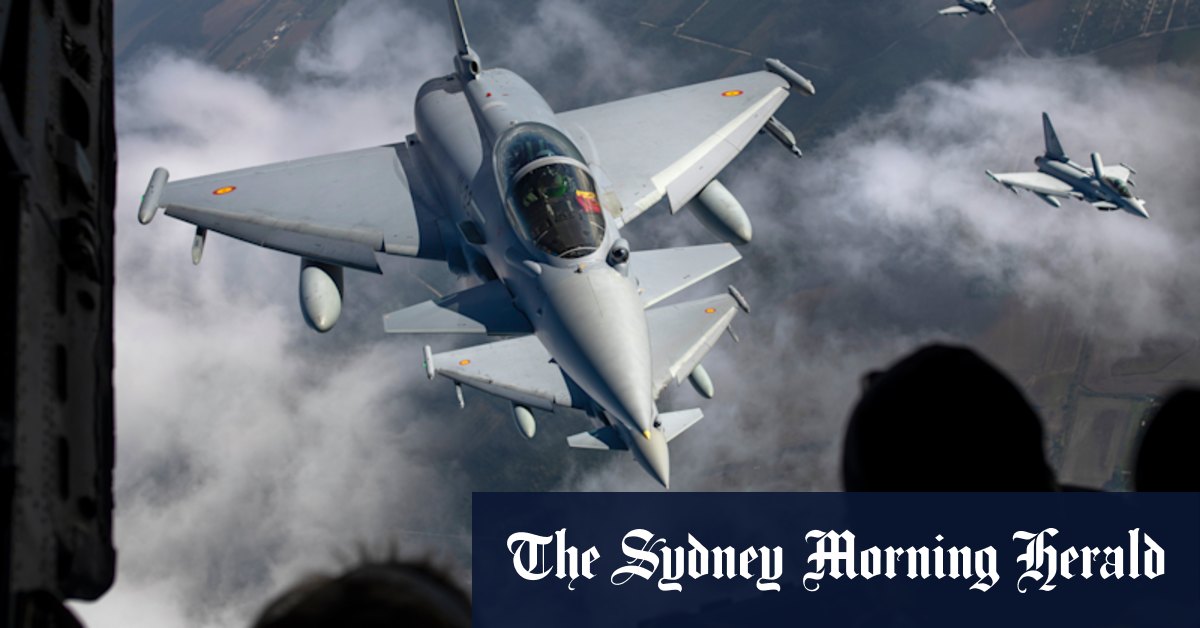
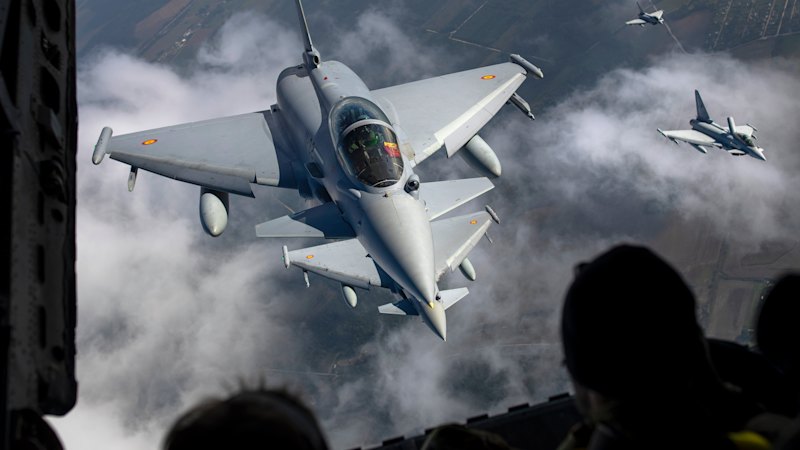
Three Russian military jets violated Estonia’s airspace for 12 minutes on September 19. NATO scrambled fighters and escorted them out. Russia denied its planes entered Estonia, saying Tallinn had no evidence to back up its claim and was seeking to ratchet up East-West tensions.
Nine days earlier, more than 20 Russian drones entered Polish airspace. NATO jets shot some of them down, the first time an alliance member had fired on Russian targets since the start of the war in Ukraine.
The US general serving as NATO’s top commander said earlier this week that Russia appeared to have been deterred by NATO’s firm response to the incursions into Polish and Estonian airspace, but Moscow is expected to continue testing boundaries.
On Wednesday, Russia staged a test launch of an intercontinental ballistic missile in an apparent move by Putin to prove his forces were ready for nuclear war, a signal he has used in the past to try to ward off action from major powers.
A broadcast showed Putin sitting at a circular desk with six screens to monitor the launch of an intercontinental missile from northern Russia; at the same time, a submarine fired a missile from the Barents Sea.
Russia also sent Tupolev Tu-95 bombers into the air to fire cruise missiles, and in a statement, said it had tested its military command structure and the procedures for launching nuclear weapons.
Reuters, AP
