







King Charles, as the Prince of Wales in 2021, urged leaders to go on a “war-like footing” to help the environment when he spoke at the UN gathering in Glasgow.
“With a growing global population creating ever-increasing demand on the planet’s finite resources, we have to reduce emissions urgently and take action to tackle the carbon already in the atmosphere, including from coal-fired power stations,” Charles said at the time.
This year, Prince William is wielding star power to try to nudge global leaders towards action.
“By hosting the prize in Brazil, we’re shining a light on the solutions emerging from this part of the world and drawing global attention to the urgency and opportunity of climate action,” he told Hello! magazine.
The remarks highlight the way the royal family can use its “pull” in the mainstream media to ensure its message reaches millions of people – which is to say, voters. Hello! published the prince’s comments on its cover as part of a special “green” issue this week.
“As a father, I think constantly about the world my children will inherit,” he told the magazine.

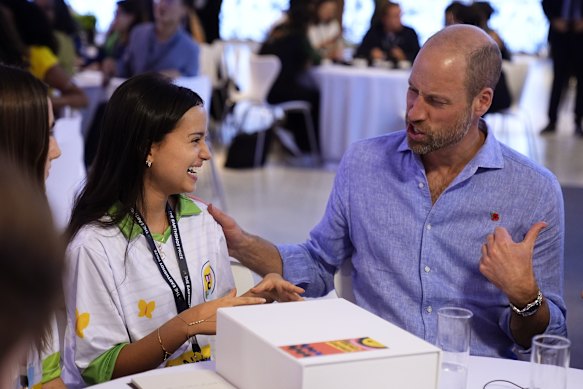
Prince William meets participants of the Generation Earthshot program on day one of his visit to Brazil for the annual Earthshot Prize Awards.Credit: Getty Images
“I want them to grow up surrounded by nature, opportunity and a sense of hope about the future. But I also know that unless we act boldly now, that future is at risk.”
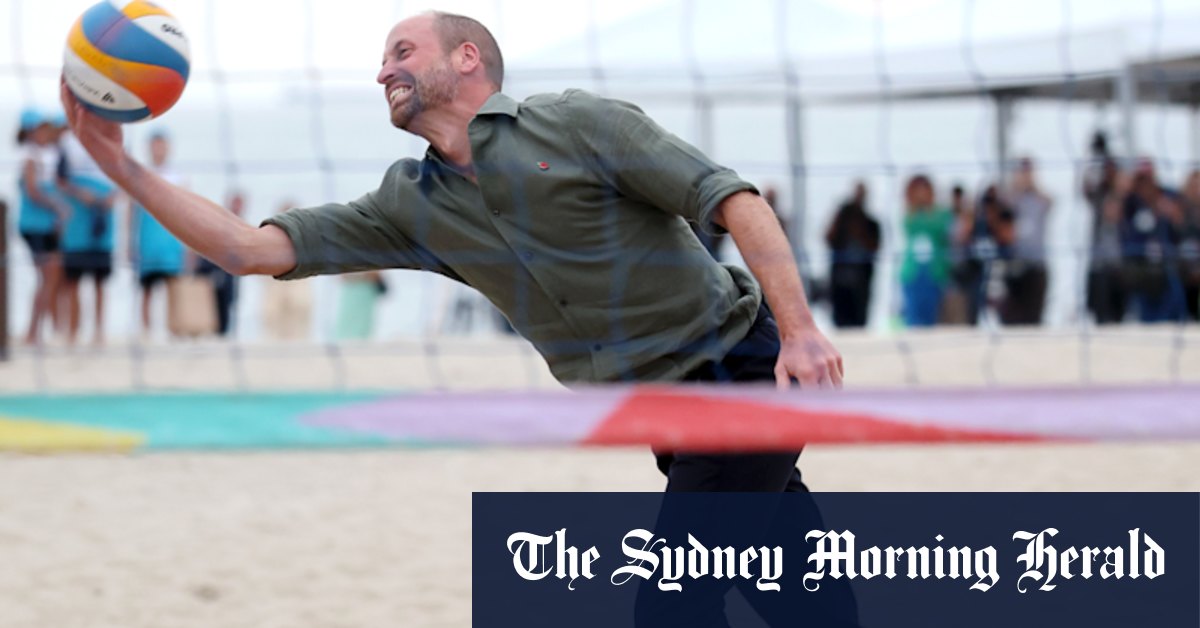
Arriving in Brazil ahead of the event, William met with participants in the Generation Earthshot program, which invites students and their teachers to discover solutions to help repair the planet, and took time out to play beach volleyball and football with local kids.
The Earthshot Prize is a non-profit entity that runs annual awards, rather than a policy advocacy group, but it has donors with deep pockets and directors with real influence.
Prince William and Princess Catherine set it up five years ago as an offshoot of their Royal Foundation, which supports causes such as childhood development, mental health and conservation.
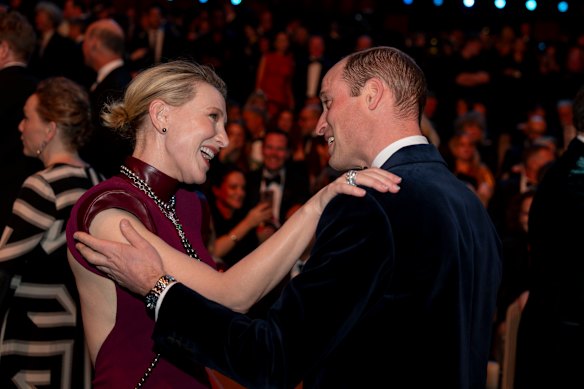
William speaks with Cate Blanchett at the Bafta Film Awards last year.
Credit: Getty Images
The £50 million ($100 million) in support for Earthshot came from more than 20 companies and foundations such as the Aga Khan Development Network, the Bezos Earth Fund, Bloomberg Philanthropies, DP World, the Jack Ma Foundation, Mastercard, Standard Chartered Bank, the Temasek Trust and Uber.
The trustees are chaired by Christiana Figueres, previously the executive secretary at the UN agency that holds the annual climate summit. Ardern is a trustee, alongside global business chiefs and policy leaders.
Attenborough, Blanchett and Bundchen are on the prize council that decides the awards. Other members include Indra Nooyi, the former chief executive of PepsiCo, and Ngozi Okonjo-Iweala, the director-general of the World Trade Organisation.
Loading
Behind it all is Jason Knauf, who worked in the royal household for almost five years before running the Royal Foundation for William and Catherine, later becoming Earthshot chief executive.
Knauf was educated in New Zealand and began his career as an adviser to Helen Clark when she was prime minister of the country.
The 15 finalists for this year’s prize include projects designed to prevent deforestation, find new ways to store renewable energy in batteries and minimise electronic waste.
One finalist is from Australia: the Quay Quarter Tower in Sydney, otherwise known as the new AMP tower, which retained 65 per cent of the original tower and therefore avoided more than 12,000 tonnes of carbon emissions.
Get a note directly from our foreign correspondents on what’s making headlines around the world. Sign up for our weekly What in the World newsletter.


