









Strathbogie Shire Mayor Claire Ewart-Kennedy said a decision was long overdue.


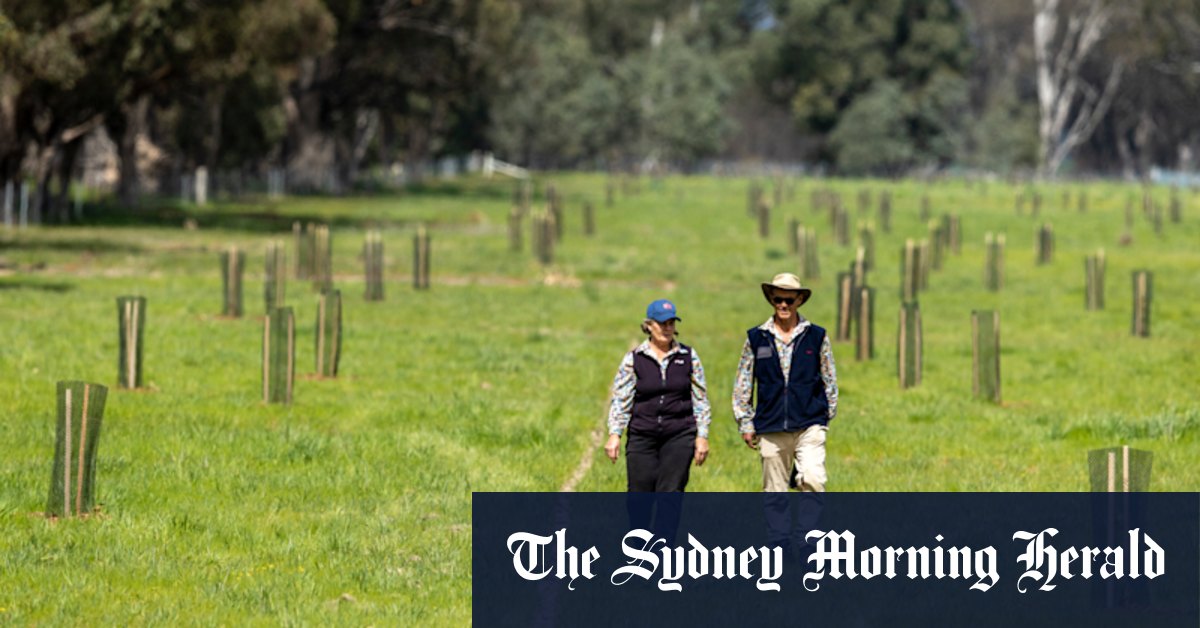
A young wattle tree on Donna Winter-Irving’s farm. Credit: Jason South
“I think everyone would admit they’re frustrated,” she said. “It shouldn’t take so long.”
Ewart-Kennedy praised the residents who had fought to protect the trees from development but said more people were moving to Nagambie, and they needed somewhere to live.
“We are very conscious that we don’t want unnecessary removal of native vegetation, but we’re also aware that houses need to be developed. There’s a housing crisis in the area.”
A state government spokeswoman did not give any indication of when a decision would be made about the trees’ fate.
“Any proposal will be considered on its merits, and all submissions will be considered as part of the assessment process,” she said.
Loading
However, the spokeswoman confirmed there was an active application for a ministerial permit to remove native vegetation through the Development Facilitation Program. She also said the Department of Transport and Planning was reviewing feedback on the draft Strathbogie planning scheme amendment, including the vegetation permit.
The spokeswoman said an earlier vegetation permit application had been refused after a priority projects standing advisory committee process identified “a number of issues that remain unresolved”.
The Age made multiple attempts to contact Hallmarc, which developed the Elloura estate, but the company did not respond to requests for comment about the trees.
The federal government listed grey box eucalypts as endangered in 2010 following advice from the threatened species scientific committee.
Arborist John Fordham said former grazing land that had already been cleared should be used for housing developments rather than knocking down established trees.

Donna and Jim Winter-Irving on their land where they recently planted hundreds of native trees. Credit: Jason South
“There’s no need to be doing that in the rural sphere because there’s ample land around,” he said. “It’s just unnecessary.”
Fordham said the trees played a crucial role in absorbing carbon and providing habitat for native fauna.
Melbourne University senior research associate Greg Moore, who has visited the Nagambie site, estimated at least two-thirds of the trees earmarked for removal were in good shape.
“They’re not all great trees,” he said. “But there are several very good specimens.”
Moore said retaining the trees made economic sense because their aesthetic and environmental value would make the estate attractive to prospective buyers.

A sapling on the Winter-Irving farm.Credit: Jason South
“This is a very well established phenomenon.”
Winter-Irving said even grey box gum trees that were leafless and dead provided habitat to insects and wildlife in their bark and hollows. All of those trees, she said, were worth protecting.
“They’re resilient trees that will grow in tough conditions,” Winter-Irving said. “That’s why we love them.”
The Morning Edition newsletter is our guide to the day’s most important and interesting stories, analysis and insights. Sign up here.


