








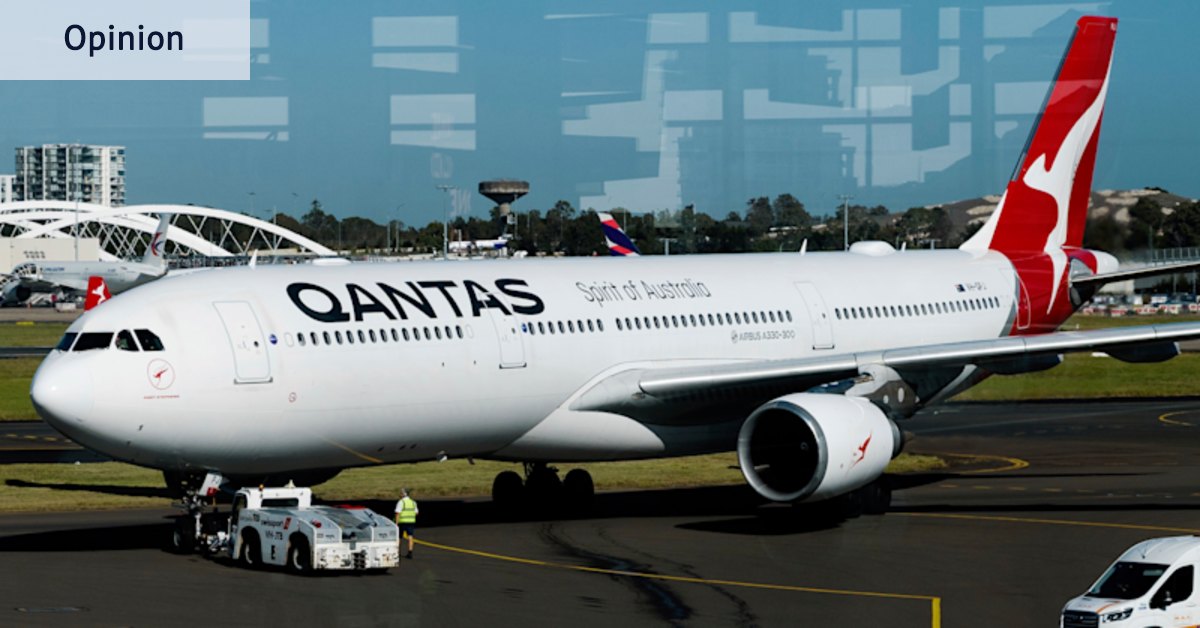
The spectre of Qantas’ profit halving this year is the latest headline-grabbing analysis that is galvanising aviation investor panic. This is despite an improvement this week in broad-based sharemarket sentiment thanks to glimmers that Donald Trump had begun navigating a conflict off-ramp.
But for aviation investors, any relief is fragile. Just this piece of negative news sent Qantas shares tumbling 2.2 per cent on Thursday, bringing the share price plunge since the conflict began to almost 15 per cent.
Alarm bells have now risen to a blare for investors in airlines around the world as they attempt to assess the earnings carnage of the war in the Gulf from which there is nowhere to hide.
And for passengers – even those in places geographically and politically remote from the Strait of Hormuz, the tentacles of the crisis have hit them with higher fares, flight changes and cancellations.
For the initial couple of weeks of the conflict, there was a hope that it would be short-dated and that the oil price and supply shock would be avoided.
Despite conflicting messages from the US and Iran, this war doesn’t yet possess a sunset clause, so the volatility in the oil price and the damage it inflicts on airlines like Qantas and Virgin rolls on.
At a certain point, enough damage has been inflicted on their earnings that even if the war finished this week, there will be significant damage already inflicted that could extend into earnings in the second half of the calendar year.
And for customers there is plenty of uncertainty about refunds on travel to and through the Middle East. That will depend on the conditions attached to the ticket.
So it’s curious that neither Australian-based airline has notified investors with a profit warning that signals changes to pre-war earnings expectations.
Air New Zealand simply withdrew its previous profit guidance and effectively proclaimed that all bets were off.
Analysts have been feeling their way through the dark based on the limits to their information. They know roughly how much each airline will be hit by the increased cost of aviation fuel, having already factored in the hedging they have in place for oil price and refined aviation fuel.
What the modelling from experts finds more difficult to plot is what mitigation moves Qantas and Virgin can employ to buffer their earnings.
A just-released investor note from Citi suggests that if Qantas did nothing, the negative fuel impact would be $150 million to $175 million for 24 days.
But like other experts, Citi analysts acknowledge that Qantas has levers it can pull to mitigate the negative earnings impact.
As we have already seen, Qantas and Virgin have announced increases in their fares by 5 per cent. But this does not necessarily translate into an equivalent increase in revenue. For Qantas’ lower-cost carrier Jetstar, a theoretical 10 per cent increase in fares will increase revenue by around half that amount because it would decrease demand, according to Macquarie. It anticipates the downside risk to Qantas’ earnings for the current year to be circa $174 million pre-tax.
Qantas has also responded to the heightened oil price by scaling back some capacity both domestically and internationally, while on Thursday it also re-deployed some of its larger planes onto routes to Europe.
On the domestic front, those longer-range routes to and from Perth and the east coast capitals have taken the biggest hit. Additionally, newer and more fuel-efficient planes are being more widely employed.
Jetstar has already cut more than 10 per cent of its scheduled flights between Australia and New Zealand, as well as within New Zealand.
It was just this kind of sensitivity to external shocks that prompted world investment guru Warren Buffett to give his decades-old sermon about the perils of investing in airlines.
Of course history now tells that Buffett broke his own investment rule on airlines just a few years before the industry was hit by COVID.
Maybe investors in airlines like Qantas and Virgin should now look to one of Buffett’s other golden rules – never panic sell.
The Market Recap newsletter is a wrap of the day’s trading. Get it each weekday afternoon.


