









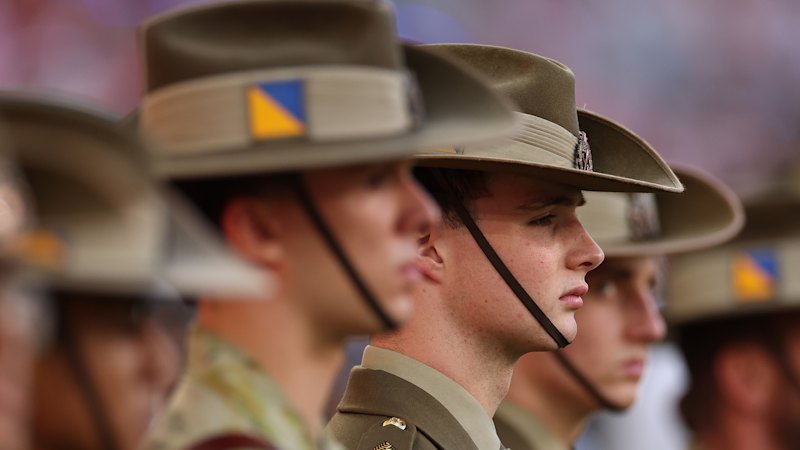
To those who booed at the Anzac service: you are showing your ignorance and your behaviour is infantile (‴War never solves anything’: Veterans honoured across Australia on Anzac Day”, smh.com.au, April 25). You would be better served by seeking to educate yourself about the sacrifices made by these courageous men and women so that you and we can live in peace without threats of harm. Their names, dignity and bravery will endure forever while your attempt at 15 seconds of fame will be gone in an instant. Hopefully, you will come to respectfully acknowledge the Anzac sprit and their service. You and we owe them so much. Merilyn McClung, Forestville
It is the RSL that organises the Anzac Day services, and we should appreciate the work their members do in organising their functions. They decide how their services should operate. I am an atheist. When we come to the part of the service where a religious minister makes comments and leads the people in prayer, I don’t join in, I remain silent. I have too much respect for the RSL, its members and all the Australian soldiers who served, and the many who did not return. Those who booed at Anzac Day services lack respect for both the RSL and those who served. A minority want to make the day about their grievance rather than remembrance. Ron Brown, Wallsend


They hide in the dark and boo loudly to disrupt the Welcome to Country at dawn services. I doubt any of them have served in Australia’s armed services, unlike the thousands of Indigenous Australians who fought for our country in world wars I and II, and in any other area since then. Those who boo defile those Australians who fought and died for them in these conflicts. And they should hide in the dark because their racist actions damage our Anzac Day recognition of those who died for our country. Shame on you. Ian Ferrier, Long Jetty
It is so disheartening to hear of booing at Welcome to Country ceremonies at Anzac Day commemorations. It is so disrespectful of history, of the welcomer, of the welcomer’s people and country, and of the event where the booing occurs. I am grateful for every Welcome to Country I am present for. Mary Anne Kennan, Burwood
It was heartening to see the public condemnation of the small contingent who booed Uncle Ray Minniecon at the dawn service in Martin Place. While it was right to call out the disrespect for the solemnity of the occasion, it shouldn’t be just about Anzac Day. Disrupting an Acknowledgement of Country is racist and disrespectful, regardless of the venue or the occasion. Every time it happens, the hope for a just, cohesive Australia suffers another blow. Tony Judge, Woolgoolga
It beggars belief that anyone would actually want to get out of bed in the wee small hours to go to the Anzac Day dawn service only to heckle the Welcome to Country and defile the observance. Such people should stay in bed and get some beauty sleep because their behaviour is seriously ugly. Craig Forbes, Lewisham
I assume Liberal Party leader Angus Taylor has now added the people who booed at the dawn service to the top of his “don’t have Australian values” list? Tony Cartwright, Drummoyne
It seems to me that Saturday’s Anzac Day was exceptional. Apart from idiots booing, everyone seemed very enthusiastic in remembering our returned servicemen and women. Has the tide turned on the negativity on everything at the moment? It feels very positive. Janet Scilly, Waterloo
The Anzac Day march in Sydney on a beautiful autumn morning was a wonderful mixture of like-minded people, splendid service people of all ages, current defence personnel, proud descendants carrying treasured photos and medals, representatives of many other countries and organisations, the dedicated bands who accompanied the marchers, the carers and volunteers and, of course, the public who turned up to show appreciation. How complete it would have been to know that there were no conflicts anywhere in the world at present. Kath Maher, Lidcombe
Our collective memory takes us back to 1915; our collective amnesia extends to 1788. Graham Fazio, Cootamundra
Lessons of 1915 go on
Having recited The Ode at an Anzac Day breakfast, I returned home and read Malcolm Knox’s expose of the Gallipoli campaign and war generally (“Amid Trump’s war, I land at Gallipoli”, April 25). It was a powerful reminder of the terrible effect war has on millions of lives. We can honour the bravery of our servicemen in all the wars but let’s not kid ourselves that the causes were always noble. Let us honour but not glorify. Andrew Macintosh, Cromer

It’s more than 20 years since I went to Gallipoli, but like Malcolm Knox I was struck by the folly of such an invasion, its lack of common sense and its devastation of our then growing population. How could stupid bureaucrats in faraway places make such mistakes? As we have learned time and time again, life is still cheaply wasted by those in extreme power. Whether it’s a frustrated Christian in name only, a would-be Crusader who mixes up Bible quotes with populist film quotes, or a geriatric, at times demented property developer who dreams of ruling the world, it matters not. Lives end. Murder is committed. Now it’s at the touch of a button. The justification is still murky at best, the planning still shrouded in mystery, the results the same, lives lost with little appreciation of the cost. Geoff Nilon, Mascot
Reflecting on Malcolm Knox’s piece on his visit to Gallipoli, I remembered my visit there more than 30 years ago. My wife and I were in a large tour group exploring Turkey. Tour leaders are normally very prescriptive when the guests are given free time and give the exact time for departure. I will never forget the following instruction: “This place is important for our Australian and New Zealand guests. We will depart when they are ready.” Bernie Carberry, Connells Point
Congratulations on a wonderful article, Malcolm Knox. The most powerful sentence: “Murder for all – nobody should have done this and nobody should ever do it again.” Lynne Poleson, Kingsford
Respect the past
We need to keep Victoria Barracks – it’s part of our history and heritage (“Battlelines drawn in fight for the Barracks”, April 25). Too many wonderful places of history and our past have been bulldozed – like the ABC studios of Gore Hill. It’s appalling that there is no sign or plaque to note their past existence. Remedy this omission: Willoughby Council should have a plaque made and Chris Minns should preserve Victoria Barracks. Revere the past this Anzac Day. Alison Stewart, Waitara
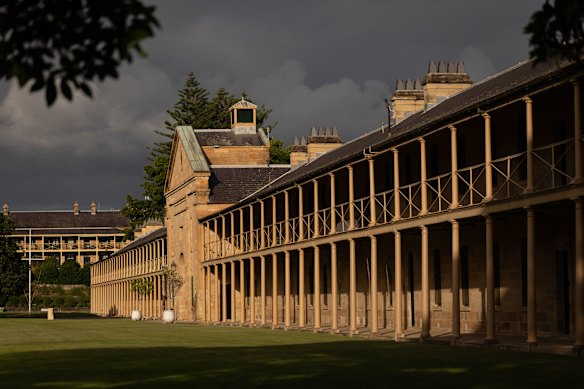
The intended disposal of Victoria Barracks for other purposes is a pathetic solution to a rare and large early Victorian but Georgian-styled example of early military architecture, its wide front spanning the parade ground. Other defence areas around the harbour went to the Harbour Trust, which looks after them for public use. Why can’t someone with a bit of intelligence and imagination get beyond “sell it” and probably put up glass sails and maisonettes in front of it? Donald Hawes, Peel
Self-interest widens wealth gap
I can’t cheer loudly enough after reading Peter Hartcher’s article (“Boomer perks in PM’s crosshairs”, April 25), though my joy will be even greater when I see it happen. Hartcher’s list, for which we will be damned – looting the environment, hoarding the national housing stock, rorting the tax system and leaving behind a national debt for the next generations to service – can be summed up as “self-interest”. My only argument with him is over his idea that there’s some consolation in the fact that we’ll be leaving much of our wealth to our kids. That’s part of the crime, not a consolation. Too many in my generation seem to have a “bugger the rest” mentality. They think providing their own children with housing and a substantial inheritance is more important than allowing the government to legislate changes that will benefit all. We should be ashamed of and nervous about the growing gap between rich and poor, to which our self-interest and sense of entitlement has made a major contribution. We complain about the sense of entitlement we think we see in younger generations, but instead of criticising them we should look at ourselves. Boomers may complain about being blamed for everything, but perhaps we protest too much. Prue Nelson, Cremorne Point
Thank you, Peter Hartcher, you’ve said it all. It is a common conversation among my elderly friends that we have had it all, including free university education, secure jobs, manageable mortgages, amazing healthcare and travel as well as facilities, leisure opportunities and cultural experiences way beyond our parents’ and grandparents’ imaginations. But the provision of pensions for those able to manage on their superannuation and investment tax breaks has been a bridge too far. Addressing intergenerational inequality is long overdue. Liz Adams, Kareela
Peter Hartcher describes the government largesse to Boomers over decades, with trillions of dollars expected to be bequeathed to their heirs. With all the clamouring for gas windfall profits taxes, surely it’s time to see that sitting on an asset (overwhelmingly land in our cities) that increased in value over time at no risk to, or effort by, the owner, boosted by generous government policies, is a windfall. It’s time the Boomer generation, of which I am one, paid a fair share of tax on our profits. Brenda Kilgore, Red Hill (ACT)
Polluter-pays levy
Much of the debate over a tax or levy on gas exports misses a central point: polluters should pay for the climate damage they cause (“Don’t let gas giants fool you with their PR – they should pay a fair share levy”, April 25). A polluter-pays levy, as proposed by the Superpower Institute, could raise $22 billion a year while finally holding major emitters like the gas industry to account. With reports warning that climate impacts could cost Australia $94 billion annually by 2060, failing to act shifts the burden on to households and future generations. Providing an incentive for fossil fuel and other industries to address climate pollution while strengthening the budget is an obvious win-win. All that is missing is the Albanese government’s willingness to stand up to the gas lobby and get it done. Isabelle Henry, Ascot Vale (Vic)
Burning question
In my career as a chemical engineer I was privileged to work for a couple of years in a remote part of Fiji and, many decades later, in the world of biodegradable plastics (“The island paradise where Australia may burn its rubbish”, April 25). So it is alarming to see the environmentally-reckless proposal for an incinerator facility in Fiji to burn waste from Australia. There are no really good options for dealing with modern cities’ household rubbish and non-recyclable plastics waste streams, most of which typically ends up in scarce landfill sites, and which produce harmful greenhouse gases during disposal. Even the best-available biodegradable plastics produce carbon dioxide if composted, or methane and carbon dioxide from anaerobic digestion in landfills. Burning is not the answer. And it is certainly not respectful turning Fiji into a dumping ground for Australia’s waste problems. Governments and industry know what has to be done, mandating well-established guidelines to “Reduce, Re-use and Recycle”. Most European countries already have strict packaging rules – including manufacturers’ obligations for collecting and recycling household packaging – and the EU has binding 2030 targets to move member states away from simply burning waste. Rob Firth, Red Hill (ACT)
Port potential
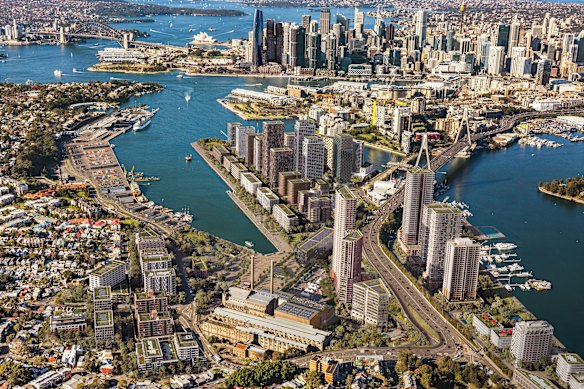
I beg to differ with your correspondent (Letters, April 25) on the developments proposed by the premier on Glebe Island. By all means develop Bays West near the proposed Metro station but the removal of port access for the bulk delivery of the raw materials essential for the construction industry and relocating it to Port Kembla would require transportation by trucks to where cement, aggregate, sand and gypsum are most needed – Sydney. Not only will the proposed harbourside foreshore towers not help the housing crisis for those on modest incomes, but building costs will go through the roof. The Port Authority planned for an attractive port, integrated with other uses, and included an attractive rocky outcrop right next to the Glebe Island Bridge abutment, as well as more public foreshore access. Maybe one of the other uses could be for an AI facility, powered by solar panels incorporated into the new port buildings? If the government can afford to spend $40 million on improving access from Wentworth Park Light Rail station to the new Fish Markets, I’m sure they can come up with a few dollars to fix the Glebe Island Bridge. Elizabeth Elenius, Pyrmont
UK quits
It’s great to see the UK strongly pushing its anti-smoking initiative in the face of facile arguments from big tobacco and other critics (“UK tobacco ban sparks fiery debate”, April 25). As a former addict, I only wish Australia had given tobacco the flick well before my misguided, youthful illogic took hold. It cost me a lot more than the prices that were charged and, in Shakespeare’s words, “My tears are now prevailing orators” (Titus Andronicus: 3,1). Adrian Connelly, Springwood
- To submit a letter to the Sydney Morning Herald, email letters@smh.com.au. Click here for tips on how to submit letters.
- The Opinion newsletter is a weekly wrap of views that will challenge, champion and inform. Sign up here.


