








Updated ,first published
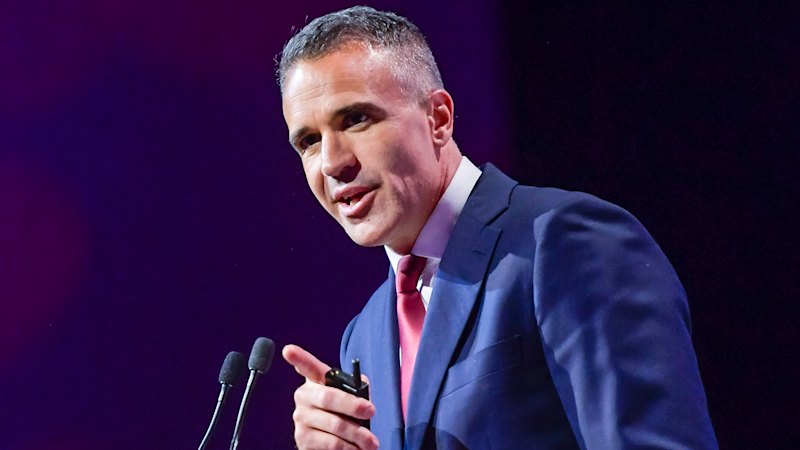
Labor has moved quickly to attack One Nation’s working-class credentials, piling on Pauline Hanson’s party’s record after South Australian Premier Peter Malinauskas warned against sneering about the cultural anxieties of suburban Australians.
Two days after the populist party beat the Liberal Party on primary votes at the South Australian election, federal Labor MPs used question time to try to drive a wedge between Hanson and her growing number of working-class supporters by arguing her party was just about stunts, not jobs.
As counting continued on Monday, One Nation was in the running for three lower house seats, close behind the Liberal Party’s expected four or five.
Malinauskas, a centrist leader who has rejected identity politics and embraced pro-business policies, said on Monday that Labor could be hurt in the long-run even though One Nation’s support was drawn almost entirely from the Liberal Party in his home state.
“One Nation project patriotism in their form: we shouldn’t sneer at it,” he said on ABC. “It opens up an opportunity for others to talk about patriotism in a way that I think reflects our country.”
“I think there’s no shame in being honest about that and being patriotic ourselves.”
Deputy Prime Minister Richard Marles talked up Labor’s investment in blue-collar jobs in South Australia via the AUKUS deal.
“This stands in contrast to One Nation, which have really only ever been about stunts and the vibe,” he said in parliament.
Defence Industry Minister Pat Conroy cited the notion of “progressive patriotism”, a phrase Prime Minister Anthony Albanese first used on this masthead’s Inside Politics podcast after last year’s election, while talking about Labor’s $22 billion Future Made in Australia policy.
“This will increase our independence and sovereignty and create Aussie jobs. It was at the heart of the progressive patriotism agenda the prime minister took to the people,” Conroy said. “Aussie-made steel leading to Aussie-made missiles.”
Another Labor MP, Sally Sitou, said One Nation had consistently voted against industrial relations and other policies that benefit working- and middle-class Australians, reflecting Labor’s strategy in Queensland to portray Hanson as anti-worker.
“One Nation is like a bad Tinder date,” Sitou said. “Photoshopped profile pic and they promise you the world. But the reality is very, very different. Just look at their voting record: they voted against strengthening workers’ rights, against making homes more affordable, voted against funding more public schools.”
Malinauskas said almost one in four voters choosing One Nation as their first preference in South Australia should not be dismissed as an anomaly or just a threat to the conservative side of politics.
“I think there are implications for my party as much as there are for the Liberal Party,” the re-elected premier told Nine’s Today show on Monday morning.
“We’re going to treat this seriously. I don’t think One Nation, or any political party for that matter, should be written off.”
Asked whether he thought One Nation was a threat at the federal level, Malinauskas said: “Yeah, I do.”
While Malinauskas’ decisive victory on Saturday night was expected, the state election was seen as the first major test of whether One Nation could convert strong polling into actual votes.
Labor won 32 of the state’s 47 lower house seats, while the Liberal Party was decimated.
Malinauskas warned the electorate would punish politicians who showed hubris or got “carried away with themselves” following a decisive victory.
“Complacency is death; you get found out really quickly,” he said. “Better to remind ourselves that in the modern era, there are no such thing as safe seats. There just isn’t. While we’ve had some incredibly big swings to us in some areas, there’s also been swings against us in others.”
The federal Coalition on Monday echoed the attack on Hanson’s credibility as it pivots to a more hardline approach to One Nation. Most of the swing to One Nation in South Australia came off the Liberal Party’s primary vote.
Deputy leader Jane Hume conceded the election outcome was not ideal, but argued the Liberals were the only credible alternative for opposition.
“We need to make sure that when we speak to Australian people we do so with empathy and understanding, but also demonstrate competence and capability,” she told Sky News.
Hanson hit back, saying the Liberals had failed to be an effective opposition after losing the 2022 federal election when they became “deflated, depressed”.
“Their policies are hopeless,” Hanson told 2GB on Monday.
Cut through the noise of federal politics with news, views and expert analysis. Subscribers can sign up to our weekly Inside Politics newsletter.


