









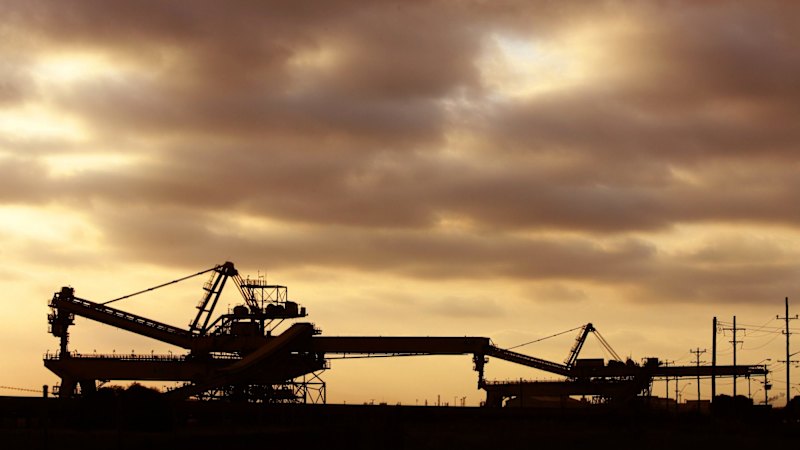


New coal mines on greenfield sites will no longer be approved in NSW under a plan published by the state government on Thursday setting out how the industry will be managed until 2050.
It says that due to rapidly expanding renewable energy capacity, future export and domestic demand can be met via extensions to already approved mining operations.
“The role of coal is evolving in response to a global shift away from coal-fired power generation to meet net zero targets by 2050,” writes NSW Natural Resources Minister Courtney Houssos in a forward to the strategy document.
“The state’s remaining coal-fired power stations are scheduled to be retired and replaced by renewable electricity by 2040.”
The government will prohibit future greenfield coal development, “meaning that coal mining cannot occur on a site that is not adjacent to, and not related to, an existing coal mining authorisation,” but “continue to allow approvals for mining operations other than new standalone greenfield coal mines… to support ongoing job and energy security,” says the report.
“This will include extensions of time and extensions of area of existing mines, as well as restarts of former operations associated with an existing mining lease, including mines that have suspended operations.”
No new greenfield coal mine has been approved in NSW for a decade and no application has been made for five years.
Stephen Galilee, chief executive of lobby group the NSW Minerals Council, said the decision to ban new greenfield mines was disappointing, but described the overall strategy as balanced.
“Some NSW coal mines will close in the years ahead,” says a Minerals Council statement. “Others are seeking planning approvals to continue operating for longer into the future. With around 8000 people working at mines currently seeking extensions, those approvals are critical to protect these jobs, and the ongoing economic contribution of those operations more broadly.”
Australian Conservation Foundation campaigner Freja Leonard welcomed the decision, but said that to meet state net zero targets, the government would need to rapidly retire the coal industry.
“The Net Zero Commission’s coal spotlight report makes it clear NSW cannot afford to approve a single additional coal project and must now plan for the orderly and rapid retirement of the dirty coal industry to meet its commitments under the Climate Change Act and, by extension, help Australia meet its Paris Agreement obligations,” she said.
Anti-fossil fuel activist group Lock the Gate said the government was using semantics to suggest it was “mask the truth that coal project approvals will continue as business as usual while everyone else in the state must work harder to reduce pollution and bear the costs of damaging climate change”.
There are 18 coal projects in NSW’s planning pipeline that would add hundreds of millions of tonnes of greenhouse gas pollution to the atmosphere, but all are expansions and extensions to existing mines, Lock the Gate said.
The government also announced new rules requiring major coal mines in NSW to reduce methane emissions caused by their operations, which are the largest source of the potent greenhouse gas in the state.
Once the rules take effect, high-emitting mines must capture, treat or convert fossil methane so it is less potent and causes less damage when released to the environment.
Coal mining is the largest source of fossil methane in NSW, producing about 30 per cent of the state’s methane emissions and contributing about 11 per cent of total greenhouse gas emissions.
Analysis by Melbourne-based modelling form Climate Resource published last year predicted that as key importers of Australian coal such as China, India and South Koreas sought to reach emission reduction targets and meet demand with their own resources, Australian coal exports could fall by as much as 80 per cent.
NSW Planning Minister Paul Scully said the state government would support coal production regions as the shift continued.
“As the need for thermal coal declines we are planning for future jobs and energy in coal-dependent regions. Work is already under way to convert former mining and energy sites so they can continue to benefit the community supporting local jobs and regional economies.”
Get to the heart of what’s happening with climate change and the environment. Sign up for our fortnightly Environment newsletter.


