


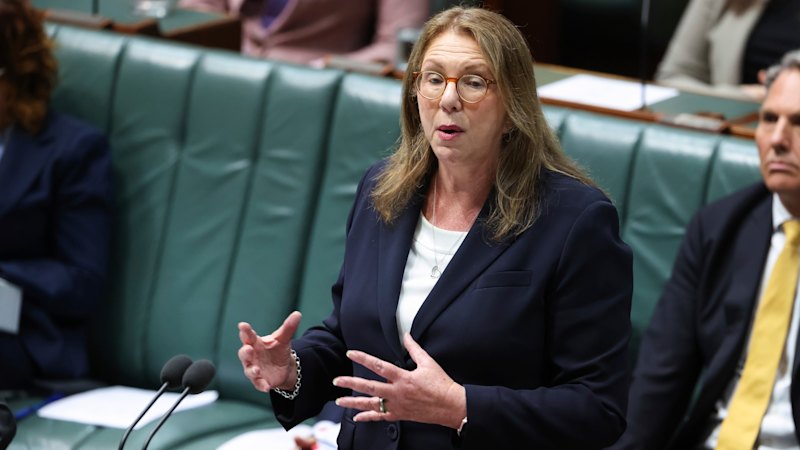

Households could receive additional cost-of-living relief in the federal budget because of high fuel prices, according to Infrastructure and Transport Minister Catherine King.
Amid ongoing fuel shortages and following a fragile peace deal between the United States and Iran, King played down the prospect of the May budget winding back tax breaks that encourage people to lease an electric vehicle, while playing down the short-term prospect of introducing road user charges for EV drivers.
The federal government has halved the fuel excise by 26 cents and reduced to zero the heavy vehicle road user charge to provide relief to motorists because of spiralling petrol and diesel prices triggered by the US and Israel’s war on Iran.
In an interview on the ABC’s Insiders program, the minister hinted that the three-month cut to fuel excise could be extended.
“I think everybody is experiencing across the world that because of constraint in supply, that means that fuel prices have gone up, and particularly obviously, the diesel price is holding much higher than anyone would like it to be,” she said.
“We’ve obviously got the tax cuts coming in on the first of July, but whether there’s need for additional measures for household and businesses … you know, they’re all things that we’re contemplating as part of the budget process.”
Last week, Prime Minister Anthony Albanese travelled to Singapore and met with his counterpart, Lawrence Wong, to shore up supplies of petrol and diesel from Australia’s biggest source of fuel and next week, he will travel to Brunei and Malaysia with a similar mission to ensure imports of petrol, diesel and fertiliser continue to flow from those two countries.
The federal government had also been considering whether to wind back generous tax arrangements that encourage people to lease electric vehicles worth up to about $91,000, which now cost the federal budget more than $500 million per year, about 10 times the original estimate.
But King defended those arrangements and repeatedly ducked questions about whether they could be left in place because of the ongoing shortages of liquid fuels.
“It’s worked, it has seen uptake of electric vehicles. We, of course, do want to try and make sure there is more availability of cheaper electric vehicles for people, and that’s what the fuel efficiency standard has done,” she said, defending the generous tax break.
“I’ll leave announcements around the fuel tax benefit for electric vehicles. I’ll leave that to discussions in the budget. But certainly, my view is it has worked to start the electrification of passenger vehicles,” she said.
King added that the availability of second-hand electric vehicles had also increased markedly as people’s three-year leases on EVs had ended and those vehicles had been sold.
“When vehicles come off novated leases and then they’re available for sale, you’ve seen a really big increase in people buying those second-hand electric vehicles right at the moment, so it actually has done a good job in terms of that availability.”
But she poured hot water on the prospect of road user charging being introduced for electric vehicles in the short term, despite the fact that her department was working on that plan and Treasurer Jim Chalmers supported its introduction.
“We’ve been working within my department on the model for what a road user charge might look like. And that’s no surprise to anyone….since December, my department’s been working on that,” she said.
“Obviously, right at the moment, we’re trying to encourage as much electric vehicle uptake as we possibly can. We don’t want to disincentivise that at all. So there’s a balance to be struck here, both obviously, with the fringe benefit tax potential of road user charging, but we’re making our way through that.”
King added she was “not clear that there’s a pathway for it through the parliament”, suggesting that preliminary discussions with the opposition and the Greens had not been positive about passing the law.
And she defended a new $20 million advertising campaign titled “every little bit helps”, that will begin on Monday across television, radio, online channels and more, designed to encourage Australians to conserve fuel.
Opposition defence spokesman slammed the advertising campaign on Sunday and described it as “taxpayer-funded political propaganda”.
“We want them [the government] to make sure that petrol and diesel, aviation fuel comes into our country, and that it gets to the service stations that they turn up to to fill up their car, and an advertising campaign is not going to make that happen,” he said.
“It’s very clearly it’s about their political interest, not about fixing the problem.”
But King said the campaign was designed to provide as much information as possible to Australians during a period of fuel shortages.
“The advertising campaign is really designed to do three things – make people aware of the national fuel security plan, make people aware of the actions that the government has taken to date, but also that every little bit that you can do can also help,” she said.
Cut through the noise of federal politics with news, views and expert analysis. Subscribers can sign up to our weekly Inside Politics newsletter.
 James Massola is chief political commentator. He was previously national affairs editor and South-East Asia correspondent. He has won Quill and Kennedy awards and been a Walkley finalist. Connect securely on Signal @jamesmassola.01Connect via X or email.