


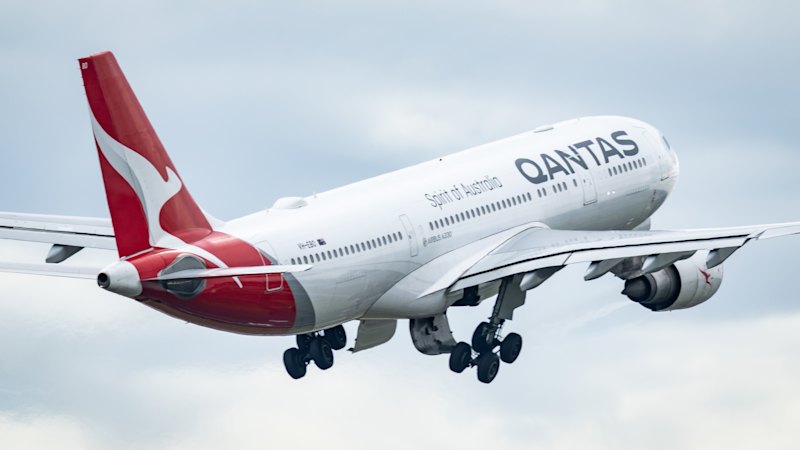

A drop in international flights spurred by the war in the Middle East has left Qantas’ suppliers “nervous” they are buying too much aviation fuel at high prices, the airline’s chief executive said.
The Iran war has chopped roughly 20 per cent of international flight capacity into Australia, dramatically altering the market for jet fuel as airlines scramble to secure supplies, CEO Vanessa Hudson said.
“Our suppliers are a little bit nervous that they purchase supply that is in excess of what the market needs at really high fuel prices,” she said. Nevertheless, the suppliers are expressing increasing “confidence” about their ability to keep airlines fuelled up through the crisis, she said.
Hudson said the situation is helped both by airlines’ close coordination with suppliers and recent efforts by the government to secure fuel from trade partners. “We’re increasingly confident that, with the government’s work on bilateral conversations with China, we’ll be seeing more supply from China.”
Qantas counts Ampol, Viva Energy, BP, and ExxonMobil among its suppliers.
“We’ve seen competitors reduce capacity, we’ve seen competitors increase pricing, and that has been at a backdrop where we’ve continued to see relatively resilient demand,” Hudson said, which has allowed Qantas to continue to recover increased fuel costs through higher ticket prices.
The dislocations in the market underscore the challenge for the aviation sector, as sharply higher fuel prices and air routes redrawn for the conflict put pressure on airlines’ business plans.
Low-cost carriers such as Air Asia X have made dramatic cuts to their services, while Spirit in the US, another low-cost carrier, was pushed out of business over the weekend.
As the aviation crisis spurred by the US and Israeli-led war on Iran ripples through the industry, Hudson said Qantas’ approach was to remain “flexible and agile.”
Qantas currently holds twice-weekly meetings with its fuel suppliers, who are “very reliant” on the airline’s information about flight volumes and demand, CFO Rob Marcolina said.
Internationally, Qantas said it’s still experiencing growth in the June quarter because of increased demand for flights between Australia and Europe.
But pressure on the airline is substantial. Qantas has already flagged an approximately $700 million extra cost in fuel, taking its fuel cost as high as $3.3 billion in the second half, from a previously forecast $2.5 billion.
Hudson, who spoke at the Macquarie Australia Conference in Sydney on Tuesday, said Qantas has fuel commitments to the middle of June.
The airline hedged about 90 per cent of its June half exposure to crude oil, but did not hedge jet refining margins – the difference between the cost of oil and refined jet fuel. Those margins jumped from US$20 per barrel in February to around US$120 in April.
Qantas and low-cost subsidiary Jetstar have begun trimming their domestic routes by 5 per cent. Last week, Qantas extended the timing of the route cuts for flights in Australia and to New Zealand.
With a long-awaited refresh of its aircraft fleet to increase fuel efficiency and performance, the airline has warned that its capital expenditure in 2026 will now be at or below $4.1 billion, “the bottom end of the previously guided range”.
The Market Recap newsletter is a wrap of the day’s trading. Get it each weekday afternoon.
 Chris Zappone is a senior reporter covering aviation and business. He is former digital foreign editor.Connect via X, Facebook or email.