







It was also her job in the Navy that introduced her to para-biathlon in an inter-service competition. The sport originated in Scandinavian militaries and three-quarters of the Australian team are either current or former serving members.
Loading
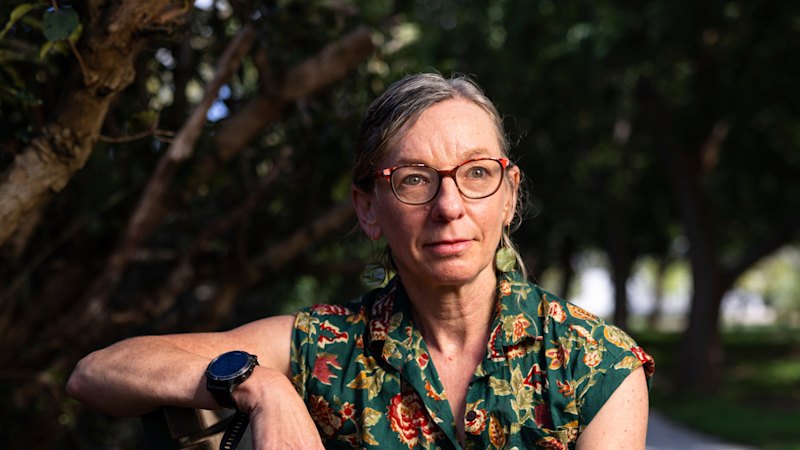
“I wanted to find a sport that I’d never done as an athlete so that I wouldn’t compare myself to how I was before and how I’m going now,” she said.
While her teammates use air rifles in the para-biathlon, Dickens uses an electro-acoustic rifle.
“There’s no projectiles at all that come out of the blind rifle, not even a laser,” she said. “Every interview I do, I say we need more blind people in Australia doing shooting sports because there is nothing dangerous about the blind rifle that I use in biathlon.”
Instead, Dickens uses a headset to aim.
“It sounds like a metal detector. So when you’re looking for metal, it beeps, and then when you find something close, it goes to a solid noise. And then when you’re over something worth getting, it squeals a really high-pitched noise. And I’ve got to find the highest pitch I can possibly find in that noise, and that’s where I pull the trigger.”
It’s a tough sport of clashing extremes; athletes go from exerting huge amounts of energy in cross-country skiing to stillness when aiming their rifles.


Dave Miln competing in the para-biathlon.Credit: Getty Images
“You’ve got to try and relax and shoot. And when I’m shooting with my headphones on, if my heart rate is too high, I can hear my heart beating and that’s so distracting,” she said.
“And I find that contrast, with these two highs and lows in sport, I transfer it to life too. Because, as you can imagine, going blind later in life is not really very great for your mental health to start with.”
Her teammate Dave Miln has skied for most of his life, but first represented Australia after an accident that would have turned many away from the sport.
In 2022, Miln and his young family went skiing on holiday in Northern California. Miln was carrying his one-year-old daughter Anna and guiding his three-year-old daughter Isla when they slid and collided with a snow removal machine with two-metre-long blades. Miln couldn’t stop them from entering the machine, but turned his body toward the blades to protect his daughters. He spent two days in an induced coma, 17 in intensive care, had 25 surgeries and had both legs amputated.
Since making his Paralympic debut last week, Miln has had two top-20 finishes in both cross-country and biathlon.
“I’m 18 months on snow post the accident, so I’m still in the very early stages in terms of mastering the craft and this is an amazing experience, I’ll take so much from this,” he said.
“I got to speak to the family back home last night after I got back after the race, which was great. I miss them, incredibly so, and they all miss [service dog] Suki.”
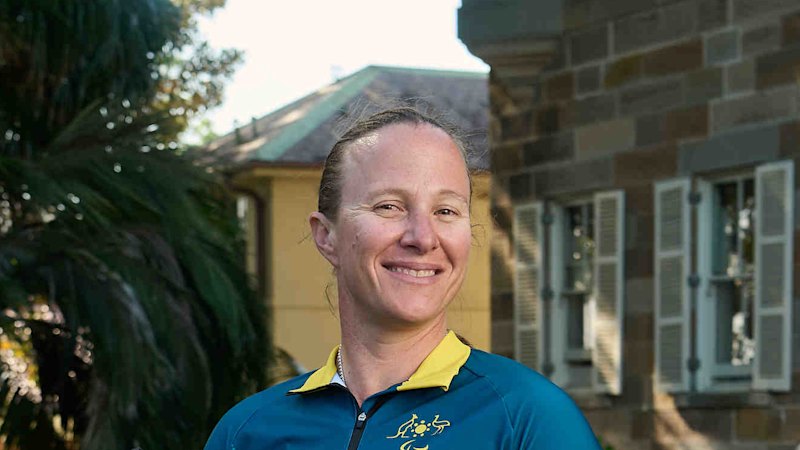
As the Games draw to a close, each member of the Nordic team has their eyes on what’s next. Matt Brumby knows well why it’s important to have something else planned after a tournament of this scale. After missing the 2016 Summer Paralympic triathlon team by one place, he threw himself into training, eventually winning the world para-triathlon title.

Relief as Matt Brumby crosses the finish line.Credit: Jeff Crow for Paralympics Australia
“You will have a downer. You’re on this huge high right now, and then coming after the Games, there’s always going to be a lull,” he said. “I think that’s the sad part for a lot of people when they have such a high, and they have nothing after it.”
His teammate, para-cycling and para-triathlon gold medallist Lauren Parker hasn’t stopped training for her other sports. Each night after leaving the snow, she returns to a stationary bike in her room. She will have three days between returning from the Games and leaving for a triathlon in New Zealand.
Still, like the others, she vows to return to the Winter Games and wants to be on the podium when she does. Even if it means beating 23-time career medallist and four-time gold medallist at these Games alone, Oksana Masters of the US.
“I am so new. It’s like my 11th week on snow in my life, so I can’t be too hard on myself,” Parker said. “Right now, I don’t think it would ever be possible to beat Oksana, but I’d love to, and I’d set that goal,” she said.

Lauren Parker on the shooting range.Credit: Thien-An Truong for OIS
Dickens crossed the finish line of her last race on Friday skiing next to her guide, Lynn Cullens. While usually Cullens skies in front of Dickens, offering instructions back to her as they navigate the course, this time, they finished side-by-side.
“Regardless of how well we shot and how well we skied, I just wanted to cross the line for the last one with Lynn because I wouldn’t be here without her.”
This masthead has travelled to Cortina as a guest of Paralympics Australia.
The Winter Paralympic Games is broadcast on the Nine Network, 9Now and Stan Sport.


