


A frozen bunker in the English countryside is helping to save Australian plants from extinction, with support from advocates such as King Charles and actor Cate Blanchett.
The project has gathered billions of seeds from around the world in an underground facility run by scientists who can rescue rare plants from the ravages of drought and climate change.
In one case, they stored the seeds that helped Australians bring a rare native wildflower back to life after it was wiped out by bushfires.

Cate Blanchett at Wakehurst.Credit: Tom Munro
And, luckily, their concern for wildlife does not stop them from welcoming an Australian journalist who has endangered one or two native plants in his Canberra backyard.
I arrive at the Millennium Seed Bank, one hour south of London, to find out how the project has become a reserve bank for wild plants from around the world – a Fort Knox for the kernels of life.
All I know before I arrive is that one of Australia’s best-known actors is a huge supporter of its work.
Cate Blanchett loves the Millennium Seed Bank so much she became an ambassador for Wakehurst, the garden that houses the project in the Sussex countryside and is an offshoot of the Royal Botanic Gardens at Kew in London.
In the latest sign of her support, Blanchett has just hosted a podcast with the King to discuss the danger of losing plants to rising temperatures.

Cate Blanchett joins senior research leader Dr Elinor Breman (centre) and King Charles at the seed bank this week.Credit: Getty Images for Royal Botanic Gardens, Kew
The podcast celebrates the first 25 years of the seed bank by sharing stories between the King and Blanchett, as well as one of the senior researchers at the project, Dr Elinor Breman.
At one stage, the King talks about the way the drier climate has destroyed many of the flowers and smaller plants that used to thrive in English meadows.
“The key nowadays, I think, and I’ve been trying to do it for years, is to take the rainwater off the roofs and somehow get it onto the garden,” he says.
Blanchett replies with a comment most gardeners would understand: “As an Australian, I’m water-obsessed.”
Climate change is seen as one of the most serious threats to wild plants, and a key reason the seed bank works with botanic gardens in Australia and similar projects around the world to preserve threatened species.
When I arrive at the bunker, which is dug into rolling lawns in Sussex, I find glass jars filled with seeds as well as a bench with two props to demonstrate the work.

Seed curator Lucy Taylor at work in the Millennium Seed Bank vault.Credit: David Crowe
Loading
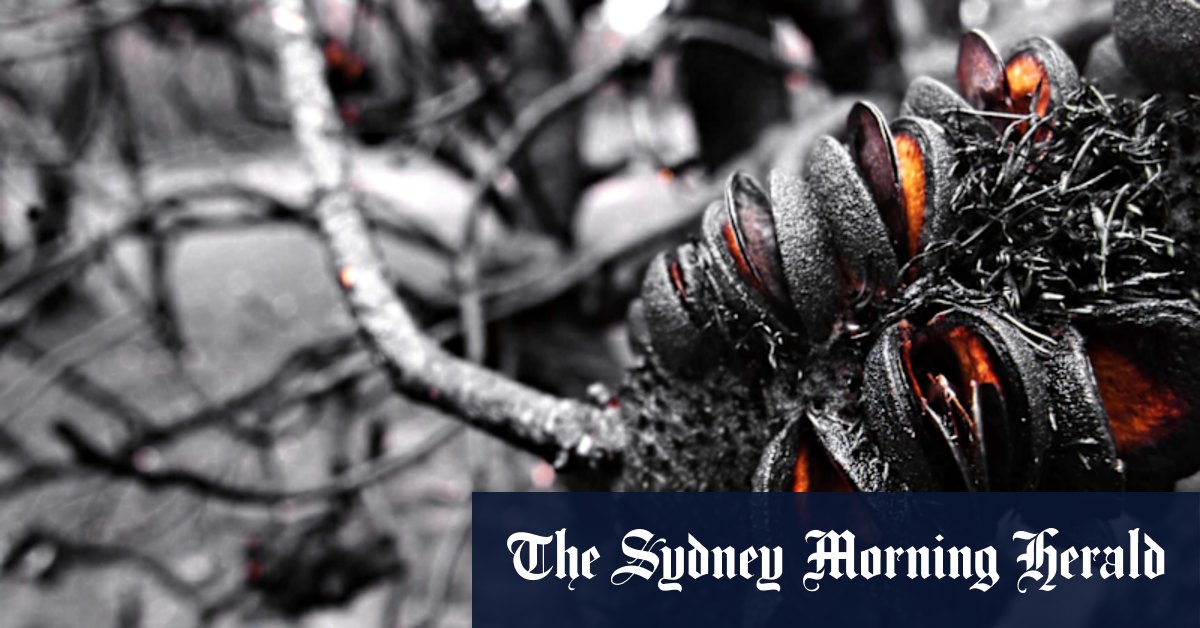
The props are banksia pods from Australia. One of them is hairy and closed, with the seeds still inside. The other is burnt and bare. It’s been subjected to a blowtorch to open the pods and extract the seeds.
Breman says Wakehurst has seeds from 190 countries and handles requests every working day to store or exchange seeds for projects around the world.
“The beauty of seed banking is it’s relatively simple technology for conserving a large amount of genetic diversity in a really small space at relatively low cost,” she says.
Some of the cost is in protecting the seeds from the unknown. The building can withstand flooding and fire and has back-up generators in case of a power failure. Given that Wakehurst is just south of Gatwick Airport, the bank also has enough reinforced concrete to withstand an aircraft disaster.
It is easier to get to, however, than a similar project on the island of Svalbard, in the Arctic Ocean, where member nations deposit seeds in a vault dug into the frozen earth.
The conservation co-ordinator at Wakehurst, Aisyah Faruk, works with agencies in Australia and Asia to preserve species.

A fire tornado descends during the Green Valley fire in southern NSW in 2019. The seed bank could help Australia recover from devastating fires in the future.Credit:
“We’re dealing with threats like deforestation, all the way to the effects of climate change,” she says.
“We need to work together to ensure the preservation of all the plants, as well as restoring some of the habitats that we’ve lost.”
Over 25 years, the bank has grown to nearly 2.5 billion seeds from more than 40,000 species. Some are no longer found in the wild. The key to saving them is dry air and cold temperatures.
“Those are the main steps that are going to ensure that the seed stays alive for tens to hundreds of years,” says Breman.
History shows how long seeds can last. In one case, the seed bank took a call from the National Archives in London after researchers found packets of seed in the leather wallet of a sailor who had been in South Africa in 1803.
The scientists germinated the seeds, and the result was a Leucospermum conocarpodendron, sometimes called a pincushion protea. It is now in a glasshouse at Kew.
I can feel these factors at work when I walk down the stairs to the deepest part of the bunker. The air is dried to 15 per cent humidity, where Lucy Taylor, a seed curator, works at a bench, testing the seeds to ensure they are properly preserved.

Conservation co-ordinator Dr Aisyah Faruk and Dr Elinor Breman at the Millennium Seed Bank.Credit: David Crowe
The next step is to see the vault that preserves the Australian wildflower that was almost lost.
The native herb with a brilliant purple flower grows only in limited areas. It is called the clover glycine and was largely destroyed when the Cudlee Creek bushfire swept through South Australia in 2019. So many were lost in the fires that Australian scientists had to search for seeds to propagate a new colony to ensure the plant survived.
Fortunately, the Millennium Seed Bank had received 1200 of the glycine seeds in 2007 and stored them in agreement with Australian authorities, creating a reserve. When the South Australian researchers were ready to propagate new plants, they turned to the seed bank in England.
‘We have no idea which of the species that we hold here are going to be the crucial ones in 10 years’ time, which is why it’s really, really important to be making collections now.’
Dr Elinor Breman, Millennium Seed Bank
The Australian team used the seeds from the UK to grow new plants and harvest more seeds so they could cultivate enough of the native herb to restore the land. The work was incredibly successful, with a 90 per cent survival rate for the plants (50 per cent is considered good).
The most valuable part of the bank is a storeroom near Taylor’s bench. I am not permitted to see it until I sign a medical waiver and put on a bulky jacket and a fleecy cap to make sure I live to tell the tale of the sub-zero room where some of the seeds are kept.
Taylor opens the door to the giant refrigerator, and we walk into a room that is kept at minus 20 degrees. Within minutes, she selects a row in a vast metal filing system and finds the drawer she wants. She brings out a small glass vial with seeds the size of peppercorns. These are some of the clover glycine. She holds them up, and I take a photo to prove they’re there.
The Millennium Seed Bank cannot store everything. The life of a seed can be extended in dry and cold air for about 85 per cent of plants but others are considered “recalcitrant” – the word used by the scientists – because their seeds do not respond to standard freezing. The recalcitrants include the mango, the avocado and the oak tree.

King Charles reflects on conservation in his discussion with Cate Blanchett.Credit: Getty Images for Royal Botanic Gardens, Kew
The Royal Botanic Gardens estimates that 45 per cent of all flowering plants are at risk of extinction and says this is likely to worsen as areas become hotter and drier. It makes a good case for having an insurance policy for the world’s wild plants.
I walk out of the dry air and the deep freeze and walk up the stairs. The English autumn feels like the tropics, heavy with humidity, after being in the vault.
I didn’t really need to see the seeds of the clover glycine, of course. But I’ve lost more native flowers than I care to admit after years of gardening. The world is becoming increasingly hostile to rare species, and scientists at the Millennium Seed Bank expect climate change to make their work even more necessary in the years to come. So I’m glad to know there is a back-up plan for Australian plants.
The challenge is that British and Australian experts cannot know exactly which seeds should take priority.
“You don’t know what you’re going to need,” says Breman.
Loading
“We have no idea which of the species that we hold here are going to be the crucial ones in 10 years’ time, which is why it’s really, really important to be making collections now from across habitats that aren’t yet threatened.”
That means 2.5 billion seeds may not be enough. Fortunately, the frozen shelves have room for more.
Get a note directly from our foreign correspondents on what’s making headlines around the world. Sign up for our weekly What in the World newsletter.
