









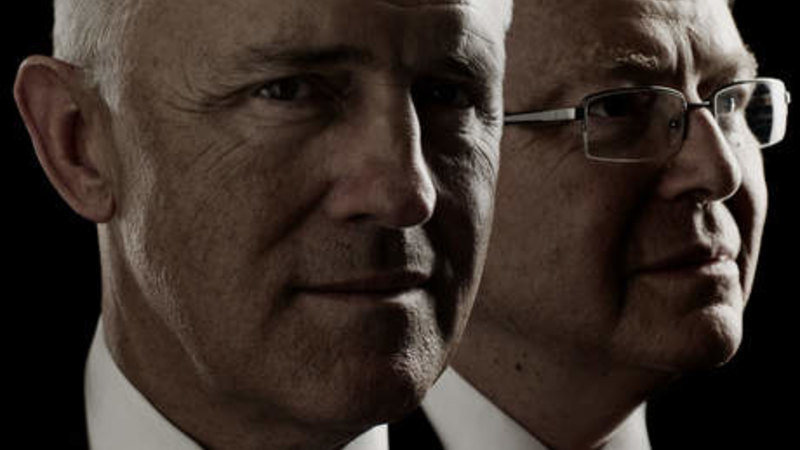
Former prime minister Kevin Rudd has urged the federal government to seize opportunities for green energy projects presented by the fuel crisis, saying “working families” were experiencing the “physical terror” of fuel insecurity.
In his first public comments since concluding his role as ambassador to the United States in March, Rudd told a gathering of climate leaders and former parliamentarians that the crisis sparked by the United States’ and Israel’s war with Iran provided real opportunities to capitalise on the boom in demand for renewables.
“Let us seize the opportunity presented by what is now unfolding in Iran and the Strait of Hormuz and, frankly, the shock which working people across the world are now experiencing in terms of continued hydrocarbon dependency,” Rudd said.
“They are experiencing the physical terror of becoming insecure in their supply of what they need to drive to work, if they’re still using a gasoline-based car … your ability to drive to work, your ability to go and drive and see your grandma, particularly in a country of long distances like ours.”
Rudd’s comments come days after international think tank Ember published research showing China’s export of renewables surged in March, off the back of the war in the Middle East and the resulting fuel crisis.
China sold record levels of solar, batteries and electric vehicles in March, an increase of 70 per cent compared with March 2025, and up 38 per cent compared with February 2026.
Last week Ember reported the share of renewables in global power generation last year overtook coal for the first time, comprising 33.8 per cent of the share of global power generation.
China exported 68GW of solar exports in March – equivalent to Spain’s entire solar capacity and exceeding the previous record hit in August 2025 by 49 per cent.
Chinese battery exports rose 44 per cent between February and March, to reach $US10 billion ($14 billion) in March. Battery imports were especially high in Australia, the European Union and India.
Rudd was speaking at the launch of a new book by Thom Woodroofe, the former diplomat and political staffer-turned-senior international fellow with the Smart Energy Council, calling for climate and energy policy to focus on “middle Australia”.
Rudd’s fellow former prime minister Malcolm Turnbull said at the launch of Woodroofe’s book Power, Prosperity & Planet: Climate and Energy Policy for All that despite what Turnbull described as “lunatic climate wars” being unleashed on the country, Australian households – who have the highest take-up of rooftop solar in the world – were voting with their pockets.
“In 2007 what we were trying to do was persuade people to pay more to save the planet because renewables were more expensive, but we’re now in the situation, happily, where the cheapest form of new generation is solar by far,” Turnbull said at the event.
“Energy policy should be determined by engineering and economics, not ideology and idiocy.”
The architect of the Paris Agreement on climate change, veteran diplomat Christiana Figueres, said it was clear the economics of climate change had been “won”, with renewable infrastructure and power now cheaper than their fossil fuel equivalents.
“I believe that we will win and we will move forward on climate action much faster the moment we stop talking about climate change. That may be ironic but do you think climate change is a fun conversation at the kitchen table?”
Woodroofe said that, as the world transitions to renewables, “there’s a difference between a transition and a just transition”.
“If we don’t get those policy settings right, if we don’t get our narrative right, the cleavage between the people that are benefiting from this transition and the people that are not is going to get more profound and more problematic for us as a country.”
Figueres, Turnbull and Rudd’s comments come as 53 nations meet in Colombia to discuss how to accelerate a global path from fossil fuels.
Born of frustration that some powerful fossil fuel-producing nations have slow-walked decarbonisation efforts since the world agreed to “transition away from fossil fuels” at COP climate talks in 2023, the so-called Santa Marta Conference is seeking to develop a treaty to create a timeline to end fossil fuel use.
At the event, co-hosted by the Netherlands and Colombia, organisers hope the treaty would be free of the need for consensus that has historically slowed efforts at United Nations COP climate talks.
Pacific nations, which face an economic crisis due to their dependence on diesel imports that continue to skyrocket in cost, are pushing for a plan to make the Pacific the world’s first 100 per cent renewable region.
Any effort towards this goal would not only need Australian support in climate diplomacy, as Climate Change and Energy Minister Chris Bowen prepares to lead this year’s COP negotiations in Turkey, but practical help to build renewable energy generation and storage infrastructure.
Get to the heart of what’s happening with climate change and the environment. Sign up for our fortnightly Environment newsletter.


