









Toyota is in so much trouble.
Until now, the petrol-electric pioneer has been able to hold on tightly to its hybrid global sales crown, but now China is coming for it.
Which is unusual, because back at home Beijing judges regular hybrids as an utter waste of time, shrugging off their efficiency gains and treating them in the same unwashed group as petrol and diesels.
MORE: ‘All-in’: Bitter Aussie ‘culture war’ breaks out
If you’re foolish enough to buy one in China not only do you miss out on hefty purchase incentives and tax breaks, but some hybrid drivers have to enter a pricey lottery just to be able to register their cars.
So why are Chinese brands now racing to develop Toyota-style self-charging hybrids, instead of the EVs and range-extended hybrids local buyers lap up with glee?

Blame China’s outrageous levels of overcapacity, a superheated domestic price war and slowing demand that has seen carmakers like BYD and Chery now addicted to export sales to relieve factories that are making too many cars.
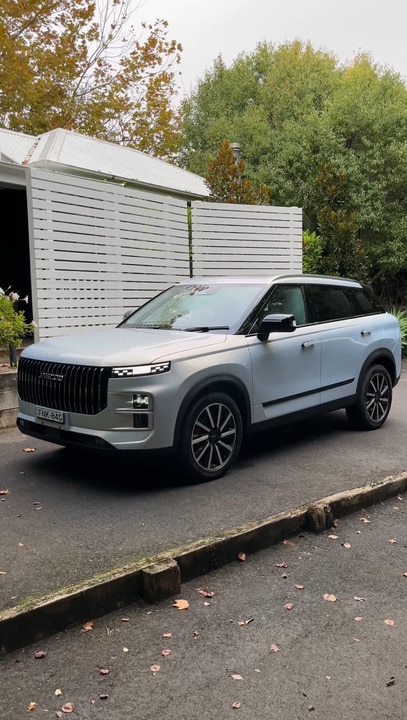
Which brings us to the budget-friendly Jaecoo J5 that will soon sport Chery’s latest Super Hybrid System-Hybrid (SHS-H) – a silly name for some very clever and important tech for the brand.
Easily confused with Chery’s existing SHS hybrid tech, the petrol-electric powertrain is almost entirely new and centres around a highly efficient and advanced 1.5-litre turbo petrol that manages to convert as much as 44.5 per cent of all energy released from burning petrol into motive power – well above the 40 per cent Toyota can manage.
Combined with a single-speed dedicated hybrid transmission, which is itself 98 per cent efficient, and a small 1.82kWh battery and electric motor the new powertrain is nothing short of a masterclass in frugality.
MORE: ‘Critical’: Dumb Aus road habit hits 10-yr high
Better still, the new J5 Hybrid doesn’t skimp on power too, producing an impressive 165kW and 295Nm of torque – far more than the paltry 143kW and 221Nm even the very latest 2026 Toyota RAV4 manages.
For reference, the J5 Hybrid also produces 15kW more than the Chery Tiggo 4 and outpunches other rivals like the GWM Haval Jolion (140kW), MG ZS (158kW) and the similarly-small Toyota Corolla Cross (143kW).
Bizarrely, despite all the efficiency claims, fuel use of the J5 Hybrid doesn’t exactly live up to the Corolla Cross that can average 4.2L/100km, with the Jaecoo only averaging a slightly disappointing 5.3L/100km, which translates into a 980km range on a full tank.
Engineers we spoke to said the SHS-H actually works better in the real world, but we’ll have to take their claims at face value.
With little to advertise the new powertrain, other than a set of fresh 18-inch wheels, it’s behind the wheel you’ll notice the big improvement, especially over the base J5, with 0-100km/h 7.9 seconds – a huge 2.3-second improvement over the entry model.
Refinement has also been improved.
Without gears to shuffle, the J5 is both smoother and quieter.
MORE: ‘Illegal’ tech war waging inside your car
Sadly, we were given little opportunity to properly put the hybrid Jaecoo through its paces, so we’ll have to wait until we can truly find out if engineers have improved the small SUV’s ride over our roads, but quick changes of direction hint at some handling improvements.
Elsewhere it’s very much business as usual for the J5, with the small SUV making a strong case for itself with generous levels of space, equipment, a long warranty and a light and airy cabin that features a large 13.2-inch portrait-mounted infotainment and an 8.0-inch digital instrument cluster.
Throw in a very generous eight-year/unlimited-kilometre warranty and an expected price premium of around 10 per cent over the base model and, unless you really want an EV, the new Hybrid should be the pick of the Jaecoo J5 range, with the Temu Range Rover Evoque easily offering enough to tempt buyers away from the Toyota equivalent.


