






Under the cover of darkness, United States’ aircraft unleashed airstrikes on Venezuela while a squad of elite soldiers ambushed its authoritarian president in his bedroom and flew him to New York, where Donald Trump’s administration plans to put him on trial.
After months of pressure on Venezuela’s President, Nicolás Maduro, Trump ordered the brazen military mission into the heart of the South American country in the most forceful American act of regime change since the 2003 invasion of Iraq.
US forces reportedly spent months preparing for the mission, learning Maduro’s habits. They tracked his movements, studied what he ate, where he travelled, what clothes he wore and details of his pets.
Here is how the night unfolded.
Airstrikes shake Caracas
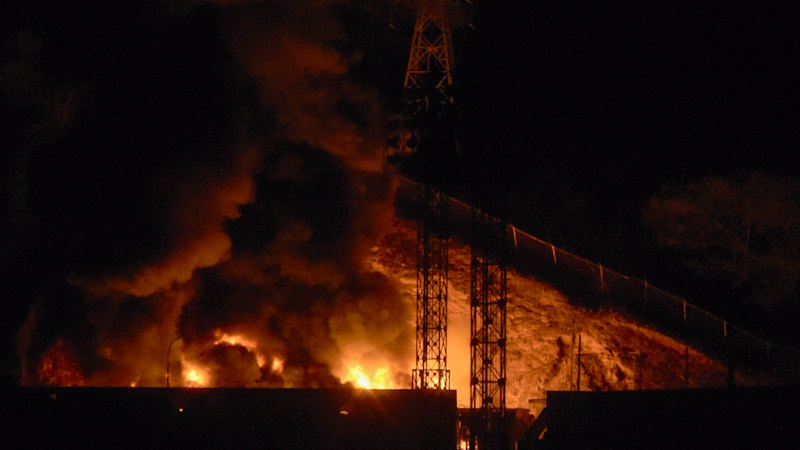
About 2am on Saturday (Venezuelan time), US aircraft swept across the skies of northern Venezuela, firing at least seven strikes on key military sites.
Social media footage showed rockets raining down on parts of the city, Higuerote Airport and the port of La Guaira, lighting up the night sky. A local media outlet allied with the ruling Socialist Party said explosions had taken place near the Fuerte Tiuna and La Carlota military bases.
State TV images of La Carlota showed what appeared to be a destroyed tank and buses.
In another social media clip, a procession of American helicopters was seen moving across the Caracas skyline, as gunfire and explosions echoed below.
The strikes were foreshadowed by a cyberattack that cut power to large parts of Caracas, allowing US forces to approach from the shadows, according to US sources cited by the New York Times.
The sources told the paper that American spy agencies had monitored Maduro’s movements with a fleet of stealth drones, which provided near constant monitoring, in addition to the direct information provided by informants within Maduro’s regime.
General Dan Caine, chair of the Joint Chiefs of Staff, told reporters that Trump gave the order to capture Maduro late on Friday. A vast array of US forces then began their mission, which lasted into early Saturday, Caine said.
The operation involved 150 aircraft, he said, working to dismantle Venezuelan air defences so that military helicopters could deliver troops into Caracas. The entire mission lasted 2 hours, 20 minutes, the general said.
The strikes killed civilians and soldiers, Venezuelan authorities said. There’s no official death toll, but The New York Times reported that at least 40 people had been killed, citing an unnamed Venezuelan official.
Trump, speaking on Fox News on Saturday, said that no American personnel had been killed, but suggested that some troops were injured.
Maduro snatched from safe house
The airstrikes were a distraction that allowed a fleet of Black Hawk helicopters carrying the US Army’s elite Delta Force squad to fly towards Maduro’s safe house.
According to the Venezuelan ruling party leader, Nahum Fernandez, Maduro and his wife, Cilia Flores, were captured at their residence within the Fuerte Tiuna military base outside the capital.
The Delta Force squad broke into Maduro’s home – “a house that was more like a fortress” as Trump later described it to Fox News – at 2.01am Venezuelan time and entered his bedroom.


A photo posted by US President Donald Trump to Truth Social shows Venezuelan President Nicolas Maduro aboard the USS Iwo Jima after he was captured by US forces.Credit: Donald Trump / Truth Social
The president and his wife, Cilia Flores, were jolted awake and dashed towards a safe room, but were grabbed by soldiers just as they were reaching the door.
Trump said the mission team was equipped with “massive blowtorches”, which they would have used to cut through steel walls had Maduro locked himself in the room.
“It had what they call a safety space, where it’s solid steel all around,” Trump told Fox. “He didn’t get that space closed. He was trying to get into it, but he got bum-rushed right so fast that he didn’t get into that. We were prepared.”
While Trump told reporters that US forces encountered significant resistance during the mission, General Caine said Maduro and Flores “gave up” and were taken into custody.
They were flown via helicopter to the USS Iwo Jima amphibious assault vessel waiting in the Caribbean and transferred to the US base at Guantanamo Bay, Cuba, before being flown to Stewart International Airport in New York.
According to Trump, Delta Force soldiers rehearsed the operation using an exact replica of Maduro’s residence.
“They actually built a house which was identical to the one they went into with all the same, all that steel all over the place,” Trump told Fox News.
A CIA source within the Venezuelan government also monitored Maduro’s movements in the lead-up to the operation, The New York Times reported.
Maduro arrives in New York
Maduro and Flores landed in New York on Saturday afternoon (Sunday AEDT) to face drug charges, US officials said.
The Venezuelan leader and his wife were escorted down a set of dimly lit aircraft stairs by Drug Enforcement Administration officers.
Maduro was processed at the airport for more than two hours before being flown to New York City by helicopter and detained at Brooklyn’s Metropolitan Detention Centre.
“Good night. Happy New Year,” the president said while being escorted by anti-drug agents, in footage published online.
He will appear in court on Monday (US time), facing drug and weapons charges.
What now for Venezuela?
Trump has said the US would take control of Venezuela until there would be a “safe, proper and judicious transition” of power.
“We can’t take a chance that someone else takes over Venezuela who doesn’t have the interests of Venezuelans in mind,” he told reporters at Mar-a-Lago.
Trump also said the US would extract masses of oil from Venezuela, some of which would be used to “reimburse” the US, and others would be paid to Venezuelans.
With Maduro gone, Venezuela’s Supreme Court has ordered his deputy, Vice President Delcy Rodriguez to assume the role of acting president “in order to guarantee administrative continuity and the comprehensive defence of the Nation”.
If Rodriguez is a willing partner, she could help the US ease a transition by maintaining stability with Venezuela’s current institutions. However, the role of the country’s opposition in any form of transitional government remains unclear.
With AP, Bloomberg.


