



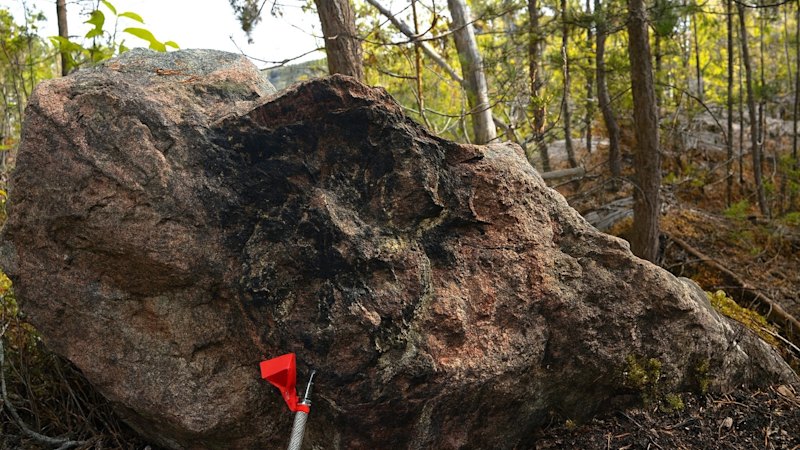
Samples returning scintillometer readings above 5000cps have been fast-tracked for analysis, and the geochemical results are expected in the December quarter.
The results will then be matched with the existing geophysical and structural data to fine-tune drill targets, which Infini says it is aiming to test in a 2026 maiden drilling campaign.
The combined Infini projects stretch 677 square kilometres on the eastern margin of the Athabasca Basin and are considered highly prospective for unconformity-style uranium deposits.
These types of deposits are the same class responsible for producing some of the world’s richest uranium mines, such as Cameco Corporation’s massive Rabbit Lake and Eagle Point mines, which have collectively produced more than 230 million pounds of uranium.
Notably, the projects also lie in a geologically complex area made up of ancient metamorphic and igneous rocks, graphite-rich schists and gneisses, and large fault lines – all key features often associated with high-grade uranium deposits.
Elsewhere, Infini has drill rigs turning in a phase two campaign at its flagship Portland Creek uranium project in Newfoundland and Labrador.
The 2500m program is designed to probe up to 12 high-priority targets strung along a six-kilometre corridor already humming with uranium-in-soil anomalies. It follows last year’s eye-popping discovery of samples grading up to a staggering 74,997 parts per million uranium oxide.
With visible uranium now confirmed at surface at Reitenbach Lake, radiometric hotspots lighting up across Reynolds Lake and assays due within months, Infini Resources looks to be hitting its stride in the Athabascan Basin.
With a 2026 drill blitz looming and momentum already building at its Portland Creek uranium project further east, the company is setting the stage for a flurry of headline-grabbing news as it races to become Canada’s next high-grade uranium supplier.
Is your ASX-listed company doing something interesting? Contact: mattbirney@bullsnbears.com.au
